Scientific and Technological Research Article
The paradox of nature-based tourism in the Amazon: between business value creation and the erosion of natural capital
La paradoja del turismo de naturaleza en la Amazonia: entre la creación de valor empresarial y la erosión del capital natural
Parcival Peña Torres1  *, Claritza Marlés Betancourt1 *, Enriqueta Villanueva Montero2 *
ABSTRACT
Introduction: Nature-based tourism has gained relevance in the Amazon as an alternative for diversifying local economies and promoting conservation; however, its expansion may generate pressures on the ecosystems that sustain the activity. This study analyzed this paradox through the relationship between value creation and natural capital. This framing addresses the coexistence of economic opportunities, community well-being, and ecological vulnerability across diverse Amazonian tourism contexts and territories.
Methodology: A systematic integrative review was conducted using a mixed-methods sequential QUAN→QUAL design. The Scopus search covered the 2021–2025 period and produced a corpus of 59 documents. VOSviewer was used to examine scientific performance, collaboration among countries and organizations, conceptual structure, and thematic evolution. Subsequently, 18 articles were purposively selected for full-text qualitative analysis.
Results: Scientific production showed growth, editorial dispersion, and more visible international collaboration than institutional articulation. The conceptual structure was organized around tourism, ecotourism, conservation, sustainability, geotourism, and environmental impacts. Qualitative analysis showed that natural capital supports multiple forms of economic, social, and cultural value, although its effects depend on governance mechanisms, benefit distribution, regulation, and reinvestment in conservation. Trajectories of synergy, compensation, tension, externalization, and erosion were identified. Overall, these patterns positioned socioecological governance as the mediating mechanism between tourism valorization and the persistence of natural systems.
Conclusions: In conclusion, the paradox does not lie in nature-based tourism being intrinsically conservation-oriented or degrading, but in the conditions governing the transformation of ecological attributes into value. Sustainability requires ecological limits, effective participation, and mechanisms that link generated benefits to the conservation of the natural base.
Keywords: biodiversity; ecotourism; environmental conservation; natural resources; sustainable development.
JEL Classification: Q26; Q27; Q51.
RESUMEN
Introducción: El turismo de naturaleza ha adquirido relevancia en la Amazonia como alternativa para diversificar las economías locales y promover la conservación. Sin embargo, su expansión ha generado presiones sobre los ecosistemas que sostienen la actividad. El estudio analizó esta paradoja a partir de la relación entre la creación de valor y el capital natural.
Metodología: Se desarrolló una revisión sistemática integrativa con enfoque mixto y diseño secuencial QUAN→QUAL. La búsqueda en Scopus abarcó el periodo 2021-2025 y conformó un corpus de 59 documentos. Mediante VOSviewer se examinaron los siguientes factores: desempeño científico, colaboración entre países y organizaciones, estructura conceptual y evolución temática. Posteriormente, 18 artículos fueron seleccionados intencionalmente para ser analizados cualitativamente.
Resultados: La producción científica mostró crecimiento, dispersión editorial y una colaboración internacional más visible que la articulación institucional. La estructura conceptual se organizó alrededor de categorías como turismo, ecoturismo, conservación, sostenibilidad, geoturismo e impactos ambientales. El análisis cualitativo evidenció que el capital natural sustenta múltiples formas de valor económico, social y cultural, aunque sus efectos dependen de mecanismos de gobernanza, distribución de beneficios, regulación y reinversión en conservación. Fueron identificadas trayectorias de sinergia, compensación, tensión, externalización y erosión. Estos patrones situaron la gobernanza socioecológica como instancia de mediación entre la valorización turística y la permanencia natural.
Conclusiones: Se concluyó que la paradoja no radica en que el turismo de naturaleza sea intrínsecamente conservacionista o degradante, sino en las condiciones que regulan la transformación de atributos ecológicos en valor. La sostenibilidad exige límites ecológicos, participación efectiva y mecanismos que vinculen los beneficios generados con la conservación de la base natural.
Palabras clave: biodiversidad; conservación ambiental; desarrollo sostenible; ecoturismo; recursos naturales.
Clasificación JEL: Q26; Q27; Q51.
Received: 25-06-2026 Revised: 01-09-2026 Accepted: 08-09-2026 Published: 15-09-2026
Editor:
Alfredo Javier Pérez Gamboa
1Universidad de la Amazonia. Florencia, Colombia.
2Universidad Rey Juan Carlos. Madrid, España.
Citar como: Peña Torres, P., Marlés Betancourt, C., & Villanueva-Montero, E. (2026). La paradoja del turismo de naturaleza en la Amazonia: entre la creación de valor empresarial y la erosión del capital natural. Región Científica, 5(2), 2026631. https://doi.org/10.58763/rc2026631
INTRODUCTION
Growing pressure on Amazonian ecosystems has intensified the debate regarding the need to build development models capable of integrating environmental conservation, social well-being, and the creation of economic opportunities (Castro Pereira & Terrenas, 2022; Heredia-R et al., 2022; Massaro et al., 2022). The Amazon represents one of the planet's most significant ecological systems due to its extraordinary biodiversity, its contribution to global climate regulation, and the sociocultural diversity of the peoples inhabiting it (Leal Filho et al., 2025). However, this territory faces simultaneous processes of environmental degradation, landscape transformation, extractive expansion, and the loss of ecosystem functions—factors that compromise both its ecological values and the sustainable development prospects of its communities (Hecht et al., 2024; Jaya-Montalvo et al., 2026; Leal Filho et al., 2025).
In this context, nature-based tourism has gained increasing relevance as a strategy aimed at diversifying local economies, strengthening community processes, and creating incentives for conservation. Unlike traditional tourism models—which rely primarily on infrastructure, intensive consumption, and landscape alteration—forms of tourism linked to nature, biodiversity, landscapes, and local culture depend directly on the maintenance of favorable ecological conditions (Donici & Dumitras, 2024; Hajarrahmah et al., 2024; Suriadi et al., 2026). Consequently, nature-based tourism has positioned itself as an activity with the potential to bridge economic and environmental objectives, particularly in territories where alternative productive activities might exert greater pressure on ecosystems (Suriadi et al., 2026).
Nevertheless, this relationship between tourism and conservation presents significant conceptual and practical tensions. Assigning economic value to natural attributes can help highlight previously overlooked benefits and strengthen arguments for their protection; however, it can also introduce processes of commodification, unequal appropriation, and increased pressure on strategic resources when tourism expands without adequate regulatory and governance mechanisms. Consequently, nature can simultaneously take on the roles of economic asset, anchor for peacebuilding, cultural foundation, and vulnerable ecosystem, creating complex relationships between value creation and ecological sustainability (Agudelo-Hz et al., 2023; Qodirov et al., 2026; Revilla Bueloth et al., 2026).
This dilemma is particularly relevant in the Amazon, where tourism appeal relies on elements whose conservation constitutes the primary territorial challenge—most notably forests, rivers, wildlife, landscapes, and traditional knowledge. In these contexts, generating income through tourism can bolster community-led conservation efforts, provided there are appropriate mechanisms for participation, benefit-sharing, and local management. Despite these stated benefits, such integration is not inherently positive and can become an additional source of pressure when the prevailing logic is one of economic growth detached from the territory's ecological limits (Rodrigues et al., 2025).
Recent literature has shifted from approaches focused exclusively on the economic benefits of ecotourism toward more holistic perspectives that view nature-based tourism as a socio-ecological system (Tuyen et al., 2025). From this viewpoint, tourism outcomes depend on the interaction among social actors, institutions, markets, local knowledge, and environmental dynamics. Under this framework, conservation is no longer seen as an automatic byproduct of tourism; instead, it is analyzed as an outcome conditioned by governance capacities, coordination mechanisms, and modes of territorial appropriation (Revilla Bueloth et al., 2026).
In particular, current debates on Amazonian governance have shown that local communities can play a pivotal role in ecosystem protection when they possess organizational capacity, institutional recognition, and appropriate mechanisms for managing natural resources (Revilla Bueloth et al., 2026; Rodrigues et al., 2025). Community-based management systems have demonstrated the potential to expand effective territorial protection, generate benefits based on local capabilities, and strengthen relationships of shared environmental responsibility—all within a plurinational context where challenges persist regarding funding, the recognition of human and non-human rights, and coordination with institutions external to the local socio-cultural and socio-economic sphere (Da Silva Medina et al., 2022).
Despite these advances, a fundamental question remains: under what conditions does the value creation associated with nature-based tourism contribute to conserving natural capital, and when might it drive the degradation of the very resource that sustains the activity? This complex question is particularly relevant because much of the existing literature has treated the economic benefits of tourism, its environmental impacts, and conservation strategies as separate topics; consequently, the dynamic relationship between economic valuation and ecological transformation has been less frequently analyzed within this subfield. The concept of natural capital allows this tension to be addressed because it recognizes that ecosystems generate multiple benefits for societies, including material, cultural, and regulatory services (Fitch et al., 2022; Garrett et al., 2024). In contrast, incorporating nature into economic valuation frameworks raises questions regarding the limits of such valuation, the distribution of benefits, and the institutional conditions necessary to prevent the pursuit of profitability from undermining the ecological foundations that sustain tourism activity (Qodirov et al., 2026).
In this context, the discussion regarding nature-based tourism in the Amazon requires moving beyond two reductionist approaches. The first assumes that any tourism activity taking place in natural areas automatically fosters conservation. The second views tourism as an inevitable threat to ecosystems. Both positions oversimplify a reality where outcomes depend on specific social, economic, and institutional relationships. Contemporary literature on inclusive tourism, protected areas, and territorial governance emphasizes that conservation processes, community participation, and the equitable distribution of benefits must be analyzed as interdependent dimensions (Suriadi et al., 2026).
Addressing this gap, the present study proposes analyzing the paradox of nature-based tourism in the Amazon through an integrative perspective that combines a bibliometric approach with a qualitative review of scientific literature. This design makes it possible to identify the field's intellectual structure, key thematic lines, and collaboration dynamics, while also examining in depth the mechanisms by which scientific studies have addressed the relationship between tourism value creation and the conservation—or degradation—of natural capital. The study’s significance lies in contributing to a more nuanced understanding of nature-based tourism as a socio-ecological phenomenon; rather than simply evaluating whether tourism represents a solution or a problem for the Amazon, the aim is to understand the conditions under which it can become a strategy compatible with territorial conservation, community well-being, and the preservation of the natural systems that make its existence possible.
METHODOLOGY
Research approach and design
The study was conducted within a pragmatic paradigm, which is suitable for integrating quantitative and qualitative procedures based on the research problem and fostering a complementary understanding of the phenomenon (Allemang et al., 2022). A mixed-methods approach with a sequential QUAN→QUAL design was adopted, ensuring that the results of the bibliometric phase guided the subsequent selection and qualitative analysis of the documents. This integration adhered to the principle of explicitly linking methods, phases, and interpretations within mixed-methods designs (Guetterman & Manojlovich, 2024).
By nature, the study constituted an integrative systematic review incorporating a bibliometric component and a qualitative thematic synthesis. Bibliometric analysis characterized the field's scientific performance as well as its collaborative and conceptual structures, while a comprehensive review of the texts provided deeper insight into the relationships between nature-based tourism, value creation, and natural capital. This combination facilitates the transition from bibliometric description to interpretation and theoretical construction (Donthu et al., 2021; Marzi et al., 2025).
The quantitative phase had a descriptive-relational scope and addressed three questions: RQ1: How did scientific output and its impact evolve between 2021 and 2025? RQ2: How were collaboration networks between countries and organizations structured? RQ3: What was the conceptual structure of the field, and what thematic shifts were observed during the period? The qualitative phase adopted an interpretive scope aimed at exploring in greater depth the relationships between value creation and the conservation, transformation, or erosion of natural capital.
Search strategy and corpus compilation
The Scopus database was selected as the source material due to the structured availability of the metadata—authorship, affiliation, keywords, and citation data—required for the analysis. The search was restricted to documents published between 2021 and 2025 to ensure that all years corresponded to completed editorial cycles. The search string was constructed through successive sensitivity and specificity tests and comprised four components: the territorial scope of the Amazon; a substantive presence of tourism, ecotourism, or nature-related modalities; environmental dimensions associated with biodiversity, conservation, natural resources, sustainability, and impacts; and economic or socio-business components related to value, livelihoods, income, employment, entrepreneurship, and territorial development. The latter two components were incorporated inclusively to avoid imposing—at the search stage—a mandatory link between value generation and environmental degradation. The complete search string and its operators were retained to ensure the search's reproducibility, in accordance with PRISMA-S (Rethlefsen et al., 2021).
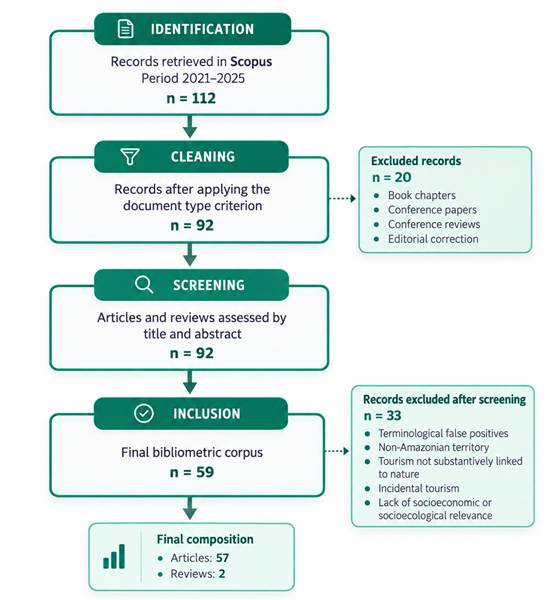
The search retrieved 112 records; after limiting eligibility to articles and reviews—thereby excluding book chapters, conference papers, and editorial corrections—the total was reduced to 92 documents. Titles and abstracts were screened based on four criteria: an unequivocal Amazonian location; a substantive presence of nature-based tourism or associated modalities; the inclusion of a relevant socioeconomic, business, or socio-ecological dimension; and the treatment of tourism as an analytical component. Thirty-three records were excluded due to terminological false positives, non-Amazonian locations, modalities unrelated to natural resources, incidental references to tourism, or the absence of an analytical tourism component.
The final bibliometric corpus consisted of 59 documents: 57 articles and 2 reviews. The identification and selection process was documented in accordance with the PRISMA and PRISMA-S guidelines (Page et al., 2021; Rethlefsen et al., 2021). The search string applied in Scopus was as follows:
TITLE-ABS-KEY(Amazonia OR Amazonía OR Amazônia OR Amazonian OR “Amazon basin” OR “Amazon rainforest” OR “Amazon rain forest” OR “Amazon forest” OR “Amazon biome” OR “Amazon region” OR “Amazonian region” OR “Legal Amazon” OR “Amazônia Legal” OR “Brazilian Amazon” OR “Colombian Amazon” OR “Peruvian Amazon” OR “Ecuadorian Amazon” OR “Bolivian Amazon” OR “Venezuelan Amazon” OR “Pan-Amazon” OR “Pan-Amazonian” OR “Madre de Dios” OR Tambopata OR Yasuni OR Yasuní OR Caqueta OR Caquetá OR Loreto OR Ucayali) AND (TITLE(touris* OR ecotouris* OR tourist* OR visitor* OR visitation OR recreation* OR ecolodge* OR birdwatch* OR geotouris* OR ethnotouris*) OR AUTHKEY(touris* OR ecotouris* OR tourist* OR visitor* OR visitation OR recreation* OR ecolodge* OR birdwatch* OR geotouris* OR ethnotouris*)) AND TITLE-ABS-KEY((“natural capital” OR “ecosystem service*” OR biodivers* OR conserv* OR “natural resource*” OR “protected area*” OR environment* OR ecolog* OR deforest* OR habitat* OR “carrying capacity” OR “land use” OR forest* OR wildlife OR sustainab*) OR (“value creat*” OR economic* OR socioeconomic* OR livelihood* OR income* OR employ* OR entrepreneur* OR enterprise* OR business* OR market* OR revenue* OR “value chain*” OR “local development” OR “community development” OR “territorial development” OR bioeconom* OR profit* OR brand*)) AND PUBYEAR > 2020 AND PUBYEAR < 2026.
Figure 1 shows the diagram of the process followed.
Figure 1.
Workflow for the identification, screening, and compilation of the bibliometric corpus
Note. Own elaboration based on Scopus records.
Bibliometric analysis
Eligible records were exported from Scopus in CSV format, including their bibliographic metadata. The quantitative analysis encompassed three dimensions, beginning with scientific performance, which was examined using indicators such as total publications, annual distribution, sources, territorial and institutional productivity, total citations, average citations, and normalized citation impact. This combination of production and impact indicators helped avoid interpretations based solely on publication growth (Hassan & Duarte, 2024).
Scientific collaboration was studied through co-authorship networks involving countries and organizations, considering documents, citations, links, and total link strength. Finally, the conceptual and temporal structure was examined based on author keywords, analyzing occurrences, links, total link strength, clusters, and average publication year. The use of co-occurrences is relevant for identifying conceptual relationships and thematic configurations within a scientific domain (Donthu et al., 2021; McAllister et al., 2022). Networks were constructed in VOSviewer 1.6.21 using fractional counting and a minimum of two documents per node for country and organization co-authorship analysis, while actors with a single publication were retained for the descriptive characterization.
For author keywords, full counting and a minimum of two occurrences were employed to preserve the effective presence of concepts without overly restricting a moderately sized corpus. Thresholds were established based on the size and analytical purpose of the document set (McAllister et al., 2022). Networks were normalized using association strength so that the network visualization allowed for the interpretation of relationships and groupings, while the overlay visualization incorporated the average publication year to examine conceptual shifts. The clusters emerged as relational groupings based on co-occurrence rather than as predefined theoretical categories.
Prior to the conceptual analysis, a thesaurus was developed to reduce fragmentation resulting from linguistic, orthographic, and morphological differences. This process involved unifying unequivocally equivalent variants—such as differences in language, singular versus plural forms, or hyphenation—while keeping analytically distinct concepts (e.g., sustainability, conservation, natural capital, ecosystem services, and biodiversity) separate. The thesaurus was used exclusively for semantic cleaning and was preserved alongside the original records to ensure traceability.
Selection and analysis of the qualitative sample
The qualitative phase was linked to the bibliometric results through a purposive, criteria-based selection process. The documents had to provide evidence regarding the creation, appropriation, or economic and social valuation derived from nature-based tourism; assets, processes, or services linked to natural capital; and observable relationships between these two dimensions—manifested as conservation, pressure, transformation, compensation, externalities, or erosion. Additionally, the selection sought to represent the key conceptual themes, tourism modalities, and Amazonian territories identified during the quantitative phase. Following verification of eligibility and full-text availability, the final sample for the qualitative phase comprised 18 articles.
The texts were analyzed in their entirety using a qualitative analysis matrix. Coding was based on the following categories: type of tourism; natural capital asset mobilized; value creation or appropriation mechanism; beneficiaries, pressures, or environmental impacts; and conservation mechanisms, governance structures, and the relationship between value and natural capital. These deductive categories remained open to emerging patterns and relationships during the reading process.
Synthesis was achieved through constant comparison between the documents and the categories to identify potential convergences, divergences, and recurring configurations. Interpretations regarding relationships of synergy, tension, compensation, externalization, or erosion were made only when supported by evidence from the studies. Thus, the qualitative phase completed the design's sequential integration and allowed for a deeper exploration of the explanatory mechanisms behind the paradox under study.
RESULTS
Evolution of output and scientific impact
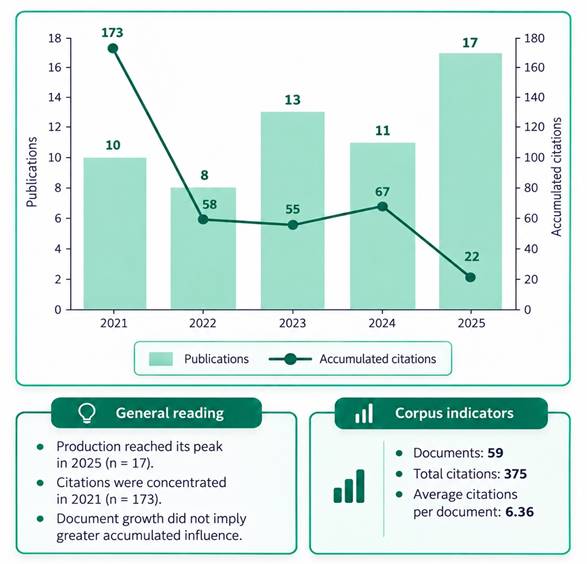
The 59 documents comprising the corpus accumulated 375 citations, with an average of 6.36 citations per document and a median of 4, showing a temporal distribution with an upward—though non-linear—trajectory. Ten documents were published in 2021; output fell to 8 in 2022, rose to 13 in 2023, dipped slightly to 11 in 2024, and peaked in 2025 with 17 publications. In aggregate terms, annual volume grew by 70% between the start and end of the period, with an approximate average annual growth rate of 14.2%. However, year-to-year fluctuations indicated that this expansion did not yet follow a stable trajectory (see Table 1 and Figure 2).
|
Table 1. Annual evolution of the corpus's production and citation |
||||||
|
Year |
Publications |
% of corpus |
Cumulative citations |
% of citations |
Average citations |
Median citations |
|
2021 |
10 |
16.95 |
173 |
46.13 |
17.30 |
16.0 |
|
2022 |
8 |
13.56 |
58 |
15.47 |
7.25 |
4.5 |
|
2023 |
13 |
22.03 |
55 |
14.67 |
4.23 |
3.0 |
|
2024 |
11 |
18.64 |
67 |
17.87 |
6.09 |
6.0 |
|
2025 |
17 |
28.81 |
22 |
5.87 |
1.29 |
1.0 |
|
Total |
59 |
100 |
375 |
100 |
6.36 |
4.0 |
|
Note: Citation counts correspond to the values recorded in Scopus. |
||||||
Figure 2.
Evolution of output and scientific impact
Note. Own elaboration based on Scopus records.
Comparing output and impact revealed differing patterns. While 2025 accounted for 28.81% of the documents, these publications contributed only 5.87% of the accumulated citations. Conversely, the ten papers published in 2021 represented 16.95% of the output but garnered 46.13% of all citations. This disparity was driven, at least in part, by the longer timeframe available for older papers to be utilized in subsequent research. Therefore, as noted by Hassan and Duarte (2024), the annual number of publications is insufficient to interpret the development of a scientific field and must be weighed against impact indicators. Similarly, the complementary use of performance indicators made it possible to distinguish between productivity and visibility, thereby avoiding the assumption that an increase in publications automatically equates to greater scientific influence (Donthu et al., 2021).
Citation distribution was also uneven: 11 documents had yet to receive any citations, while 13 had reached 10 or more, and only 4 exceeded 20. The five most-cited documents accounted for 141 citations—representing 37.6% of the total impact—while the top ten gathered 56.53%. This pattern suggested that visibility was concentrated within a relatively small group of studies; consequently, the field simultaneously exhibited a trend toward an expanding body of literature and an unequal distribution of scientific influence.
This disparity became even more apparent when incorporating citation counts normalized by publication year. This indicator was derived by comparing each document's citations against the average for papers published in the same year; thus, values greater than 1 indicated citation performance above the annual mean. This normalization made it possible to reduce the effect of age inherent in cumulative counts and facilitated more balanced comparisons between research published at different times during the five years—a particularly relevant aspect when evaluating recent documents (Stahlschmidt & Stephen, 2022).
The article by Santafe-Troncoso and Loring (2021), “Indigenous food sovereignty and tourism: the Chakra Route in the Amazon region of Ecuador,” showed the greatest absolute impact, with 42 citations, and also maintained a high relative performance, with 2.43 normalized citations. It was followed by the work of Izurieta et al. (2021) on scientific tourism in the Ecuadorian Amazon, with 28 citations, and the study by Mestanza-Ramón and Jiménez-Caballero (2022) on nature tourism along the Colombia-Ecuador Amazon border, with 27 (Table 2). Also appearing among the top-ranked works was a line of research focused on the ecological effects of recreational activities on Amazonian beaches, represented by Dos Santos et al. (2021), with 25 citations.
|
Table 2. Documents with the greatest absolute and normalized impact |
|||
|
Document |
Year |
Citation |
Normalized citation |
|
Indigenous food sovereignty and tourism: the Chakra Route in the Amazon region of Ecuador |
2021 |
42 |
2.43 |
|
Exploring community and key stakeholders’ perception of scientific tourism as a strategy to achieve SDGs in the Ecuadorian Amazon |
2021 |
28 |
1.62 |
|
Nature tourism on the Colombian–Ecuadorian Amazonian border: History, current situation, and challenges |
2021 |
27 |
1.56 |
|
Recreational activities trigger changes in meiofauna and free-living nematodes on Amazonian macrotidal sandy beaches |
2021 |
25 |
1.45 |
|
Anthropogenic litter on the macrotidal sandy beaches of the Amazon region |
2022 |
18 |
2.48 |
|
Do recreational activities affect macrofauna distribution pattern in Amazonian macrotidal sandy beaches? |
2023 |
13 |
3.07 |
|
Geoeducation strategies in the Amazon, Napo Sumaco Aspiring UNESCO Global Geopark |
2024 |
14 |
2.30 |
|
Innovative approaches to geoscientific outreach in the Napo Sumaco Aspiring UNESCO Global Geopark, Ecuadorian Amazon Region |
2025 |
5 |
3.86 |
|
Human trampling and vehicle traffic affect meiofauna and Nematoda distribution patterns in Amazonian macrotidal sandy beaches |
2025 |
4 |
3.09 |
|
Note. Normalized citation refers to the ratio between the citations received by a given document and the average number of citations for documents published in the same year within the corpus. Values greater than 1 indicate an impact exceeding the annual average. |
|||
Normalization partially altered the ranking derived from absolute citation counts. A 2025 study on geoscience outreach in the Napo Sumaco Geopark received only five citations (Salazar-Del-Pozo et al., 2025), yet yielded the highest normalized value in the corpus (3.86). Similarly, a 2025 study on human trampling and vehicular traffic (T. M. Dos Santos et al., 2025) recorded four citations but achieved a normalized score of 3.09. Likewise, the work by Dos Santos et al. (2023) on the effects of recreational activities on macrofauna obtained a value of 3.07, despite ranking lower when only absolute citation counts were considered. These results demonstrated that some recent studies gained visibility relatively quickly, yet their accumulated influence could not yet be directly equated to that of publications with a longer citation window.
Furthermore, the output was widely distributed across publishing sources (Table 3). The 59 documents appeared in 49 different journals, with 41 of them (83.67%) contributing a single article. Only eight sources published two or more documents from the corpus. The journals Sustainability and Historia Ambiental Latinoamericana y Caribeña showed the highest frequency, with three publications each. However, their citation patterns differed, with 50 and 9 accumulated citations, respectively. Tourism Management Perspectives recorded only two documents, yet these amassed 37 citations, while Marine Pollution Bulletin accounted for two papers and 31 citations.
|
Table 3. Sources with two or more documents in the corpus |
|||
|
Source |
Documents |
Total citations |
Average citations |
|
Sustainability |
3 |
50 |
16.67 |
|
Historia Ambiental Latinoamericana y Caribeña |
3 |
9 |
3.00 |
|
Tourism Management Perspectives |
2 |
37 |
18.50 |
|
Marine Pollution Bulletin |
2 |
31 |
15.50 |
|
International Journal of Primatology |
2 |
18 |
9.00 |
|
Geosciences |
2 |
7 |
3.50 |
|
Journal of Ecotourism |
2 |
5 |
2.50 |
|
Brazilian Journal of Biology |
2 |
1 |
0.50 |
The high degree of publishing dispersion was consistent with a subject of study that simultaneously spans tourism, conservation, ecology, territorial development, and natural resource management. However, this diversity alone was insufficient to confirm that the field was consolidated. Rather, the coexistence of numerous sources with isolated contributions—coupled with the concentration of impact within a few documents—suggested a field that is expanding yet remains distributed across various disciplinary communities. In this regard, bibliometric growth must be interpreted in relation to the formation of conceptual and collaborative structures, rather than solely through an increase in document volume; the value of a bibliometric analysis lies precisely in linking its indicators to the substantive configuration of the field under study (Mukherjee et al., 2022).
The results showed rising output toward the end of the period—with 2025 marking the peak of activity—yet an accumulated influence still dominated by publications from 2021. Normalized citation metrics also identified recent research that garnered an initial reception exceeding the average performance of its respective cohorts. Thus, the evidence did not point to a linear consolidation of the field, but rather to a recent expansion characterized by varied impacts, citation concentration, and significant publishing dispersion.
Distribution of production by country
Scientific output showed a marked geographical concentration (Table 4). The 59 documents involved institutions from 17 countries: Brazil led by a wide margin, participating in 24 publications (40.68% of the corpus), followed by Ecuador with 11 (18.64%), Colombia with 9 (15.25%), and Peru with 8 (13.56%). Overall, 49 documents (83.05%) included at least one affiliation from an Amazonian country, demonstrating substantial regional participation in the generation of the analyzed knowledge.
|
Table 4. Countries with the highest participation in scientific production |
||||
|
Country |
Documents |
Share of the corpus (%) |
Cumulative citations |
Average citations |
|
Brazil |
24 |
40.68 |
162 |
6.75 |
|
Ecuador |
11 |
18.64 |
102 |
9.27 |
|
Colombia |
9 |
15.25 |
21 |
2.33 |
|
Peru |
8 |
13.56 |
27 |
3.38 |
|
United Kingdom |
7 |
11.86 |
31 |
4.43 |
|
Spain |
7 |
11.86 |
63 |
9.00 |
|
United States |
6 |
10.17 |
20 |
3.33 |
|
Mexico |
4 |
6.78 |
35 |
8.75 |
|
Note. Full counting was used for the descriptive characterization; therefore, a document with authors from multiple countries was counted once for each participating territory, and the percentages do not sum to 100%. |
||||
The distribution of impact did not exactly mirror the productivity hierarchy. Brazil combined the highest volume of output with the highest absolute number of citations (162), while Ecuador garnered 102 citations and an average of 9.27 per document. Spain, with seven publications, accumulated 63 citations and an average of 9.00. In contrast, Canada—despite contributing only three documents—recorded 73 citations and the highest average of the group (24.33), a result that must be interpreted with caution given the small number of works involved. These differences confirmed that a higher volume of publications did not necessarily translate into proportional citation influence.
Amazonian representation was also uneven; institutional participation from the region was concentrated primarily in Brazil, Ecuador, Colombia, and Peru, whereas Venezuela appeared in only one document, and no affiliations from Bolivia, Guyana, or Suriname were identified. Concurrently, ten publications originated exclusively from institutions located outside Amazonian countries. This landscape revealed a field strongly anchored in specific territories of the basin but accompanied by a significant extra-regional presence, the collaborative structure of which is examined in the following section.
International collaboration network
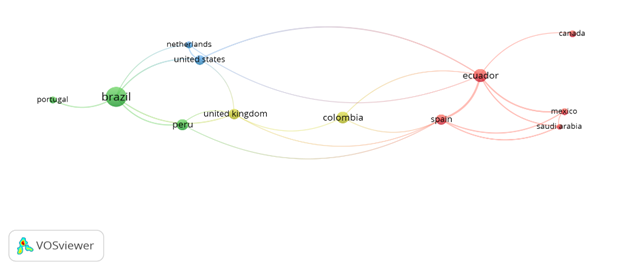
Applying a minimum threshold of two documents included 12 of the 19 countries initially identified by VOSviewer. The resulting network comprised four clusters and displayed an international structure characterized by a few nodes with high bridging capacity. Ecuador recorded the highest total link strength (TLS = 16) and 7 connections, followed by Spain (TLS = 13), Brazil (TLS = 9), the United States (TLS = 7), and the United Kingdom and Mexico (TLS = 6 each).
The strongest bilateral connection was established between Ecuador and Spain (link strength = 6), followed by Ecuador and Mexico (3). Additionally, relationships with a strength of 2 were observed between Ecuador and Saudi Arabia, Ecuador and the United States, Mexico and Spain, and Saudi Arabia and Spain. At the other end of the network, Brazil formed a distinct collaboration hub, connected primarily to Peru, Portugal, the United Kingdom, and the United States, with a link strength of 2 in each case. This configuration explains why Ecuador and Spain held the positions of greatest relational centrality, even though Brazil maintained the highest document productivity within the corpus (Figure 3).
Figure 3.
Scientific co-authorship network between countries
Note. The network was constructed in VOSviewer using fractional counting, with a minimum of two documents per country and no minimum citation threshold.
Cluster analysis reinforced this differentiation: a first group brought together Ecuador, Spain, Mexico, Canada, and Saudi Arabia; a second linked Brazil, Peru, and Portugal; a third primarily connected the United States and the Netherlands; and a fourth grouped Colombia and the United Kingdom. These clusters should not be viewed as isolated communities—as connections existed between them—but they did reveal distinct cooperation trajectories and the role of certain extra-regional countries as bridges between scientific spheres.
The network also revealed gaps in intra-regional integration; although Brazil, Ecuador, Colombia, and Peru accounted for a significant share of Amazon-related research output, direct collaboration among these countries was limited. Colombia connected with Ecuador, and Peru with Brazil, yet no densely interconnected Amazonian network was observed. At the same time, a substantial portion of international connectivity relied on external partners such as Spain, the United Kingdom, and the United States. This pattern suggests that research on nature-based tourism and natural capital in the Amazon rests on a significant regional foundation. However, trans-Amazonian cooperation remains fragmented and dependent on specific international alliances.
Institutional collaboration
Institutional collaboration exhibited a considerably more dispersed structure than that observed among countries, as VOSviewer identified 190 organizational names across the 59 documents. However, when a minimum threshold of two publications was applied, only four organizations (2.11%) met the criterion. The Faculty of Geological Sciences at the Universidad Complutense de Madrid and the Energy and Sustainability Research Group at Yachay Tech University each recorded two documents, seven citations, and a total link strength of two. Meanwhile, the Department of Financial Economics and Operations Management at the Universidad de Sevilla accumulated 31 citations across two publications, while the Fundación Geoparque Napo Sumaco garnered 17 citations. In both instances, the total link strength within the network formed by recurring organizations was zero.
The low level of institutional recurrence became even more apparent when the threshold was lowered to a single publication. Of the 190 recorded names, only 16 appeared connected, representing 8.42% of the total. These connections were primarily concentrated among academic units and groups associated with Yachay Tech University, the Universidad Regional Amazónica Ikiam, Universidad Complutense de Madrid, and the Geoparque Napo Sumaco, with a strong presence of Ecuadorian affiliations. However, much of this sub-network's apparent density stemmed from the co-occurrence of multiple faculties, schools, laboratories, and groups within the same documents, resulting in numerous one-off links rather than sustained institutional relationships. Indeed, most links had a strength of one, and only a single relationship reached an intensity of two.
These results demonstrated that research output regarding nature-based tourism and natural capital in the Amazon during the period under study relied predominantly on sporadic institutional participation, characterized by limited continuity in publication and recurring cooperation. Unlike the international network, where certain countries assumed clear coordinating roles, the organizational level did not exhibit consolidated hubs capable of providing a stable structure for the field. Fragmentation was also linked to how Scopus records affiliations, as a single institution might appear subdivided into faculties, schools, laboratories, and research groups. Consequently, the 190 designations were not interpreted as 190 entirely independent institutions, but rather as affiliation units reported in the metadata.
Overall, the evidence suggested a low level of institutionalization within the research domain; while international collaboration was evident at the country level, it did not translate into enduring organizational networks (Table 5). This lack of continuity may hinder capacity building, the sustained pursuit of joint agendas, and the establishment of stable research programs focused on nature-based tourism and natural capital in the Amazon.
|
Table 5. Organizations with two or more publications in the corpus |
||||
|
Organization |
Country |
Documents |
Citations |
Total link strength |
|
Department of Financial Economics and Operations Management, Universidad de Sevilla |
Spain |
2 |
31 |
0 |
|
Faculty of Geological Sciences, Universidad Complutense de Madrid |
Spain |
2 |
7 |
2 |
|
Energy and Sustainability Research Group, Yachay Tech University |
Ecuador |
2 |
7 |
2 |
|
Fundación Geoparque Napo Sumaco |
Ecuador |
2 |
17 |
0 |
|
Note. The identification corresponds to the institutional names registered in Scopus and processed in VOSviewer. A single parent institution may appear disaggregated into multiple academic units or research groups. |
||||
Conceptual structure of the field
Dominant keywords
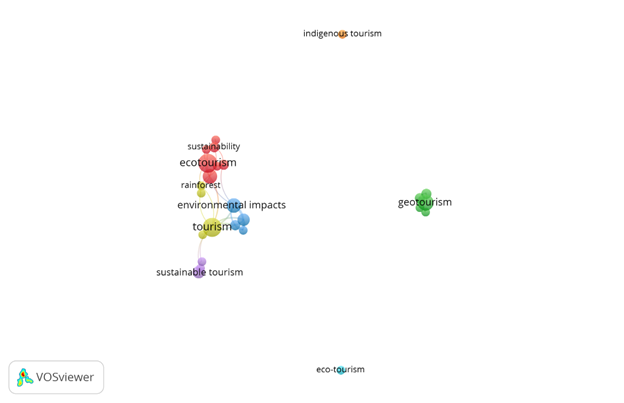
Keyword co-occurrence revealed a conceptual structure centered on a few terms with high integrative capacity. Tourism and ecotourism appeared most frequently, with 10 occurrences each, followed by geotourism (7) and conservation and environmental impacts (6). However, frequency did not exactly mirror relational centrality; tourism achieved the highest total link strength (TLS = 18), followed by environmental impacts (13), and Amazon coast and sandy shores (11), while conservation and geotourism recorded values of 9.
This discrepancy made it possible to distinguish frequently occurring concepts from terms that truly act as connecting nodes (Figure 4). Tourism functioned as the primary cross-cutting node, linked to environmental dimensions as well as to conservation, valuation, and socio-ecological conflicts. Meanwhile, ecotourism showed a high frequency of occurrence but lower connectivity (TLS = 7), suggesting a more defined conceptual specialization. Associations with the highest intensity included environmental impacts with Amazon coast, sandy shores, and tourism, as well as sandy shores with tourism—all with a strength of 3. Additionally, the association between conservation and ecotourism showed an intensity of 2.
Figure 4.
Author keyword co-occurrence network
Note. Own elaboration using VOSviewer. Full counting and a minimum of two occurrences per keyword were used.
Thematic clusters
The network revealed several distinct thematic clusters; the first was organized around ecotourism, conservation, and sustainability, while also integrating nature-based tourism, political ecology, ecolodges, and tourist attractions. This cluster represented an approach linking tourism activity to the conservation, management, and sustainable use of natural resources.
A second cluster was clearly associated with geotourism and the valorization of geological heritage, evidenced by connections between geotourism, geodiversity, geoconservation, geoeducation, and guides. Although spatially distinct from the main component, it exhibited clear internal cohesion: the link between geoconservation and geotourism had a strength of 3, while the connections between geotourism and geodiversity, geoeducation, and guides showed intensities of 2.
The third cluster grouped environmental impacts associated with tourism and recreational activities, particularly through terms such as environmental impacts, Amazon coast, sandy shores, and benthos. In contrast, another set linked tourism with rainforest, environmental management, and human–wildlife conflict, highlighting a socio-ecological dimension in which tourism activity interacted with natural systems and species.
Finally, some terms remained peripheral or disconnected—notably indigenous tourism. This position did not imply a lack of thematic relevance, but rather limited bibliometric integration with the dominant clusters—a finding that later proved significant for the qualitative selection process. Meanwhile, the label eco-tourism—appearing as an isolated node—was interpreted as a lexical variant of ecotourism rather than an independent conceptual domain.
The overall configuration thus revealed a fragmented yet complementary field, where a conservation- and sustainability-oriented strand coexisted with one focused on environmental impacts and another related to geological valorization. This distinction is particularly relevant to the study's central issue, as the dimensions of value generation and impact on natural capital did not appear to be structured around a single conceptual core.
Temporal evolution of conceptual cores
The overlay visualization revealed certain shifts during the analyzed period (Figure 5). Terms with the earliest average appearance included sustainable tourism (2022.0), contingent valuation method and indigenous tourism (2022.5), geoconservation (2022.67), and Amazon coast (2022.75). Occupying an intermediate position were ecotourism (2023.2), tourism (2023.3), conservation and environmental impacts (2023.5), as well as geotourism (2023.57). The concepts with the most recent average presence were benthos and human–wildlife conflict (2024.0), nature tourism and sustainability (2024.33), geoeducation and guides (2024.5), geodiversity (2024.67), and, notably, ecolodges (2025.0).
Figure 5.
Temporal evolution of keywords according to average year of publication
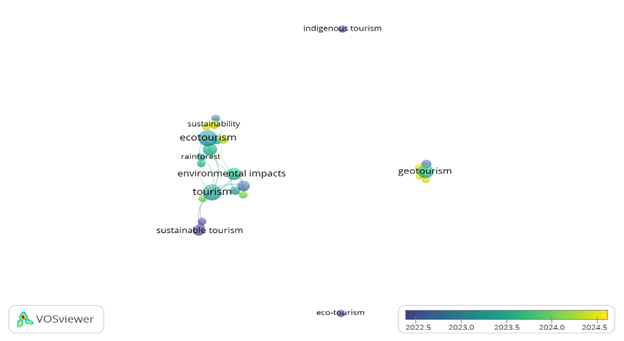
Note. The color scale represents the average publication year of the documents associated with each term.
This shift suggested a transition from approaches initially linked to sustainable tourism, valuation, and conservation toward recent approaches focused on applied sustainability, geodiversity, education, the management of human-wildlife interactions, and specific modes of tourism operation. However, given the short timeframe, these patterns were interpreted as changes in the relative prevalence of concepts rather than as conclusive evidence of established trends (Figure 6).
Figure 6.
Density of the field's conceptual structure
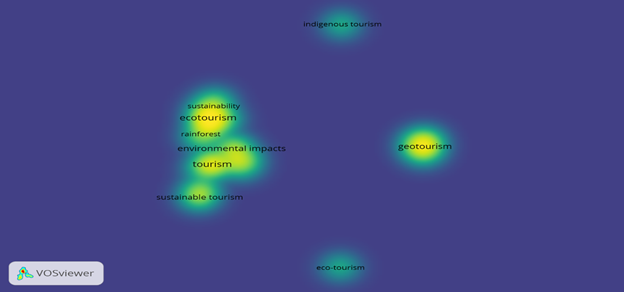
Note. Density reflects the relative concentration of occurrences and relationships among keywords. Areas of highest intensity correspond to the concepts with the greatest combined weight within the network.
Integration of quantitative results
The integration of bibliometric indicators revealed a scientific field that is expanding yet remains fragmented in territorial, institutional, and conceptual terms. The rise in output toward the end of the period—with 2025 marking the highest number of publications—contrasted with a citation impact concentrated primarily on works from the earlier years analyzed. This divergence indicated that recent growth in the volume of documents could not automatically be interpreted as scientific consolidation. Compounding this was a high degree of publishing dispersion; the 59 documents were distributed across 49 sources, demonstrating that the subject matter circulated among diverse disciplinary communities rather than within a clearly specialized publishing niche.
The geography of knowledge partially mirrored this configuration. Brazil accounted for the highest output, while Ecuador stood out for its capacity for international collaboration, achieving the strongest total link strength within the network of countries (TLS = 16), followed by Spain (TLS = 13) and Brazil (TLS = 9). However, collaborations among Amazonian countries were comparatively limited, and much of the connectivity relied on partnerships with actors from outside the region. This fragmentation was even more pronounced at the organizational level: of the 190 institutional names identified, only four produced two publications, and just two of those showed recurring connections within that subset. Consequently, the internationalization observed at the country level had not yet translated into a stable, widely distributed institutional network, as noted in the relevant section.
The conceptual structure reinforced this picture of heterogeneity; while tourism and ecotourism were the most frequent terms, tourism demonstrated a significantly greater capacity to link concepts (TLS = 18), followed by environmental impacts (13), whereas conservation and geotourism" each reached a value of 9. The network identified a core cluster related to ecotourism, conservation, and sustainability, and another cluster centered on tourism and environmental impacts—particularly associated with Amazonian coastal ecosystems; and a distinct component comprising geotourism, geodiversity, geoconservation, and geoeducation, which exhibited high internal cohesion yet remained relatively separate from the main component.
The results showed that while recent literature acknowledged various forms of interaction between tourism and nature, it did not predominantly frame value creation and the transformation of natural capital as a single conceptual core. Economic or business concepts did not achieve a level of centrality comparable to that of tourism, conservation, sustainability, or environmental impacts, whereas areas such as indigenous tourism remained peripheral to the network's main components. This separation is a significant finding, as the tension between economic valuation and conservation—or ecological degradation—appears to be distributed across different research traditions rather than explicitly formulated as an integrated issue. This quantitative configuration provided the foundation for the subsequent qualitative in-depth analysis of the literature.
Qualitative analysis
Natural capital as the foundation for value creation
Qualitative analysis confirmed that natural capital served not merely as the setting for tourism activity but as the fundamental asset from which value was generated. From a tourism perspective, forests, biodiversity, wildlife, water resources, landscapes, geodiversity, and ecosystem services were transformed into recreational experiences, tourism products, business opportunities, and sources of income. This relationship was particularly evident in economic valuation studies—such as that of the central Brazilian Amazon, where forest conservation was deemed essential for sustaining tourism, and 71% of users expressed a willingness to pay for ecosystem services (Nunes Medeiros et al., 2021). Similarly, regarding the Hacha River—a tributary of the Colombian Amazon basin—environmental quality yielded recreational benefits and a positive willingness to fund improvements (Pardo-Rozo et al., 2023; Soria-Díaz et al., 2024).
Valuation also took forms beyond monetary terms, as seen in ecotourism, which generated employment, income, and community well-being in Caquetá (Calvache López et al., 2024), while community-based tourism in Pacto Sumaco transformed geodiversity, biodiversity, cultural heritage, and local knowledge into livelihoods linked to conservation and territorial monitoring (Sánchez-Cortez et al., 2023). In other cases, biodiversity gained value through specific species—such as primates, odonates, Charapa turtles, or jaguars—that became tourism resources capable of generating economic benefits or shifting local incentives toward conservation (Guerrero-Moreno et al., 2024; Lebrão et al., 2021; Mestanza-Ramón et al., 2022; Monteiro et al., 2025; Reyes Vargas et al., 2025).
However, value creation extended beyond profitability, as observed, for instance, in the Ruta Chakra, where tourism was linked to food sovereignty, territorial positioning, traditional knowledge, the participation of Indigenous women, and biocultural conservation. This indicates that benefits can encompass social and symbolic dimensions not captured by income alone (Santafe-Troncoso & Loring, 2021). These integrated findings revealed that natural capital constitutes a multidimensional productive asset, given that its ecological quality determines tourism appeal and its mobilization can generate economic, community, cultural, and territorial value. Nevertheless, this dependency introduces a structural constraint, as the activity can only sustain its value-creation capacity as long as it preserves the natural attributes that make it possible (Figure 7).
Figure 7.
Deconstruction of the socio-ecological footprint
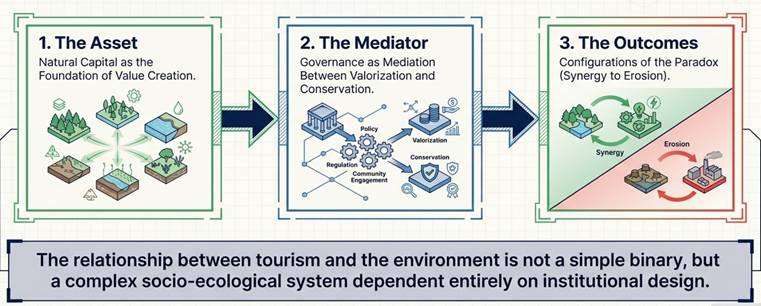
Note. Own elaboration with the assistance of NotebookLM.
Governance as mediation between valorization and conservation
Regarding this issue, the evidence showed that value generation did not, in itself, yield conservation outcomes. A mediating variable consistently appeared between these two dimensions: the governance of tourism activity and the natural resource. Interconnected factors—such as community participation, access rules, monitoring, carrying capacity, the formalization of enterprises and services, benefit distribution, and institutional coordination—determined whether value creation translated into conservation incentives or, conversely, intensified pressures on natural capital.
The cases with the most favorable outcomes combined local ownership of value with management mechanisms. In Mamirauá, primate-watching tourism operates under a system of community co-management and restricted access—a strategy designed to reconcile revenue generation with the reduction of risks to wildlife (Lebrão et al., 2021). In Sumaco, community-based tourism was integrated with conservation, control, and monitoring activities within the reserve (Sánchez-Cortez et al., 2023). Similarly, the development of odonate-focused tourism in Tapajós-Arapiuns was part of a participatory public-use plan that links biodiversity conservation, a leading role for the community, and local development (Guerrero-Moreno et al., 2024). In Caquetá, improvements in income and conservation went hand-in-hand with concerns regarding inequitable benefit distribution and the lack of carrying-capacity studies, highlighting that positive outcomes were contingent upon proper management (Olaya-Marín et al., 2025 b).
The absence or weakness of these mediating factors led to varying outcomes, as exemplified by voluntourism projects in Madre de Dios; there, reliance on visitors for funding and labor can spark competition among organizations and drive activities aimed at meeting tourist expectations rather than conservation priorities (Ocañas & Thomsen, 2023). Furthermore, only a small fraction of these projects systematically monitored their environmental outcomes (Ocañas & Thomsen, 2023). Even more strikingly, eco-lodges in the Peruvian Amazon demonstrated how informality, institutional fragility, and the need for business survival can lead to the adoption of hybrid models in which economic viability takes precedence over environmental commitments. These models also contend with issues such as waste accumulation, habitat fragmentation, and resource overuse (Lukacs De Pereny et al., 2025). Figure 8 illustrates the primary mechanisms of ecological valuation.
Figure 8.
Mechanisms for the ecological valorization of tourism activity
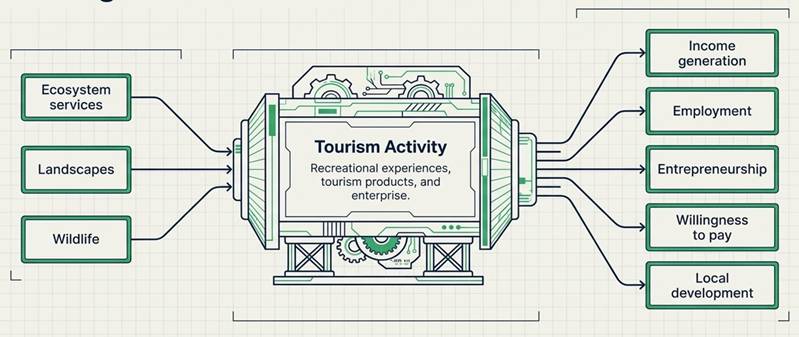
Note. Own elaboration with the assistance of NotebookLM.
In this way, governance functioned as the mechanism that transformed potential value into concrete socio-ecological outcomes. Local participation and benefit-sharing increased the likelihood of aligning tourism with conservation. Conversely, weak regulation, a lack of monitoring, or subordination to short-term demands increased the risk of a decoupling between profitability and sustainability. Figure 9 presents the seven mediating variables of governance.
Figure 9.
Mediating variables of governance
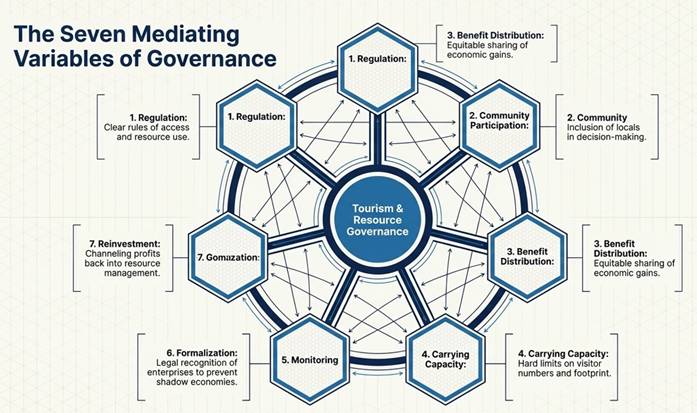
Note. Own elaboration with the assistance of NotebookLM.
Configurations of the paradox: from synergy to the erosion of the natural asset
The synthesis of the 18 studies did not support a linear relationship according to which nature tourism will simultaneously generate value and degradation in all contexts. Instead, the paradox took on different configurations, determined by the way in which natural capital was valued, used, and governed.
A first configuration corresponded to the conservation synergy, in which the generation of value increased the incentives to maintain the natural resource. The observation of primates, community tourism, and tourist interaction with jaguars illustrated this pattern, since the presence of the living resource sustained the tourist attraction and, at the same time, was associated with community benefits, greater tolerance towards fauna, or participation in conservation processes (Lebrão et al., 2021; Monteiro et al., 2025).
A variant was productive substitution, in which tourism modified the economic incentive for the use of nature. The proposal associated with the charapa turtle sought to replace its extractive use with nesting, release, and sponsorship experiences that generate community benefits. In Lago Sandoval, for its part, tourism was perceived as an economic alternative to destructive activities such as illegal mining (Mestanza-Ramón et al., 2022; Santa Cruz Arévalo, 2024).
A second configuration corresponded to compensatory valuation, connoted by sustained conservation through making payments, willingness to pay, or monetary recognition of ecosystem services. The studies of Presidente Figueiredo, Alto Mayo and Río Hacha showed that assigning economic value to forests, water, biodiversity and recreation can generate resources or favorable economic signals to conserve them (Pardo-Rozo et al., 2023; Requejo-La Torre et al., 2021; Soria-Díaz et al., 2024).
The third configuration properly expressed the socioecological trade-off, given that tourism produced value, but the intensity, organization, or economic dependence of the activity threatened the natural conditions that supported it. The recreational fishing of the Negro River showed an economically and culturally significant activity whose ecological and management performance was considered insufficient, which led to recommending monitoring, participation, and integrated management to preserve the fishing resource in the long term (Lubich et al., 2025). Peruvian ecolodges offered the clearest manifestation of this tension, as corporate resilience coexisted with informal practices and ecosystem degradation under conditions of weak governance (Lukacs De Pereny et al., 2025).
Finally, a fourth configuration emerged, termed the external erosion of the tourism asset. In this instance, the threat did not necessarily stem from tourism itself but from other economic activities that degraded the natural capital upon which tourism relied. In Caquetá, the potential alteration of rivers and biodiversity by small-scale hydroelectric plants was perceived as a risk to the nature-based tourism economy; this revealed that a decline in ecological quality can destroy tourism value even when the pressure originates outside the sector (Olaya-Marín et al., 2025a, 2025b).
Consequently, the identified paradox was not simply a matter of the equation "more tourism equals greater erosion." The core finding was broader: nature-based tourism transforms natural capital into value, thereby altering the incentives that determine whether that capital is conserved or degraded.
When the value generated is locally appropriated, regulatory mechanisms are in place, and a portion of the benefits is reinvested in resource management, a virtuous feedback loop can emerge: natural capital → tourism appeal → value creation → conservation → maintenance of natural capital. Conversely, when overuse, unequal benefit distribution, informality, or inadequate governance prevail, the cycle can reverse: natural capital → tourism exploitation → value appropriation → ecological pressure → asset erosion → future loss of value-creation capacity. This dual trajectory lies at the heart of the nature-based tourism paradox in the Amazon, shifting the debate from a simplistic opposition between tourism and conservation toward the institutional and distributional conditions that shape their relationship.
DISCUSSION
The results indicate that the relationship between nature-based tourism and natural capital in the Amazon cannot be understood through a dichotomous lens in which tourism activity is defined solely as either a conservation strategy or an environmental threat. Qualitative evidence revealed diverse scenarios where the economic, social, and cultural value generated by tourism can strengthen conservation efforts while simultaneously exerting pressure on the very ecosystems that sustain the activity. This ambivalence aligns with contemporary debates on tourism sustainability, which acknowledge that the primary challenge lies not merely in increasing nature-derived benefits, but in establishing institutional mechanisms capable of maintaining the ecological and social systems that generate those benefits (Gross et al., 2023).
Accordingly, the authors argue that the paradox of Amazonian nature-based tourism lies not in the simultaneous existence of benefits and impacts, but in the process by which natural capital is transformed into value, and in the conditions determining whether that transformation fosters conservation or erosion. This interpretation shifts the analysis from an instrumental view of tourism to a socio-ecological perspective, wherein nature, the economy, and governance are integral parts of a single dynamic system.
These findings allow nature-based tourism to be interpreted as an activity dependent on pre-existing ecological infrastructure—comprising factors such as biodiversity, landscapes, water bodies, forests, iconic species, and cultural ecosystem services. In other words, tourism does not create natural attractions; rather, it transforms existing ecological attributes into experiences, income, employment, business ventures, and opportunities for territorial development. This perspective aligns with the recent evolution of the natural capital concept, which views ecosystems as systems that generate benefits for human societies—benefits that cannot be reduced solely to monetary values (Donici & Dumitras, 2024).
Contemporary approaches to ecosystem services have shown that activities such as recreation, tourism, genuine environmental education, and landscape appreciation represent cultural contributions from nature that hold economic and social importance (Liu et al., 2024). Despite the available evidence, this valuation requires acknowledging that ecosystems do not function solely as service providers and that understanding them must begin by recognizing them as living systems with their own biophysical limits. Consequently, assigning economic value to nature can strengthen conservation arguments by highlighting previously overlooked benefits, yet it can also create risks when economic valuation supplants broader ecological, cultural, or territorial dimensions (Lopez-Rivas & Cardenas, 2024).
This tension is particularly relevant in the Amazon, where much of the tourism offering relies precisely on attributes threatened by external processes such as deforestation, the expansion of extractive industries, landscape transformation, and biodiversity loss. In this context, preserved forests, wildlife, and the integrity of aquatic ecosystems take on a dual nature: they serve as economic assets for communities and tourism operators, yet simultaneously represent ecological systems that cannot be managed solely based on profitability criteria.
Recent literature on nature-based tourism has reinforced this view, noting that such models can contribute simultaneously to local well-being and conservation when appropriate management mechanisms are in place (Chausson et al., 2024; Peng et al., 2025). Specifically, a systematic review of nature-based tourism in protected areas by Donici and Dumitras (2024) identified key benefits—including income generation, sustained environmental education programs, and strengthened conservation—while also highlighting that these outcomes depend on planning and the participation of local stakeholders. Similarly, Mandić et al. (2025) argue that the resilience of nature tourism requires integrating ecological conservation, territorial governance, and economic diversification, rather than viewing tourism merely as a productive activity.
From this perspective, the study’s findings suggest that natural capital functions as an invisible infrastructure for Amazonian tourism. It is "invisible" because it is often reduced to the concept of a tourist attraction, yet it is fundamental because it underpins all subsequent value-creation processes. This interpretation helps explain why environmental degradation is not merely an ecological loss but is explicitly linked to potential future economic loss; as ecosystem quality declines, so too does the territory's capacity to generate experiences, income, and opportunities.
However, acknowledging this relationship does not imply assuming that any tourism-based valuation of nature automatically leads to its protection. Critical literature on market-based conservation has warned that transforming ecosystems into economic assets can generate new forms of appropriation and inequality if benefits are captured by external actors or if local communities remain merely as service providers (Peng et al., 2025). Consequently, the central question is not whether nature should acquire value, but rather who defines that value, who benefits from it, and what mechanisms ensure that a portion of that value is reinvested in the maintenance of the ecosystem.
One of the study's key interpretive contributions is demonstrating that the relationship between tourism and conservation is mediated by governance. The results showed that tourism models with similar characteristics can yield different outcomes depending on factors such as community participation, benefit distribution, regulation, institutional capacity, environmental monitoring, and territorial control.
This notion aligns with contemporary approaches to socio-ecological systems, wherein sustainability depends on the capacity of actors to establish collective rules for use, adaptation, and oversight (Pereira et al., 2024). From this perspective, tourism should not be analyzed as an external force impacting a passive ecosystem, but rather as an additional component within systems where communities, institutions, businesses, and nature constantly interact.
Recent literature on community-based tourism has reinforced this idea. The systematic review by Tuyen et al. (2025), for instance, demonstrated that community-based tourism can contribute to sustainable development when there is effective participation, local ownership, and equitable benefit distribution. However, the authors caution that many models employ community participation merely as a tokenistic mechanism without transferring actual decision-making power. This distinction is crucial for interpreting the Amazon region, where the presence of Indigenous and traditional communities entails recognizing territorial rights, ecological knowledge, and unique ways of relating to nature.
In this regard, the study's findings suggest that local participation should not be viewed solely as a strategy to enhance the tourism experience, but rather as a mechanism for governing natural capital. When communities participate in defining the tourism model, receive benefits, and retain decision-making power over their territory, tourism can serve as an incentive to maintain healthy ecosystems. Conversely, when that capacity diminishes, there is an increased risk that the value generated will be appropriated outside the territory, while the environmental costs are borne locally.
This argument is particularly relevant in Amazonian territories, where tourism activity often takes place in areas subject to multiple economic pressures. The competing demands of conservation, extractive industries, infrastructure development, and local growth create scenarios where tourism can serve as an economic alternative—yet also act as a new source of pressure if it perpetuates dynamics of value concentration.
Recent approaches to regenerative tourism have deepened this discussion by highlighting that sustainability requires moving beyond models where communities merely participate in externally designed activities (Duarte et al., 2024; Rastegar, 2025). Bellato et al. (2023) propose that regenerative approaches must view communities, visitors, and ecosystems as interdependent actors within living systems; in this context, the goal is not simply to reduce impacts but to enhance the regenerative capacity of the territories.
Governance, therefore, emerges as the central explanatory variable in this paradox. Nature does not generate conservation on its own; it creates opportunities for conservation only when social arrangements exist that can transform tourism value into effective protection.
The evidence analyzed also allows for a discussion of a fundamental tension: tourism success can harbor the seeds of its own fragility. In nature-based destinations, an increase in visitors, infrastructure, and economic demand may strengthen the case for conservation, yet it can simultaneously intensify pressures on the very ecosystems that drive the destination's appeal.
This situation represents a significant difference compared to other economic sectors (Vidal et al., 2023, 2024). In nature-based tourism, the productive resource does not disappear immediately upon overuse. Instead, degradation typically occurs through cumulative processes, such as the loss of landscape quality, wildlife disturbance, waste generation, altered animal behavior, or the gradual transformation of the landscape. For this reason, tourism sustainability cannot be assessed solely through economic indicators like visitor numbers, revenue generated, or business growth. A destination may experience economic expansion while simultaneously diminishing the ecological capacity that ensures its long-term viability.
Contemporary studies on ecotourism have emphasized this distinction. For instance, Torsney et al. (2025) note that not all tourism activity taking place in natural areas qualifies as ecotourism; the mere presence of a natural setting does not guarantee conservation goals or responsible practices. This distinction is crucial for the Amazon, as tourism located in a forest or reserve is not automatically sustainable if it replicates intensive consumption models, creates cumulative impacts, or decouples economic benefits from environmental stewardship.
This discussion provides a framework for interpreting the cases identified in the qualitative sample, where tourism activities generated revenue and social benefits but coexisted with environmental risks. The paradox arises not from an accidental contradiction, but from the fact that tourism operates on a resource that can be simultaneously valued and depleted.
Consequently, the challenge lies not merely in attracting responsible visitors, but in designing tourism systems capable of recognizing ecological limits. This entails incorporating control mechanisms—such as continuous monitoring, adaptive regulation, spatial planning, and redistribution schemes—aimed at preventing economic pressure from exceeding the ecosystems' capacity for recovery.
The conceptual response to this paradox leads to a discussion on regenerative tourism. This approach emerges precisely as a critique of the limitations of traditional sustainability, arguing that reducing negative impacts is insufficient when territories face cumulative processes of environmental degradation and social inequality (Alhitmi et al., 2024; Bellato & Pollock, 2025).
Bellato et al. (2023) propose that regenerative tourism entails a paradigm shift: moving from a logic centered on minimizing harm toward an orientation in which tourism actively contributes to strengthening ecological and social systems. This approach integrates scientific knowledge, Indigenous wisdom, and place-based practices to understand destinations as living systems rather than merely economic products. When applied to the Amazonian context, this perspective allows for a reinterpretation of the study's findings. The question should no longer be whether tourism generates economic value or environmental conservation, but rather whether the mechanisms through which it generates value increase or decrease the territory's regenerative capacity.
Recent literature on regenerative tourism has emphasized precisely this transition, highlighting the idea that tourism enterprises can act as critical agents in the transformation of a territory (Price et al., 2025; Ridanpää & Amore, 2025). Bellato et al. (2024) argue that this approach requires incorporating Indigenous perspectives and non-Western epistemologies to move beyond tourism models based exclusively on value extraction. Furthermore, recent reviews of regenerative tourism indicate that the field is shifting from the concept of "less harmful tourism" toward approaches where destinations aim to generate net positive effects for communities and ecosystems (Bellato et al., 2022; Hajarrahmah et al., 2024; Iddawala & Lee, 2026).
The central contribution of this study, then, lies in showing that the problem does not reside in tourism as an isolated activity, but rather in the systems of relationships that determine how nature is valued, governed, and utilized. The true paradox is not that tourism depends on nature and can damage it, but that it can only maintain its capacity to generate value when it preserves that which constitutes its productive and ecological foundation.
CONCLUSIONS
The study revealed that the paradox of nature-based tourism in the Amazon does not lie in an inevitable link between economic value generation and environmental degradation, but rather in how territories transform natural capital into economic, social, and cultural opportunities. The results demonstrated that the very ecological attributes sustaining tourism activity can serve as incentives for conservation or, conversely, become sources of pressure when value-appropriation models detached from ecological and territorial sustainability prevail.
A primary conclusion is that natural capital forms the invisible productive foundation of Amazonian nature-based tourism. Biodiversity, aquatic ecosystems, landscapes, wildlife, and ecosystem services are not merely tourist attractions but territorial assets that underpin experiences, business ventures, income generation, and community well-being. However, assigning economic value to these assets contributes to conservation only when it acknowledges their ecological limits and social dimensions—aspects that cannot be reduced solely to their utility for tourism.
A second conclusion highlights governance as the key factor distinguishing paths of conservation from those of degradation. The evidence showed that generating tourism benefits does not automatically guarantee positive outcomes; success depends on community participation, the distribution of generated value, institutional capacity, usage regulations, and reinvestment in conservation. Consequently, the sustainability of Amazonian tourism relies not only on the quality of natural resources but also on the collective capacity to manage them.
From a methodological standpoint, the sequential integration of bibliometric analysis and qualitative review made it possible to move beyond fragmented approaches to the phenomenon. While the quantitative phase identified the field's intellectual, territorial, and conceptual structure, the qualitative analysis provided insight into the mechanisms by which tourism can either strengthen or deplete natural capital. This combined approach offers a valuable pathway for investigating complex socio-environmental issues where causal relationships cannot be explained solely through indicators of scientific output.
In practical terms, the findings suggest that Amazonian tourism models need to move beyond approaches focused solely on economic growth or increasing visitor numbers. Future planning should aim for frameworks where the creation of tourism value is linked to effective conservation, community empowerment, ecological monitoring, and mechanisms for the equitable distribution of benefits. From this perspective, tourism is no longer viewed as an activity external to the ecosystem but rather as part of a territorial system in which the economy and nature are mutually interdependent.
Regarding the future research agenda, it is necessary to conduct in-depth longitudinal studies to observe how Amazonian destinations evolve following tourism expansion, as well as to carry out comparative research across territories with different governance models. Furthermore, approaches integrating ecological, economic, and social indicators are required to assess when tourism-driven valorization yields regenerative effects and when it triggers processes of cumulative degradation. Finally, future research could further explore the roles of indigenous communities, local enterprises, and emerging forms of regenerative tourism as alternatives for establishing more balanced relationships between conservation and development.
REFERENCES
Agudelo-Hz, W.-J., Castillo-Barrera, N.-C., y Uriel, M.-G. (2023). Scenarios of land use and land cover change in the Colombian Amazon to evaluate alternative post-conflict pathways. Scientific Reports, 13(1), 2152. https://doi.org/10.1038/s41598-023-29243-2
Alhitmi, H. K., Rahman, E. Z., y Bayram, G. E. (2024). Regenerative Tourism – The Concept of Moving Beyond Responsible and Sustainable Tourism. En Alnoor, A., Bayram, G. E., XinYing, C., y Shah, S. H. A. (Eds.), The Role of Artificial Intelligence in Regenerative Tourism and Green Destinations (pp. 33-50). Emerald Publishing Limited. https://doi.org/10.1108/978-1-83753-746-420241003
Bellato, L., Frantzeskaki, N., Briceño Fiebig, C., Pollock, A., Dens, E., y Reed, B. (2022). Transformative roles in tourism: Adopting living systems’ thinking for regenerative futures. Journal of Tourism Futures, 8(3), 312-329. https://doi.org/10.1108/JTF-11-2021-0256
Bellato, L., Frantzeskaki, N., y Nygaard, C. A. (2023). Regenerative tourism: A conceptual framework leveraging theory and practice. Tourism Geographies, 25(4), 1026-1046. https://doi.org/10.1080/14616688.2022.2044376
Bellato, L., Frantzeskaki, N., tebrakunna country and, Lee, E., Cheer, J. M., y Peters, A. (2024). Transformative epistemologies for regenerative tourism: Towards a decolonial paradigm in science and practice? Journal of Sustainable Tourism, 32(6), 1161-1181. https://doi.org/10.1080/09669582.2023.2208310
Bellato, L. y Pollock, A. (2025). Regenerative tourism: A state-of-the-art review. Tourism Geographies, 27(3-4), 558-567. https://doi.org/10.1080/14616688.2023.2294366
Calvache López, S., Olaya-Marín, E. J., Jaramillo Morales, C. O., y Plaza Pérez, C. D. (2024). Diversidad y Dinámicas del Ecoturismo en la Amazonia: Estudio de Caso en Florencia- Caquetá, Colombia. Historia Ambiental Latinoamericana y Caribeña (HALAC) Revista de la Solcha, 14(3), 553-580. https://doi.org/10.32991/2237-2717.2024v14i3.p553-580
Castro Pereira, J. y Terrenas, J. (2022). Towards a transformative governance of the Amazon. Global Policy, 13(S3), 60-75. https://doi.org/10.1111/1758-5899.13163
Chausson, A., Smith, A., Reger, R. Z.-Z., O’Callaghan, B., Mori Clement, Y., Zapata, F., y Seddon, N. (2024). Harnessing nature-based solutions for economic recovery: A systematic review. PLOS Climate, 3(10), e0000281. https://doi.org/10.1371/journal.pclm.0000281
Da Silva Medina, G., Pokorny, B., y Campbell, B. (2022). Forest governance in the Amazon: Favoring the emergence of local management systems. World Development, 149, 105696. https://doi.org/10.1016/j.worlddev.2021.105696
Donici, D. S. y Dumitras, D. E. (2024). Nature-Based Tourism in National and Natural Parks in Europe: A Systematic Review. Forests, 15(4), 588. https://doi.org/10.3390/f15040588
Donthu, N., Kumar, S., Mukherjee, D., Pandey, N., y Lim, W. M. (2021). How to conduct a bibliometric analysis: An overview and guidelines. Journal of Business Research, 133, 285-296. https://doi.org/10.1016/j.jbusres.2021.04.070
Dos Santos, T. M. T., De Almeida, M. F., Aviz, D., y Rosa Filho, J. S. (2021). Patterns of spatial and temporal distribution of the macrobenthic fauna on an estuarine macrotidal sandy beach on the Amazon coast (Brazil). Marine Ecology, 42(5), e12675. https://doi.org/10.1111/maec.12675
Dos Santos, T., Venekey, V., y Petracco, M. (2023). Do recreational activities affect macrofauna distribution pattern in Amazonian macrotidal sandy beaches? Marine Pollution Bulletin, 197, 115716. https://doi.org/10.1016/j.marpolbul.2023.115716
Dos Santos, T. M., Petracco, M., y Venekey, V. (2025). Human trampling and vehicle traffic affect meiofauna and Nematoda distribution patterns in Amazonian macrotidal sandy beaches. Continental Shelf Research, 293, 105533. https://doi.org/10.1016/j.csr.2025.105533
Duarte, C. M., Cousins, R., Ficociello, M. A., Williams, I. D., y Khowala, A. (2024). Advancing Global Climate and Biodiversity Goals Through Regenerative Tourism. Sustainability, 16(20), 9133. https://doi.org/10.3390/su16209133
Fitch, A., Kuyer, J., Kharadi, N., Gower, J., Roberts, C., Dewey, N., Hull, S., y Jones, L. (2022). Under the influence of nature: The contribution of natural capital to tourism spend. PLOS ONE, 17(6), e0269790. https://doi.org/10.1371/journal.pone.0269790
Garrett, R., Ferreira, J., Abramovay, R., Brandão, J., Brondizio, E., Euler, A., Pinedo, D., Porro, R., Cabrera Rocha, E., Sampaio, O., Schmink, M., Torres, B., y Varese, M. (2024). Transformative changes are needed to support socio-bioeconomies for people and ecosystems in the Amazon. Nature Ecology & Evolution, 8, 1815-1825. https://doi.org/10.1038/s41559-024-02467-9
Gross, M., Pearson, J., Arbieu, U., Riechers, M., Thomsen, S., y Martín-López, B. (2023). Tourists’ valuation of nature in protected areas: A systematic review. Ambio, 52, 1065-1084. https://doi.org/10.1007/s13280-023-01845-0
Guerrero-Moreno, M. A., Juen, L., Puig-Cabrera, M., Teodósio, M. A., y Oliveira-Junior, J. M. B. (2024). Neotropical dragonflies (Insecta: Odonata) as key organisms for promoting community-based ecotourism in a Brazilian Amazon conservation area. Global Ecology and Conservation, 55, e03230. https://doi.org/10.1016/j.gecco.2024.e03230
Guetterman, T. C. y Manojlovich, M. (2024). Grand rounds in methodology: Designing for integration in mixed methods research. BMJ Quality & Safety, 33(7), 470-478. https://doi.org/10.1136/bmjqs-2023-016112
Hajarrahmah, D., McGehee, N. G., y Soulard, J. (2024). The road to success: Tourism social entrepreneurs’ quest for regenerative tourism. Annals of Tourism Research, 108, 103818. https://doi.org/10.1016/j.annals.2024.103818
Hassan, W. y Duarte, A. E. (2024). Bibliometric analysis: A few suggestions. Current Problems in Cardiology, 49(8), 102640. https://doi.org/10.1016/j.cpcardiol.2024.102640
Hecht, S., Schmink, M., Abers, R. N., Assad, E., Bebbington, D. H., Brondizio, E., Costa, F. D. A., Durán Calisto, A. M., Fearnside, P., Garrett, R., Heilpern, S., Mcgrath, D., Oliveira, G. D. L. T., Pereira, H., y Pinedo-Vazquez, M. (2024). Amazonia in motion: Changing politics, development strategies, peoples, landscapes and livelihoods. Acta Amazonica, 54(spe1), e54hu22306. https://doi.org/10.1590/1809-4392202203060
Heredia-R, M., Torres, B., Vasseur, L., Puhl, L., Barreto, D., y Díaz-Ambrona, C. G. H. (2022). Sustainability Dimensions Assessment in Four Traditional Agricultural Systems in the Amazon. Frontiers in Sustainable Food Systems, 5, 782633. https://doi.org/10.3389/fsufs.2021.782633
Iddawala, J. y Lee, D. (2026). Regenerative Tourism: Context and Conceptualisations. Tourism Planning & Development, 23(2), 185-215. https://doi.org/10.1080/21568316.2025.2527614
Izurieta, G., Torres, A., Patiño, J., Vasco, C., Vasseur, L., Reyes, H., y Torres, B. (2021). Exploring community and key stakeholders’ perception of scientific tourism as a strategy to achieve SDGs in the Ecuadorian Amazon. Tourism Management Perspectives, 39, 100830. https://doi.org/10.1016/j.tmp.2021.100830
Jaya-Montalvo, M., Brito-Matamoros, R., Carrión-Mero, P., Berrezueta, E., y Morante-Carballo, F. (2026). An integrated bibliometric and systematic review of governance responses to illegal gold mining in the Amazon Basin. Trees, Forests and People, 26, 101315. https://doi.org/10.1016/j.tfp.2026.101315
Leal Filho, W., Dinis, M. A. P., Canova, M. A., Cataldi, M., Da Costa, G. A. S., Enrich-Prast, A., Symeonakis, E., y Brearley, F. Q. (2025). Managing ecosystem services in the Brazilian Amazon: The influence of deforestation and forest degradation in the world’s largest rain forest. Geoscience Letters, 12, 24. https://doi.org/10.1186/s40562-025-00391-9
Lebrão, C., Rosa, L. M. V., Paim, F. P., Nassar, P. M., El Bizri, H. R., y Silva, F. E. (2021). Community-Based Ecotourism and Primate Watching as a Conservation Tool in the Amazon Rainforest. International Journal of Primatology, 42, 523-527. https://doi.org/10.1007/s10764-021-00226-2
Liu, Q., Xiong, K., Chen, Y., y Feng, M. (2024). Advancements in ecological assets and ecological product supply: In-depth insights from Karst World Heritage sites. Heritage Science, 12, 398. https://doi.org/10.1186/s40494-024-01519-4
Lopez-Rivas, J. D. y Cardenas, J.-C. (2024). What is the economic value of coastal and marine ecosystem services? A systematic literature review. Marine Policy, 161, 106033. https://doi.org/10.1016/j.marpol.2024.106033
Lubich, C., Siqueira-Souza, F., y Freitas, C. (2025). Integrated assessment of sustainability indicators for recreational fishing of the Middle Negro River, Brazilian Amazon. Brazilian Journal of Biology, 85, e297005. https://doi.org/10.1590/1519-6984.297005
Lukacs De Pereny, S., Guillén, N. K., y Horna Young, N. (2025). Sustainable ecotourism practices in nature-based destinations: A study of ecolodges in the Peruvian rainforest. Journal of Ecotourism, 1-20. https://doi.org/10.1080/14724049.2025.2545361
Mandić, A., Spenceley, A., y Leung, Y.-F. (2025). Toward Resilient Nature-Based Tourism in the Post-Pandemic Era: Integrating Governance, Visitor Dynamics, Finance, and Ecosystem Integrity. Tourism Planning & Development, 22(5), 617-631. https://doi.org/10.1080/21568316.2025.2553500
Marzi, G., Balzano, M., Caputo, A., y Pellegrini, M. M. (2025). Guidelines for Bibliometric‐Systematic Literature Reviews: 10 steps to combine analysis, synthesis and theory development. International Journal of Management Reviews, 27(1), 81-103. https://doi.org/10.1111/ijmr.12381
Massaro, L., Calvimontes, J., Ferreira, L. C., y De Theije, M. (2022). Balancing economic development and environmental responsibility: Perceptions from communities of garimpeiros in the Brazilian Amazon. Resources Policy, 79, 103063. https://doi.org/10.1016/j.resourpol.2022.103063
McAllister, J. T., Lennertz, L., y Atencio Mojica, Z. (2022). Mapping A Discipline: A Guide to Using VOSviewer for Bibliometric and Visual Analysis. Science & Technology Libraries, 41(3), 319-348. https://doi.org/10.1080/0194262X.2021.1991547
Mestanza-Ramón, C., Lara-Váscones, R., Mora-Silva, D., Milanes, C. B., Saeteros-Hernández, A., Sánchez-Capa, M., y Cunalata-Garcia, A. (2022). Charapa Turtles (Podocnemis unifilis), an Opportunity to Improve Community Tourism and Contribute to Their Conservation in Yasuní National Park, Ecuador. Sustainability, 14(13), 7548. https://doi.org/10.3390/su14137548
Monteiro, M. C. M., Marchini, S., Del Toro-Orozco, W., y Ramalho, E. E. (2025). The Impact of Community-Based Tourism on Human-Jaguar Interactions in Central Amazonia. Human Dimensions of Wildlife, 30(6), 670-686. https://doi.org/10.1080/10871209.2024.2414879
Mukherjee, D., Lim, W. M., Kumar, S., y Donthu, N. (2022). Guidelines for advancing theory and practice through bibliometric research. Journal of Business Research, 148, 101-115. https://doi.org/10.1016/j.jbusres.2022.04.042
Nunes Medeiros, H. M., De Moura Guerreiro, Q. L., Almeida Vieira, T., Sousa Da Silva, S. M., Da Silva Aço Renda, A. I., y Barbosa Oliveira-Junior, J. M. (2021). Alternative Tourism and Environmental Impacts: Perception of Residents of an Extractive Reserve in the Brazilian Amazonia. Sustainability, 13(4), 2076. https://doi.org/10.3390/su13042076
Ocañas, A. R. y Thomsen, J. M. (2023). Challenges and opportunities of voluntourism conservation projects in Peru’s Madre de Dios region. Tourism Management Perspectives, 45, 101046. https://doi.org/10.1016/j.tmp.2022.101046
Olaya-Marín, E. J., Barrios Peña, M. I., y Molina Roa, J. A. (2025a). El Papel del Turismo de Naturaleza en la Conservación Según la Percepción de los Emprendedores del Departamento de Caquetá, Colombia. Historia Ambiental Latinoamericana y Caribeña (HALAC) Revista de la Solcha, 15(1), 197-231. https://doi.org/10.32991/2237-2717.2025v15i1.p197-231
Olaya-Marín, E. J., Plaza Pérez, C. D., y Molina Roa, J. A. (2025b). Percepción comunitaria sobre el impacto de pequeñas centrales hidroeléctricas en el turismo de naturaleza: Estudio de caso en Caquetá, Amazonia Colombiana. Agua y Territorio / Water and Landscape, (28), 289-304. https://doi.org/10.17561/at.28.9124
Pardo-Rozo, Y. Y., Saldaña-Fonseca, L. A., y Peláez-Rodríguez, M. (2023). Valoración económica por servicios recreativos del río Hacha en el piedemonte amazónico colombiano. Revista U.D.C.A Actualidad & Divulgación Científica, 26(2). https://doi.org/10.31910/rudca.v26.n2.2023.2428
Peng, J., Li, J., Peng, L., y Zhang, Y. (2025). Forest Ecosystem Conservation Through Rural Tourism and Ecosystem Services: A Systematic Review. Forests, 16(10), 1559. https://doi.org/10.3390/f16101559
Pereira, P., Inácio, M., Pinto, L., Kalinauskas, M., Bogdzevic, K., y Zhao, W. (2024). Mapping ecosystem services in urban and peri‑urban areas. A systematic review. Geography and Sustainability, 5(3), 491-509. https://doi.org/10.1016/j.geosus.2024.06.002
Price, S., Taylor, S., Turnbull, K., y Stafford, M. R. (2025). A regenerative approach to tourism: Learnings from community enterprises. Journal of Outdoor Recreation and Tourism, 51, 100900. https://doi.org/10.1016/j.jort.2025.100900
Qodirov, A. A., Isomov, B. S., Shukurov, I. S., Yusupova, N. D., Aripova, A. N. K., Eshburiev, U., y Mamatov, D. (2026). Natural capital accounting for mangrove ecotourism: A framework for valuing ecosystem services and sustainable business development. Frontiers in Sustainable Tourism, 5, 1865712. https://doi.org/10.3389/frsut.2026.1865712
Rastegar, R. (2025). Regenerative justice and tourism: How can tourism go beyond restoration? Annals of Tourism Research, 111, 103896. https://doi.org/10.1016/j.annals.2025.103896
Requejo-La Torre, M., Rodríguez-Lichtenheldt, J. R., Gonzales-Castillo, J. R., Sánchez-Medina, G. A., y Astudillo, E. J. M. (2021). Valoración económica ambiental con fines turísticos del Área de Conservación Municipal “Asociación Hídrica Aguajal Renacal Alto Mayo”. Revista de Economia e Sociologia Rural, 59(4), e192386. https://doi.org/10.1590/1806-9479.2021.192386
Rethlefsen, M. L., Kirtley, S., Waffenschmidt, S., Ayala, A. P., Moher, D., Page, M. J., Koffel, J. B., y PRISMA-S Group (2021). PRISMA-S: An extension to the PRISMA Statement for Reporting Literature Searches in Systematic Reviews. Systematic Reviews, 10, 39. https://doi.org/10.1186/s13643-020-01542-z
Revilla Bueloth, M., Sánchez Pantaleón, A. J., Puscan Visalot, J., y Esparza-Huamanchumo, R. M. (2026). Community participation, governance, and environmental education as drivers of local sustainable development: Tutumberos community, Peruvian Amazon. World Development Sustainability, 8, 100283. https://doi.org/10.1016/j.wds.2026.100283
Reyes Vargas, M. V., Andy Malaver, I. C., Ortega Ocaña, F., y Quishpe Quishpe, L. M. (2025). Sostenibilidad turística en la Amazonía ecuatoriana: Conexiones entre conservación y comunidades del Corredor de Conectividad Llanganates-Sangay. Documents d’Anàlisi Geogràfica, 71(2), 353-385. https://doi.org/10.5565/rev/dag.1248
Ridanpää, R. y Amore, A. (2025). Principles and driving factors of regenerative tourism entrepreneurship. Current Issues in Tourism, 1-6. https://doi.org/10.1080/13683500.2025.2590594
Rodrigues, A. C., Costa, H. C. M., Peres, C. A., Brondizio, E. S., Dias, A., De Moraes, J. A., Constantino, P. D. A. L., Ladle, R. J., Malhado, A. C. M., y Campos-Silva, J. V. (2025). Community-based management expands ecosystem protection footprint in Amazonian forests. Nature Sustainability, 8, 1304-1313. https://doi.org/10.1038/s41893-025-01633-6
Salazar-Del-Pozo, S.-S., Carlosama-Morejón, F., Freire-Quintanilla, K., Grefa-Shiguango, H., y Simbaña-Tasiguano, M. (2025). Innovative Approaches to Geoscientific Outreach in the Napo Sumaco Aspiring UNESCO Global Geopark, Ecuadorian Amazon Region. Geosciences, 15(2), 43. https://doi.org/10.3390/geosciences15020043
Sánchez-Cortez, J. L., Simbaña-Tasiguano, M., Vélez-Macías, K., Grefa-Shiguango, H., Jaque-Bonilla, D., y Cabascango-Chiliquinga, E. (2023). Sumaco Volcano (Ecuador): Integral Approach to its Geotourism Potential. Geoconservation Research, 6(2), 271-292. https://doi.org/10.57647/J.GCR.2023.0602.18
Santa Cruz Arévalo, J. E. (2024). A Case Study: Tourism Impact on the Inhabitants of Lake Sandoval – Tambopata National Reserve – Peru. Revista de Gestão Social e Ambiental, 18(3), e06601. https://doi.org/10.24857/rgsa.v18n3-104
Santafe-Troncoso, V. y Loring, P. A. (2021). Indigenous food sovereignty and tourism: The Chakra Route in the Amazon region of Ecuador. Journal of Sustainable Tourism, 29(2-3), 392-411. https://doi.org/10.1080/09669582.2020.1770769
Soria-Díaz, H. F., Lima De Alencastro Graça, P. M., Díaz-Salas, S. D. C., Chambi-Legoas, R., Leitão Dos Reis, J. R., y Soria-Solano, B. (2024). Economic Valuation of Ecosystem Services for the Maintenance of Tourism Activity in the Central Amazon, Brazil. Floresta, 54(1). https://doi.org/10.5380/rf.v54i1.95011
Stahlschmidt, S. y Stephen, D. (2022). From indexation policies through citation networks to normalized citation impacts: Web of Science, Scopus, and Dimensions as varying resonance chambers. Scientometrics, 127, 2413-2431. https://doi.org/10.1007/s11192-022-04309-6
Suriadi, N. A., Akil, A., Achmad, A., y Latif, A. N. K. (2026). Inclusive tourism in protected rural areas: A systematic review and network analysis. Environmental and Sustainability Indicators, 31, 101455. https://doi.org/10.1016/j.indic.2026.101455
Torsney, A., O’Driscoll, P., y Buckley, Y. M. (2025). Defining ecotourism for mainstream application and to support sustainable tourism governance. Ecological Solutions and Evidence, 6(2), e70050. https://doi.org/10.1002/2688-8319.70050
Tuyen, Q. D., Phan, C., Hieu, N. D., y Le Anh, T. (2025). How Has Community‐Based Tourism Evolved Over Three Decades (1995-2025): A Bibliometric and Systematic Literature Review on Evolution and Future Research Directions. Sustainable Development, 33(6), 8870-8893. https://doi.org/10.1002/sd.70118
Vidal, M. D., Paim, F. P., y Mamede, S. B. (2023). Showing and Saving: The Challenges and Opportunities of Mammal-Based Tourism in Brazilian Amazonia. En Spironello, W. R., Barnett, A. A., Lynch, J. W., Bobrowiec, P. E. D., y Boyle, S. A. (Eds.), Amazonian Mammals (pp. 299-320). Springer International Publishing. https://doi.org/10.1007/978-3-031-43071-8_11
Vidal, M. D., Santos, P. M. D. C., Simonetti, S. R., y Siciliano, S. (2024). Wildlife Ecotourism in Protected Areas of the Lower Negro River, Brazilian Amazon: Characterization, challenges, and potentials. Turismo: Visão e Ação, 26, e19646. https://doi.org/10.14210/tva.v26.19646
FINANCING
None.
CONFLICT OF INTEREST STATEMENT
None.
ARTIFICIAL INTELLIGENCE USE STATEMENT
During the manuscript preparation process, digital tools such as Grammarly were used to assist with linguistic and stylistic review. Additionally, large language models—including ChatGPT and Gemini—were employed as auxiliary tools to cross-check information and verify certain figures cited in the studies. ConsensusAI served as a supplementary aid in locating scientific literature during the process of triangulating empirical findings with academic sources. Furthermore, figures derived from the qualitative analysis were created with the assistance of NotebookLM, based on the information, categories, and interpretations developed by the authors.
The use of these tools was strictly instrumental and supportive in nature, without replacing any of the research's substantive stages. The study design, data collection and analysis, interpretation of results, discussion, and formulation of conclusions are entirely the product of the authors' own intellectual and scientific work. Consequently, the authors attest to the accuracy of the content presented and assume full responsibility for the article's authorship, integrity, and academic rigor.
AUTHORSHIP CONTRIBUTION
Conceptualization: Parcival Peña Torres, Claritza Marlés Betancourt, Enriqueta Villanueva Montero.
Data curation: Parcival Peña Torres, Claritza Marlés Betancourt, Enriqueta Villanueva Montero.
Formal analysis: Parcival Peña Torres, Claritza Marlés Betancourt, Enriqueta Villanueva Montero.
Investigation: Parcival Peña Torres, Claritza Marlés Betancourt, Enriqueta Villanueva Montero.
Methodology: Parcival Peña Torres, Claritza Marlés Betancourt, Enriqueta Villanueva Montero.
Project administration: Parcival Peña Torres, Claritza Marlés Betancourt, Enriqueta Villanueva Montero.
Software: Parcival Peña Torres, Claritza Marlés Betancourt, Enriqueta Villanueva Montero.
Supervision: Parcival Peña Torres, Claritza Marlés Betancourt, Enriqueta Villanueva Montero.
Validation: Parcival Peña Torres, Claritza Marlés Betancourt, Enriqueta Villanueva Montero.
Visualization: Parcival Peña Torres, Claritza Marlés Betancourt, Enriqueta Villanueva Montero.
Writing – original draft: Parcival Peña Torres, Claritza Marlés Betancourt, Enriqueta Villanueva Montero.
Writing – proofreading and editing: Parcival Peña Torres, Claritza Marlés Betancourt, Enriqueta Villanueva Montero.