Scientific and Technological Research
doi: 10.58763/rc2026607
Converging technologies in organizational onboarding: Mapping and bibliometric analysis of their strategic implications for human talent development
Tecnologías convergentes en la incorporación organizacional: mapeo y análisis bibliométrico de sus implicaciones estratégicas para el desarrollo del talento humano
Martha Liliana Torres-Barreto1  *,
Camila Alejandra León Vanegas1 *, Fabio Edisson Morera Forero2 *
*,
Camila Alejandra León Vanegas1 *, Fabio Edisson Morera Forero2 *
ABSTRACT
Introduction: Despite rapid integration of converging technologies into organizational practices, limited systematic research exists on their strategic implications for onboarding and human resource development (HRD). Organizations struggle to transform traditional induction into strategic interventions enhancing employee adaptability, commitment, and retention.
Methodology: This bibliometric study analyzes 1,091 Scopus articles (2004–March 2025) using Bibliometrix, VOSviewer, and SciMAT to map technology-enhanced onboarding developments.
Findings: Results reveal transitions from traditional models toward digital, immersive, personalized approaches, identifying key themes: workplace learning, e-learning, digital skills, artificial intelligence, virtual reality, and learning analytics. HRD professionals, organizational leaders, and researchers benefit from understanding how converging technologies redefine onboarding as a critical talent management strategy.
Conclusions: This research contributes to HRD theory by demonstrating that technology-enhanced onboarding strengthens learning experiences and connects technological innovation with sustainable employee development, providing actionable insights for practitioners implementing digital transformation initiatives.
Keywords: converging technologies; digital learning; human resource development (HRD); onboarding; SciMAT.
JEL Classification: D83, E24, J24.
RESUMEN
Introducción: A pesar de la rápida integración de las tecnologías convergentes en las prácticas organizacionales, existe escasa investigación sistemática sobre sus implicaciones estratégicas para la incorporación de nuevos empleados y el desarrollo de recursos humanos (DRH). Las organizaciones se enfrentan al reto de transformar la inducción tradicional en intervenciones estratégicas que mejoren la adaptabilidad, el compromiso y la retención de los empleados.
Metodología: Este estudio bibliométrico analiza 1091 artículos de Scopus (2004-marzo de 2025) utilizando Bibliometrix, VOSviewer y SciMAT para mapear los avances en la incorporación de nuevos empleados potenciada por la tecnología.
Resultados: Los resultados revelan transiciones de modelos tradicionales hacia enfoques digitales, inmersivos y personalizados, identificando temas clave: aprendizaje en el lugar de trabajo, e-learning, habilidades digitales, inteligencia artificial, realidad virtual y analítica del aprendizaje. Los profesionales de DRH, los líderes organizacionales y los investigadores se benefician al comprender cómo las tecnologías convergentes redefinen la incorporación de nuevos empleados como una estrategia fundamental de gestión del talento.
Conclusiones: Esta investigación contribuye a la teoría de DRH al demostrar que la incorporación potenciada por la tecnología fortalece las experiencias de aprendizaje y conecta la innovación tecnológica con el desarrollo sostenible de los empleados, proporcionando información práctica para los profesionales que implementan iniciativas de transformación digital.
Palabras clave: tecnologías convergentes; aprendizaje digital; desarrollo de recursos humanos (DRH); incorporación de nuevos empleados; SciMAT.
Clasificación JEL: D83, E24, J24.
Received: 06-06-2026 Revised: 31-07-2026 Accepted: 10-08-2026 Published: 15-08-2026
Editor:
Alfredo Javier Pérez Gamboa
1Universidad Industrial de Santander. Bucaramanga, Colombia.
2Broward International University. Miami, Estados Unidos.
Cite as: Torres-Barreto, M. L., León Vanegas, C. A., & Morera Forero, F. E. (2026). Converging technologies in organizational onboarding: Mapping and bibliometric analysis of their strategic implications for human talent development. Región Científica, 5(2), 2026607. https://doi.org/10.58763/rc2026607
INTRODUCTION
In the context of digital transformation, organizations are faced with the need to optimize their methods for integrating new staff, commonly known as onboarding processes. This concept ranges from the formal incorporation of new employees to their functional and cultural adaptation within the organization, and in recent years it has gained strategic importance in the business environment (Bauer, 2010). This is because onboarding is not just a process of adaptation to the new company; it is a strategic intervention within human talent management that directly impacts Employee retention, commitment, and productivity (Ahakwa et al., 2021; Klein et al., 2015; Malik et al., 2024).
In this way, onboarding, as a strategic process of organizational integration, constitutes a fundamental intervention within the field of human resource development (HRD). Beyond its initial function of administrative orientation, onboarding represents the critical entry point for continuous talent development and organizational capacity building (Klein et al., 2015). In this way, onboarding transcends its traditional conception as an isolated process to become an integral component of strategic talent management, where the organization’s ability to facilitate an effective and enriching transition determines not only the new employee’s immediate adaptation, but also their potential for future development and contribution to organizational performance (Ahakwa et al., 2021). This strategic perspective recognizes that human resource development begins from the moment the employee first comes into contact with the organization, and that onboarding experiences shape patterns of learning, interprofessional relationships, and commitment that last well beyond the initial induction period.
In onboarding processes, the integration of converging technologies offers an opportunity for HR professionals to redesign and improve their usefulness and effectiveness as a strategic talent development intervention. Converging technologies, understood as the synergy between different technological disciplines such as artificial intelligence (AI), systems that simulate human cognitive abilities; the Internet of Things (IoT), which Interconnects physical devices via the internet; augmented reality (AR), which superimposes digital information onto the real world to enrich the user experience; virtual reality (VR), which creates immersive computer-generated environments for interactive simulations; big data, in which large volumes of data are processed to extract meaningful patterns; machine learning, in which algorithms are developed that automatically learn from data to improve predictions; and cloud computing, which provides remotely distributed computing services. Together with other technologies, they are proving to have a positive impact on the transformation of knowledge management and new employee training models (Schwab, 2016).
These technologies enable HRD professionals to create more immersive, personalized, and flexible experiences, which facilitate learning, the integration of new employees into the organization, and reduce their adaptation time to the position (Ahakwa et al., 2021). These aspects, among others, will enable the expected levels of labor productivity to be achieved more quickly. According to recent studies, through the use of simulated environments, intelligent mentoring systems, and collaborative digital platforms, human resource management achieves a more effective adaptation of new employees to their roles (Hauptmann et al., 2019). Despite their potential, and perhaps due to the novel nature of these technologies, the academic literature on their integration into onboarding processes from an HRD perspective is still scarce, and a systematization is pending that will allow us to understand how these technologies interact with each other during staff training processes, what the predominant research trends are, and what practical implications arise for the strategic management of human talent (Pinco et al., 2025).
Given this situation, this article aims to conduct a scientific mapping exercise, together with a bibliometric analysis, to identify the evolution, dynamics, and trends in research on the integration of converging technologies in organizational onboarding processes. To this end, the Bibliometrix and SciMAT tools were used, based on a database extracted from Scopus between 2004 and 2025.
Rather than limiting the analysis to descriptive bibliometric indicators, this study examines the structural and thematic evolution of the field, identifying how converging technologies are progressively reconfiguring onboarding from a procedural activity into a strategic, technology-enabled learning process within human resource development (HRD).
The study aims to answer the following research questions:
(RQ1) What are the central and emerging themes in the literature on onboarding using converging technologies?
(RQ2) What are the main quantitative characteristics of publications regarding converging technologies used in onboarding processes?
(RQ3) What are the main structural and evolutionary aspects of the use of converging technologies in onboarding processes?
With this approach, we hope to contribute to the existing body of theory by offering a scientific map that can serve as a basis for future research, as well as for the design of organizational strategies focused on leveraging technology to improve the work integration experience, achieve onboarding learning objectives within the expected time frame, and positively impact productivity and employee commitment to the organization.
METHOD
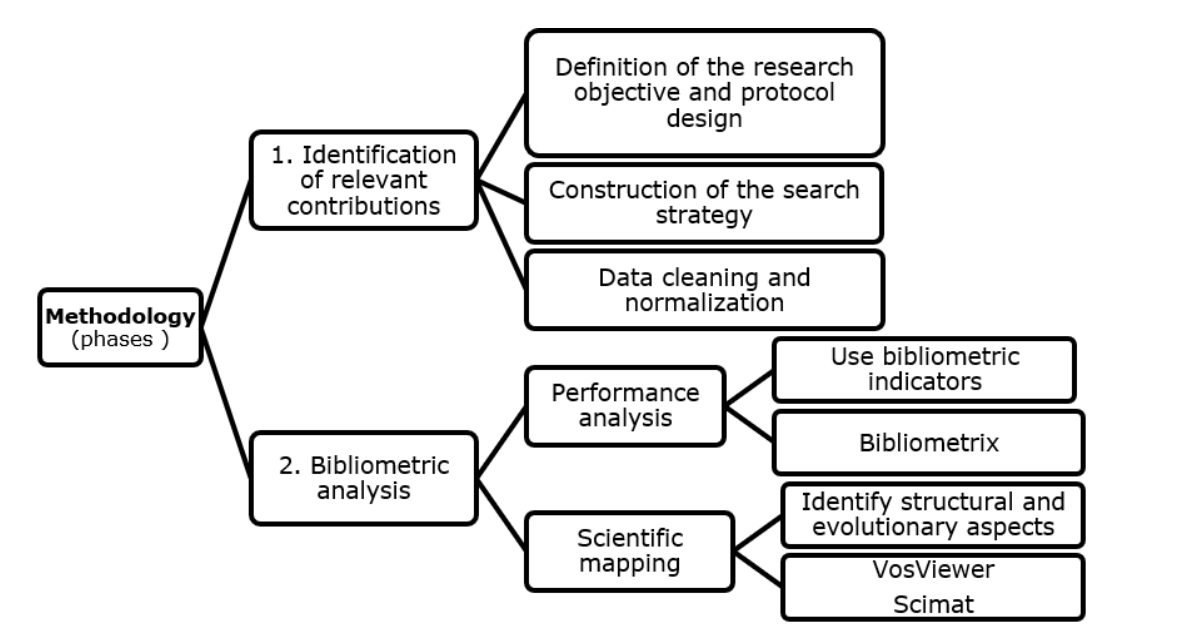
In line with previous research, this study adopted a structured five-step methodological approach: (1) definition of the research objective and protocol design, (2) construction of the search strategy, (3) data cleansing and normalization, (4) bibliometric analysis using Bibliometrix and VOSviewer, and (5) scientific mapping analysis using SciMAT (Chen et al., 2023; Marzi et al., 2025; Ullah & Asghar, 2023). These steps were grouped into two phases (see Figure 1). Phase 1 focused on identifying relevant contributions, while Phase 2 involved developing the bibliometric analysis.
The bibliometric analysis was divided into two stages: performance analysis and scientific mapping (Donthu et al., 2021; Noyons et al., 1999). The objective of the first stage is to evaluate the quantitative characteristics of publications from a descriptive perspective, using bibliometric indicators such as document type, journal, number of citations, country, and authors, following the approach of Narin and Hamilton (1996). On the other hand, mapping, or scientific cartography, aims to identify the structural and evolutionary aspects of research areas through content analysis, generating bibliometric maps that spatially represent the relationships between different topics or technologies in this case, and facilitates understanding how they are connected to each other so that it is possible to determine which ones are consolidated within the field of study, or which ones are totally emerging (Cobo et al., 2011; Small, 1999).
Figure 1.
Methodological design
Source: Adapted from Chen et al., 2023; Donthu et al., 2021; Marzi et al., 2025; Noyons et al., 1999; Ullah & Asghar, 2023.
Data collection
Relevant contributions were extracted from Scopus, a platform recognized for its multidisciplinary coverage and suitability for bibliometric studies. The search was conducted within the fields “title,” “abstract,” and “keywords,” combining terms associated with converging technologies and organizational onboarding processes. The inclusion criteria were defined as peer-reviewed scientific articles published between January 2004 and March 2025, written in English. This time frame was selected to ensure both representativeness and relevance, considering the recent and rapidly evolving nature of converging technologies. The records were exported in BibTeX format for processing in Bibliometrix and in CSV format for analysis in SciMAT.
In defining the search strategy, it is important to recognize that onboarding is not consistently represented under a single term in academic literature. Rather than being a bounded administrative activity, onboarding is conceptualized as a multidimensional process of organizational integration that encompasses learning, adaptation, and socialization (Bauer, 2010; Bauer & Erdogan, 2011). In their widely cited 4 Cs framework, Bauer & Erdogan (2011) describe onboarding as comprising four core dimensions: Compliance, Clarification, Culture, and Connection.
Each of these dimensions is operationalized in practice through activities that are indexed in the literature under different terminologies. The Compliance dimension, which involves the transmission of organizational rules, safety protocols, and regulatory requirements, is frequently addressed under the terms “industrial training” and “corporate training” (Noe et al., 2019). The Clarification dimension, focused on role understanding and performance expectations, is commonly associated with “employee training” and “employee orientation” programs (Klein et al., 2015). The Culture dimension, referring to the assimilation of organizational values and informal norms, is extensively studied within the “workplace learning” literature, particularly in relation to informal and experiential learning processes (Illeris, 2011; Marsick & Watkins, 2001). Finally, the Connection dimension, which involves the development of interpersonal relationships and professional networks, is addressed through research on mentoring, communities of practice, and social learning (Lave & Wenger, 1991; Wenger, 1998).
From this perspective, onboarding can be understood as a learning ecology that extends across multiple organizational practices and conceptual domains. As such, studies examining the integration and development of new employees are not always explicitly labeled under the term “onboarding,” but are frequently published under broader descriptors such as “workplace learning,” “corporate training,” or “employee training,” particularly in fields such as engineering, healthcare, and vocational education (Billett, 2011; Fuller & Unwin, 2004).
This terminological diversity also reflects the way in which the HRD and organizational behavior literature conceptualizes onboarding as the initial phase of a continuous workplace learning trajectory rather than a discrete event (Bauer, 2010; Chao et al., 1994). Consequently, restricting the search strategy to the terms “onboarding” or “organizational socialization” alone would risk excluding a substantial body of relevant literature that addresses the same underlying processes through different disciplinary lenses.
Accordingly, the search strategy incorporated both explicit onboarding-related terms and broader organizational learning terms, allowing for a more comprehensive representation of the phenomenon under study. This approach is consistent with established bibliometric guidelines, which recommend balancing conceptual precision with sufficient terminological coverage to avoid corpus truncation and ensure a representative dataset (Donthu et al., 2021; Paul & Criado, 2020).
Tools
The Bibliometrix package in Rstudio and its Biblioshiny graphical interface were used to generate indicators of scientific productivity, collaboration, most relevant sources, and co-occurrence networks (Aria & Cuccurullo, 2017). VOSviewer was used to visualize maps of co-occurrence networks, density, and overlap. SciMAT was used for scientific mapping, with the latter being used to perform a longitudinal analysis divided into four periods: 2004–2010, 2011–2015, 2016–2020, and 2021–March 2025. To better observe the thematic evolution over time, in accordance with Cobo et al. (2011), this tool used the equivalence index for normalization, the simple centers algorithm for cluster aggregation, and the inclusion and Jaccard indices to evaluate the connection and evolution between themes.
RESULTS
Identification of relevant contributions
The SCOPUS search yielded 1,114 records. Equation 1 shows the combination of terms related to onboarding and training in organizational environments, together with concepts linked to converging technologies. The results were limited to scientific articles written in English. After a process of refinement and standardization with Bibliometrix, 1,091 documents were retained, as duplicates were eliminated, author and institution names were homogenized, and keywords were standardized to ensure data quality and consistency.
Equation 1: TITLE-ABS-KEY (“employee onboarding” OR “employee training” OR “workplace learning” OR “corporate training” OR “employee orientation” OR “industrial training”) AND (TITLE-ABS-KEY (technolog* OR converg* OR nbic OR emerg*)
Table 1 summarizes the main bibliometric indicators derived from the analyzed corpus. It shows that the average number of citations per document is 16.69, which reflects the academic relevance of the topic. The number of publications on this topic is growing at a rate of 3.15% per year, indicating continued interest in the integration of converging technologies into onboarding processes. In this regard, some analyses of scientific literature on the topic of onboarding and technology have also reported similar growth rates (Donthu et al., 2021).
|
Table 1. Summary of bibliometric entities |
|
|
Description |
Results |
|
General information about the data |
|
|
Sources (journals, books, etc.) |
647 |
|
Documents |
1091 |
|
Annual growth rate (%) |
3.15 |
|
Average age of documents |
7.78 |
|
Average number of citations per document |
16.69 |
|
Document content |
|
|
Key words plus (id) |
2484 |
|
Authors’ keywords (de) |
3310 |
|
Authors |
|
|
Total number of authors |
3022 |
|
Authors of individually authored documents |
213 |
|
Collaboration between authors |
|
|
Documents with individual authorship |
231 |
|
Average number of co-authors per document |
3.03 |
|
Percentage of international co-authorships (%) |
22.09 |
Source: own elaboration.
The results from Bibliometrix, based on the search conducted in SCOPUS, also reveal a diversity of scientific publication spaces related to this topic, as evidenced by the fact that 647 different sources were identified where these publications have been published. The search also lays the groundwork for identifying thematic connections between all these publications, as 2,484 different keywords were identified across the entire set of registered manuscripts. This is a significant number that will allow for more in-depth analysis in the second phase of this study. Another particularly relevant aspect is the high level of cooperation between authors, particularly those from different countries. As shown in Table 1, each manuscript was written by an average of more than three authors (3.03), and 22.09% of the publications identified were co-authored internationally. These results provide a preliminary reading of the state of the use of onboarding technologies as a relevant and cross-cutting field of study, driven by technological advances and the need for organizational adaptation (Donthu et al., 2021; Tranfield et al., 2003).
Bibliometric analysis
Performance analysis
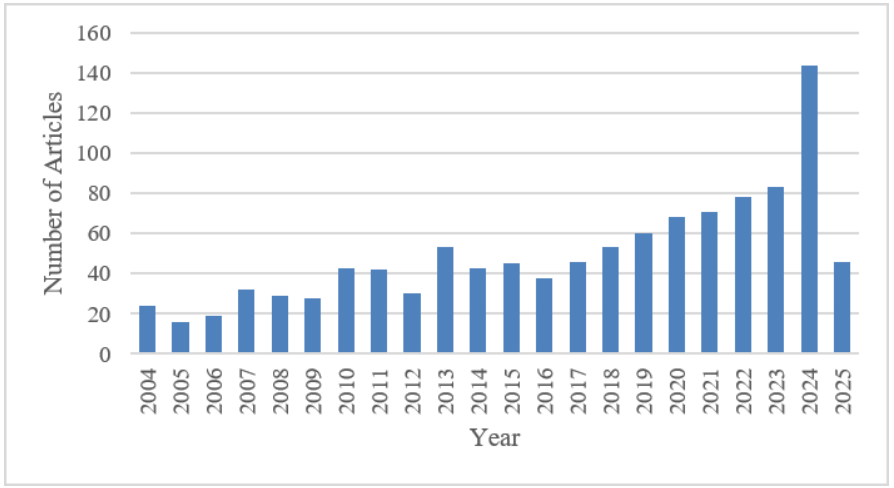
Scientific output peaked significantly in 2024, when more than 140 articles were published (see Figure 2). As of March 2025, more than 40 publications have already been recorded, suggesting that the upward trend could continue throughout the year. These are indicators of a growing recognition of the value of technologies such as artificial intelligence, the Internet of Things, and virtual reality in transforming the processes of labor incorporation, as these technologies are being used as tools to improve the onboarding experience for new employees, optimize the efficiency of processes once onboarding is complete, and improve talent retention by creating a sense of belonging within the organization (Donthu et al., 2021).
Figure 2.
Number of publications January 2004- March 2025
Source: own elaboration.
Influence of sources
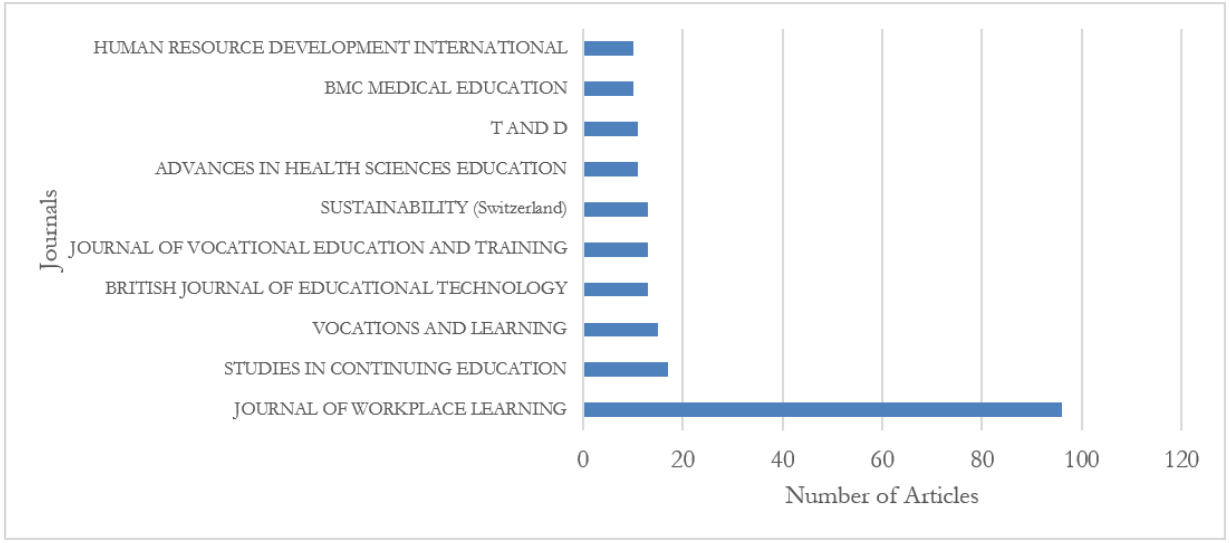
As shown in Figure 3, the Journal of Workplace Learning leads the group with 96 published manuscripts, making it the most influential and specialized channel in this field. This is logical considering that the nature of the journal is associated with learning in the workplace, and recently its link with converging technologies has become more evident. It is followed by journals such as Studies in Continuing Education (17), Vocations and Learning (15), and the British Journal of Educational Technology (13). Furthermore, it is confirmed that research on onboarding has transcended the exclusive realm of human resources to reach sectors such as health, sustainability, and technological innovation, as a significant number of publications have been made in journals with a multidisciplinary focus, such as Sustainability (13) and BMC Medical Education (10).
Figure 3.
Top 10 journals with the greatest impact
Source: own elaboration.
Main countries
Nearly 50% of research on this topic has been produced in ten countries (see Table 2). The United States (the country with the highest scientific productivity) accounts for 11.0% of all published documents, followed by the United Kingdom (7.2%), Australia (6.3%), India (4.4%), and China (3.9%). This analysis adds to the consistent prominence of the United States in scientific production in multiple areas of knowledge, which can be attributed to various structural factors, such as the high number of active researchers, the strength of its scientific and technological infrastructure, and significant investment in research from both the public and private sectors, including universities and innovation centers. In particular, the development of human talent (including onboarding), organizational training, and the incorporation of emerging technologies have been strategic priorities in the academic and business spheres in this country. Likewise, countries such as the United Kingdom, Australia, and India are beginning to emerge as relevant players in research on this topic. The prominent presence of nations such as China, Malaysia, the Netherlands, Sweden, and Finland indicates geographical diversification, which gives this line of research an international, multidisciplinary, and strategic character and makes it important to associate many of these studies with the design of innovative practices for human capital management in organizational environments.
|
Table 2. Top 10 Countries with Most Publications |
||
|
Country |
Articles |
% Articles |
|
USA |
120 |
11.0 |
|
United Kingdom |
79 |
7.2 |
|
Australia |
69 |
6.3 |
|
India |
48 |
4.4 |
|
China |
43 |
3.9 |
|
Canada |
35 |
3.2 |
|
Sweden |
35 |
3.2 |
|
Malaysia |
26 |
2.4 |
|
Netherlands |
25 |
2.3 |
|
Finland |
24 |
2.2 |
Source: own elaboration.
Most influential contributions
The most cited article (see Table 3) is Lee et al. (2011), a study that seeks to investigate the factors that influence employees’ intention to use e-learning systems, combining the Diffusion of Innovation Theory with the Technology Acceptance Model (TAM). It aims to help decision-makers in organizations plan, evaluate, and implement the use of these systems. Technology is the central object of study in terms of its acceptance and use by employees. The findings suggest that organizations should provide the benefits of well-designed e-learning in onboarding. Mann (2011) presents a literature review on learning theories in medical education. It provides a theoretical lens for understanding the learning aspects of onboarding and continuing professional development, highlighting that learning is not only individual but also a social and collective process.
Al-Gahtani’s study (2016) validates TAM3 in Arab university contexts, demonstrating that perceptions of usefulness and ease of use influence the adoption of e-learning platforms. It proposes designing onboarding supported by educational technologies. Webel et al. (2013) develop an augmented reality (AR) platform for training in maintenance tasks. Its application is directly related to technical onboarding and training in specific operational skills in industrial environments, improving learning through this convergent technology.
Ottenbacher and Gnoth (2005) identify human factors (training, empowerment) as key to innovation in the hotel sector. The research highlights the role of onboarding as a mechanism for preparing for innovative change, employee engagement, and strategic human resource management. Ketata et al. (2015) show that staff training has a greater impact on sustainable innovation than spending on research and development (R&D) to promote sustainable innovation. This supports the use of training technologies as part of onboarding in innovative organizations to adapt to new challenges.
Delmas and Pekovic (2013) study the direct relationship between the adoption of environmental standards and labor productivity, and two key mediating mechanisms: employee training and improved interpersonal contacts within the company. Although they do not explore a specific technology, they argue for the use of technological tools in the initial training process. Kamphuis et al. (2014) explore the potential of convergent technology such as AR in medical education for complex learning and skills transfer. The technology enables advanced visualization and simulation, useful for clinical onboarding and learning complex tasks.
Bok et al. (2013) propose a continuous assessment model for competency-based learning, workplace assessment, and training in veterinary medical education. It involves technologies such as digital portfolios and easy-to-use assessment tools on mobile devices that are an integral part of the onboarding process. Finally, Cheng (2012) demonstrates that the quality of the system, service, and instructor affects employee acceptance of e-learning platforms for knowledge acquisition in organizations. Designing student-centered programs, providing technical support, user-friendly interfaces, and a positive attitude on the part of instructors are important to ensure the successful adoption and continued use of these systems for training, observing a continuous form of onboarding to new knowledge or tools.
|
Table 3. Top 10 Most Cited Documents |
|||||
|
Title |
Authors |
Journal |
Year of Publication |
No. Of citations |
Average inter citations |
|
Adding innovation diffusion theory to the technology acceptance model: Supporting employees’ intentions to use e-learning systems |
Lee et al. (2011) |
Educational Technology and Society |
2011 |
466 |
31.07 |
|
Theoretical perspectives in medical education: Past experience and future possibilities |
Mann (2011) |
Medical Education |
2011 |
358 |
23.87 |
|
Empirical investigation of e-learning acceptance and assimilation: A structural equation model |
Al-Gahtani (2016) |
Applied Computing and Informatics |
2016 |
356 |
35.60 |
|
An augmented reality training platform for assembly and maintenance skills |
Webel et al. (2013) |
Robotics and Autonomous Systems |
2013 |
353 |
27.15 |
|
How to develop successful hospitality innovation |
Ottenbacher & Gnoth (2005) |
Cornell Hotel and Restaurant Administration Quarterly |
2005 |
314 |
14.95 |
|
The role of internal capabilities and firms’ environment for sustainable innovation: Evidence for Germany |
Ketata et al. (2015) |
R and D Management |
2015 |
239 |
21.73 |
|
Environmental standards and labor productivity: Understanding the mechanisms that sustain sustainability |
Delmas & Pekovic (2013) |
Journal of Organizational Behavior |
2013 |
234 |
18.00 |
|
Augmented reality in medical education? |
Kamphuis et al. (2014) |
Perspectives on Medical Education |
2014 |
232 |
19.33 |
|
Programmatic assessment of competency-based workplace learning: When theory meets practice |
Bok et al., (2013) |
BMC Medical Education |
2013 |
211 |
16.23 |
|
Effects of quality antecedents on e-learning acceptance |
Cheng (2012) |
Internet Research |
2012 |
202 |
14.43 |
Source: own elaboration.
Concurrence of terms
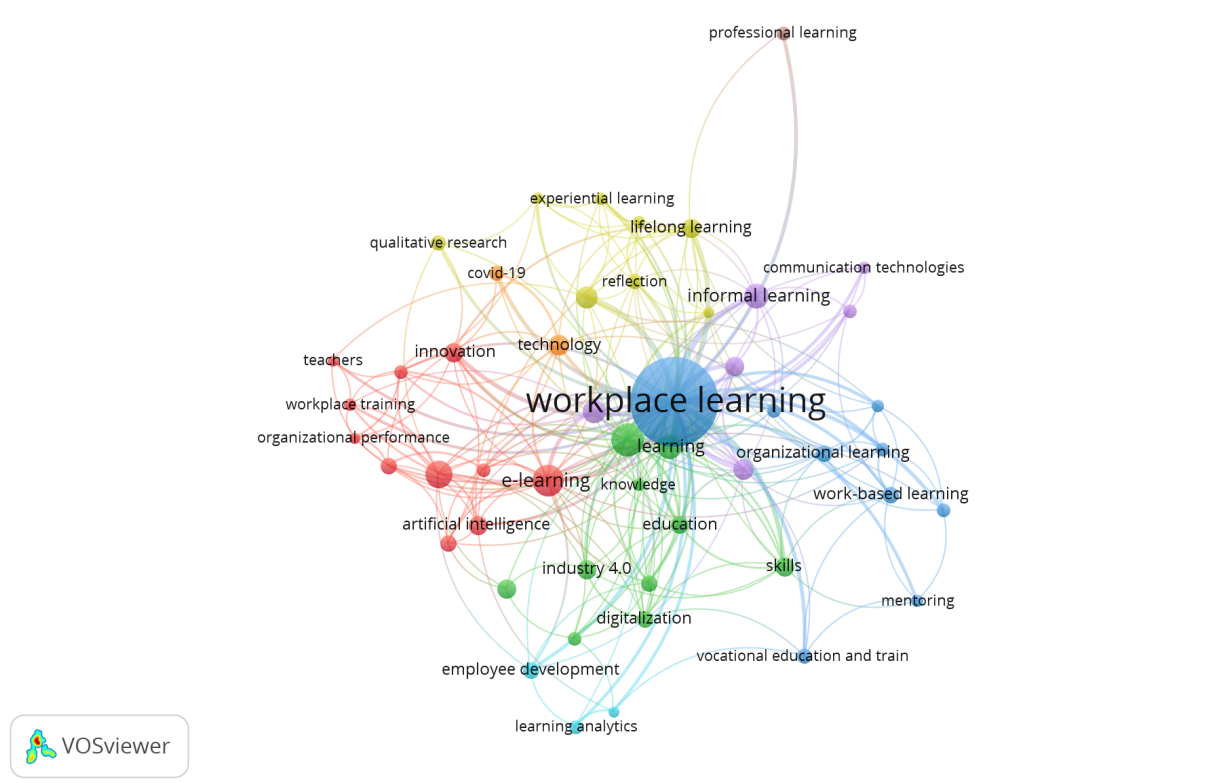
An analysis focused on the author keywords of the 1,091 selected articles allowed the research team to get a little closer to the thematic intentions and identify key areas and conceptual patterns. Of the total of 3,310 author keywords, the 50 most frequent were selected, applying a minimum threshold of six occurrences. In total, eight clusters were identified, the details of which are presented in Table 4.
|
Table 4. Cluster analysis by VOSviewer grouping |
||
|
Cluster / Color |
Terms included |
Main focus of cluster |
|
1 Red |
artificial intelligence; e-learning; employee training; human resource development; human resource management; innovation; online learning; organizational performance; teachers; training and development; workplace training. |
Technology plus human talent management. Represents the modern corporate training ecosystem in which AI and e-learning are integrated with traditional practices. It focuses on how these technological innovations improve organizational performance through new training methods. It still recognizes the role of the human trainer within these technological systems. |
|
2 Green |
Digitalization; education; industry 4.0; information technology; knowledge; learning; motivation; skills; training; virtual reality |
Digital educational transformation in Industry 4.0. Connects knowledge and skills with technologies such as virtual reality. Focus on human factors. Represents organizations that are adapting to prepare workers for an increasingly digitized work environment. |
|
3 Blue |
Learning methods; learning organizations; mentoring; mobile learning; organizational learning; vocational education and training; work-based learning; workplace; workplace learning |
Learning methodologies in the organizational context. Mobile learning and work-based learning. Importance of integrating education with real work practice. Systemic approach in which the organization participates in a continuous cycle of learning and improvement. The cluster represents conceptual frameworks for implementing learning in work environments. |
|
4 Yellow |
Development; experiential learning; feedback; lifelong learning; professional development; qualitative research, reflection, situated learning |
Learning methodologies focused on practice and critical self-reflection. Continuous lifelong learning. The cluster focuses on the human aspect of learning: reflection and feedback for effective professional development. |
|
5 Violet |
Communication technologies; continuing professional development; corporate training; higher education; informal learning; knowledge management |
Higher education, corporate training and continuing professional development. Focuses on how ICT facilitates informal learning and knowledge management within organizations. |
|
6 Light Blue |
Employee development; learning analytics; self-regulated learning |
Importance of data analytics in employee development. More personalized and data-driven methodologies for professional development. The cluster represents the trend toward nterproe learning in which data informs. |
|
7 Orange |
Covid-19; technology |
Transformative impact of the pandemic on educational technology in workplace settings. How COVID-19 has acted as a catalyst for accelerated adoption of technology solutions for remote and virtual learning in organizations. |
|
8 Brown |
Professional learning |
Professional learning as a stand-alone concept. It acts in a cross-cutting manner, with the capacity to impact multiple dimensions of learning in the work context. |
Source: own elaboration.
Figure 4.
Network map of co-occurrences of author keywords
Source: own elaboration.
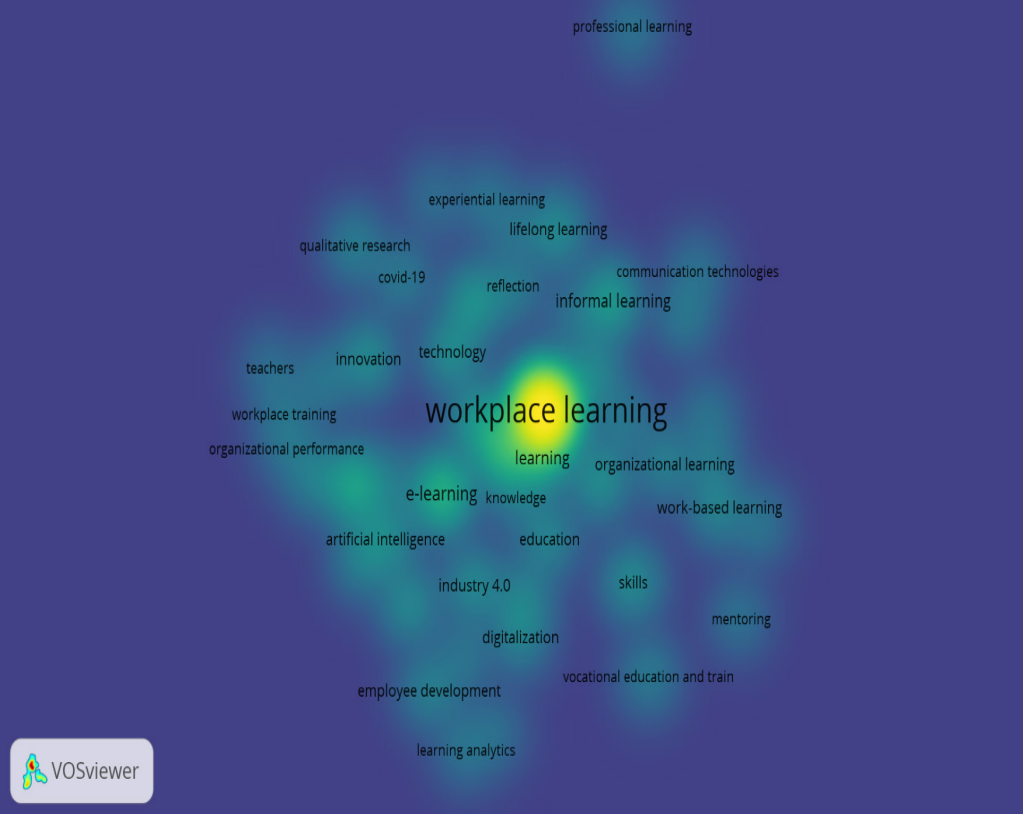
Figures 4 and 5 show the network map and density map, respectively, which reflect consistent findings. In Figure 5, the areas with warmer colors (yellow and light green) denote a higher concentration and frequency of terms, while cooler tones (blue and violet) indicate a lower frequency. The most prominent central term is workplace learning. Surrounding it are closely related concepts such as learning, e-learning, organizational learning, informal learning, and education. Other topics that are more relevant to this research also emerge, such as artificial intelligence, industry 4.0, digitalization, and learning analytics, which reflect an emerging interest in the application of converging technologies to personalize, automate, and optimize job training processes.
Likewise, terms such as employee development, mentoring, and skills once again highlight the importance that authors have placed on these concepts in their research. On the other hand, the presence of concepts such as COVID-19 and remote learning (to a lesser extent) suggests that the pandemic acted as a catalyst for the digital transformation of onboarding and training processes. These findings also coincide with the clusters identified by the algorithm and presented in Table 4.
Figure 5.
Density map of author keyword co-occurrences
Source: own elaboration.
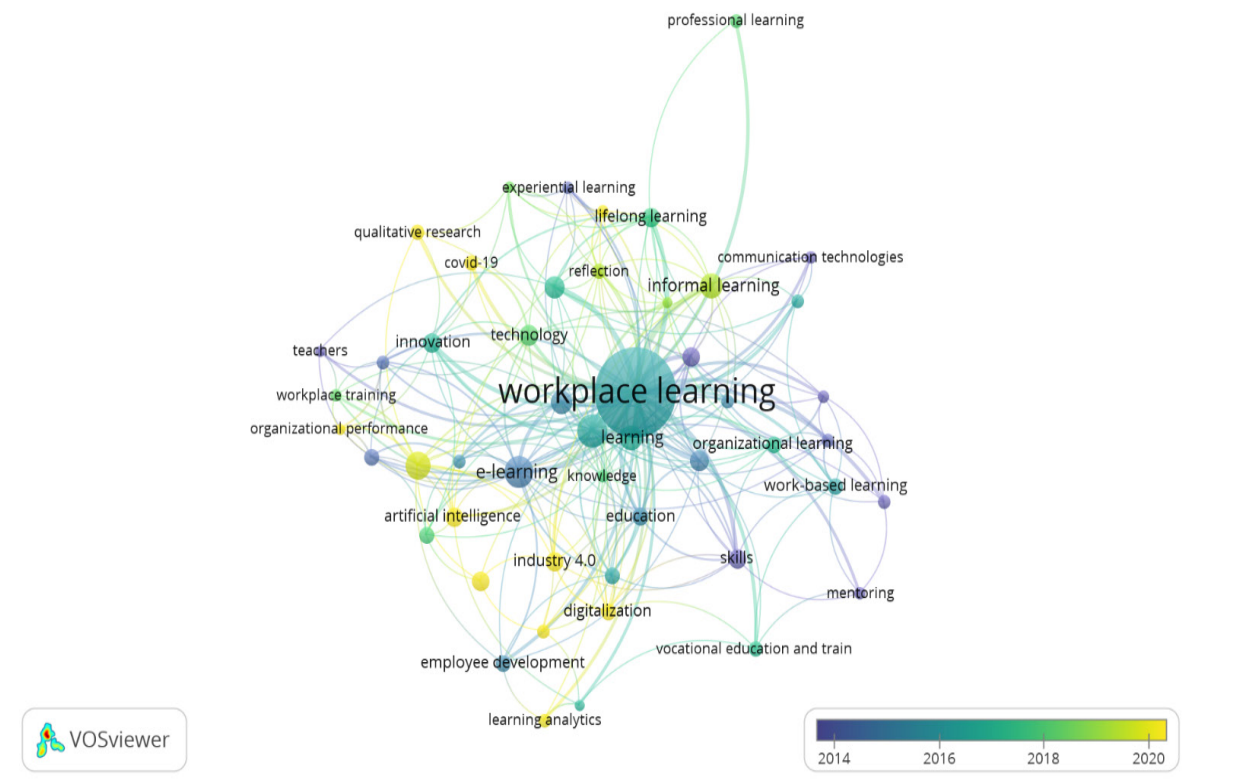
To complement the analysis, an overlay map is added, shown in Figure 6. The nodes colored in shades of yellow and light green, such as artificial intelligence, digitalization, industry 4.0, and COVID-19, are more recent terms that have gained prominence since 2018. Their location on the periphery, but connected, indicates that they are emerging topics, aligned with post-pandemic organizational transformations and the advance of the fourth industrial revolution. This pattern coincides with the growing literature addressing artificial intelligence in the personalization of learning and the use of simulators or augmented reality in labor integration processes (Kamphuis et al., 2014; Webel et al., 2013).
On the other hand, older terms such as organizational performance, teachers, and workplace training, identified with dark blue tones and in areas further from the center, are evidence of a thematic shift in the literature from more traditional approaches to perspectives focused on digital, flexible, and adaptive learning. It is worth noting the dense connection between nodes such as informal learning, lifelong learning, reflection, and experiential learning, which reinforce the idea that onboarding processes are no longer conceived as isolated induction activities, but as continuous, reflective experiences connected to the employee’s professional trajectory (Bok et al., 2013; Mann, 2011). Figure 6 shows that terms such as learning analytics and communication technologies are gradually becoming integrated.
Figure 6.
Overlay map of author keyword co-occurrences
Source: own elaboration.
Scientific mapping
In accordance with previous studies addressing co-occurrence analysis in longitudinal scenarios, four time segments were defined, taking into account the growth patterns identified in scientific production: (a) 2004–2010, (b) 2011–2015, (c) 2016–2020, and (d) 2021–March 2025 (Cobo et al., 2012; Martínez et al., 2015). This segmentation captures how the research field has evolved and the changes in research on technologies applied to onboarding processes. Segment (a) allows us to trace the conceptual and theoretical roots; (b) shows progressive growth around emerging technological approaches; (c) reflects a maturing field; and (d) shows a set of publications associated with digital transformations accelerated by global phenomena such as the COVID-19 pandemic and the massive adoption of technologies such as AI, machine learning, and automation. Table 5 shows the methodological approach used to identify consolidated thematic cores, emerging themes, and key conceptual transitions.
|
Table 5. Criteria for thematic and evolutionary analysis |
|
|
Criterion |
Reference/method |
|
Normalisation |
Callon equivalence index (Callon et al., 1991) |
|
Clusters |
Simple centre algorithm |
|
Thematic relevance |
Hirsch’s H index (2005) |
|
Thematic evolution between periods |
Inclusion index and Jaccard index (Peters & Van Raan, 1993) |
Source: own elaboration.
Evolution analysis
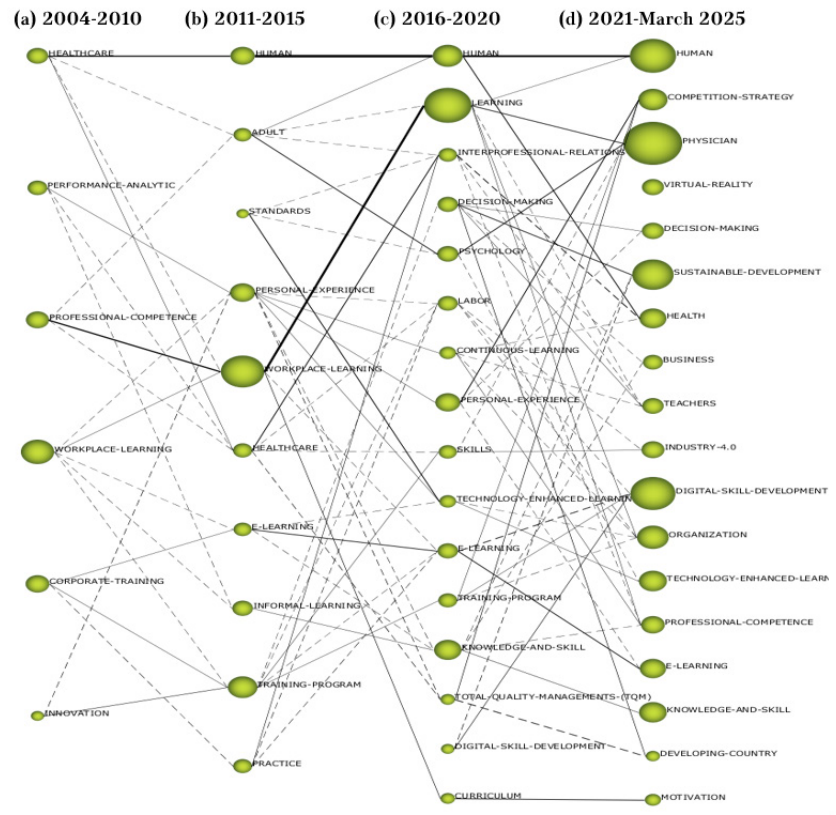
Figure 7 shows four columns corresponding to the four time segments identified. In these columns, each node represents a topic, and its size represents the number of publications associated with the respective segment. There is a clear upward trend in thematic diversity and research volume. In the 2004-2010 segment, the conceptual foundations of the field were established, with a predominant focus on traditional corporate training within the health sector. The terms healthcare and professional competence emerged as fundamental nodes, reflecting an initial concern for the development of specific technical skills in health professionals.
Figure 7.
Map of the evolution of thematic clusters over four periods (2004-2010, 2011-2015, 2016-2020, 2021-March 2025)
Source: own elaboration.
The following period (2011-2015) marked a turning point characterized by the emergence of e-learning, and the concept of informal learning gained notoriety. Workplace learning, a crucial area, provided value to the work environment as a privileged space for professional development. A curious aspect is the appearance of the relevant term: training program, referring to organizational processes aimed at teaching skills, knowledge, or competencies to employees. Although this term has been in scientific literature since the 1940s, in the search conducted for this research, it is only relevant from segment (b) onwards, especially after 2010, when this term is recontextualized in studies on converging technologies, digital onboarding, and e-learning.
The following segment (2016-2020) shows the adoption of technologies in training processes and a growing concern for quality, interdisciplinary collaboration, and continuous learning, with concepts such as technology-enhanced learning, digital skill development, total quality management (TQM), curriculum, skills, continuous learning, knowledge and skill, and interprofessional relations. Terms from previous periods such as e-learning, training program, personal experience, and human remain, suggesting a conceptual and functional evolution of these topics. Words such as decision-making and psychology demonstrate an interest in human, cognitive, and strategic factors.
Finally, in the most recent time frame (2021-March 2025), organizational onboarding is consolidated as a strategic practice, integrated with the digital transformation driven by Industry 4.0. Terms such as Technology Enhanced Learning, Virtual Reality, and Digital Skill Development reflect the use of converging technologies and digital platforms to personalize and optimize the onboarding experience. Key themes such as E-learning, Knowledge and Skill, and Professional Competence persist, framed within a talent development-focused approach. Clusters such as Competition Strategy, Decision Making, Business, and Organization are emerging, showing how onboarding directly impacts competitiveness and corporate culture. The human dimension remains fundamental, evidenced by terms such as Human, Motivation, and Teachers, while the emergence of Sustainable Development, Health, and Developing Country signals a shift toward more inclusive, ethical, and global models.
Figure 8 presents a thematic overlap map that allows us to analyze the evolution of scientific knowledge related to onboarding and the use of converging technologies in this context. Each circle represents the number of unique keywords used in articles published during each time interval, allowing us to observe the growth of the field: from 143 terms in the period 2004–2010 to 224 in the period 2021–March 2025. The arrows indicate the degree of thematic inheritance, i.e., how many key terms remain or are reused between one period and the next. For example, of the 143 terms in the first period, 120 remain in the second, which is represented by the arrow connecting the two circles. The values 120, 148, and 179 reflect this degree of conceptual continuity between the different time periods, and their progressive increase suggests a cumulative process of consolidation in the field. The numbers in parentheses at the bottom of each arrow (e.g., (83.9%) between the first and second periods) indicate the percentage of thematic overlap between consecutive periods. This percentage expresses what proportion of the terms from the previous period are still present in the next, reinforcing the idea of sustained thematic evolution. Taken together, this map reveals that the field of research is not only growing in volume, but also enriching itself and maintaining a common conceptual basis over time. This analysis is complemented by the cluster map (Figure 7), which visualizes how certain terms are maintained, emerge, or disappear over time. For example, the terms “training program” and “e-learning” appear for the first time in the second period (2011–2015) as part of a cluster linked to informal learning, and they manage to persist into the following periods, consolidating themselves in relation to terms such as “technology-enhanced learning” and “knowledge and skill.” The two maps, analyzed together, show a process of thematic maturation, in which onboarding and training become key fields of research within organizational digital transformation.
Figure 8.
Thematic overlap map

Source: own elaboration.
Strategic mapping and cluster networks
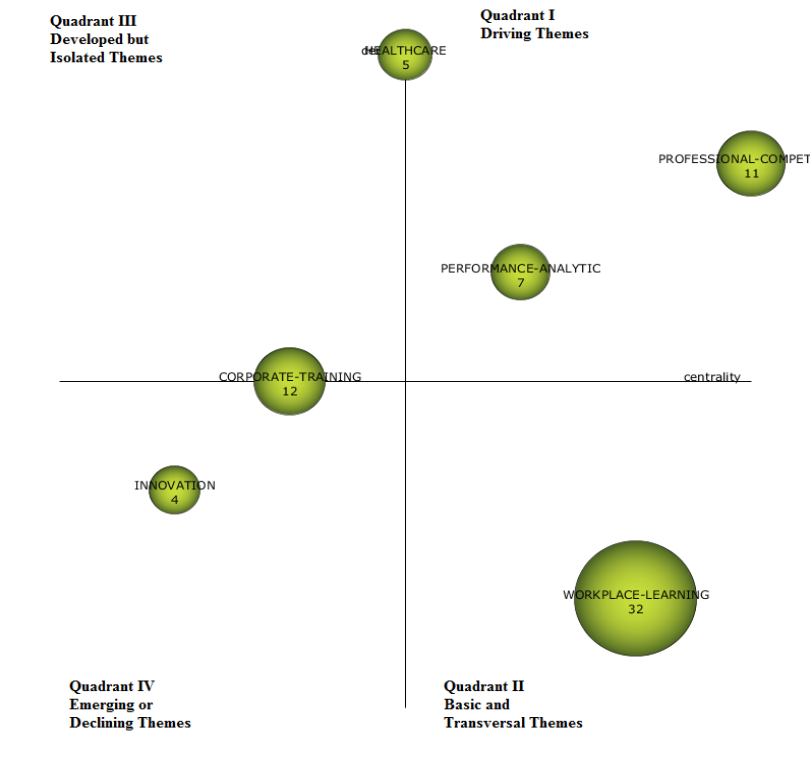
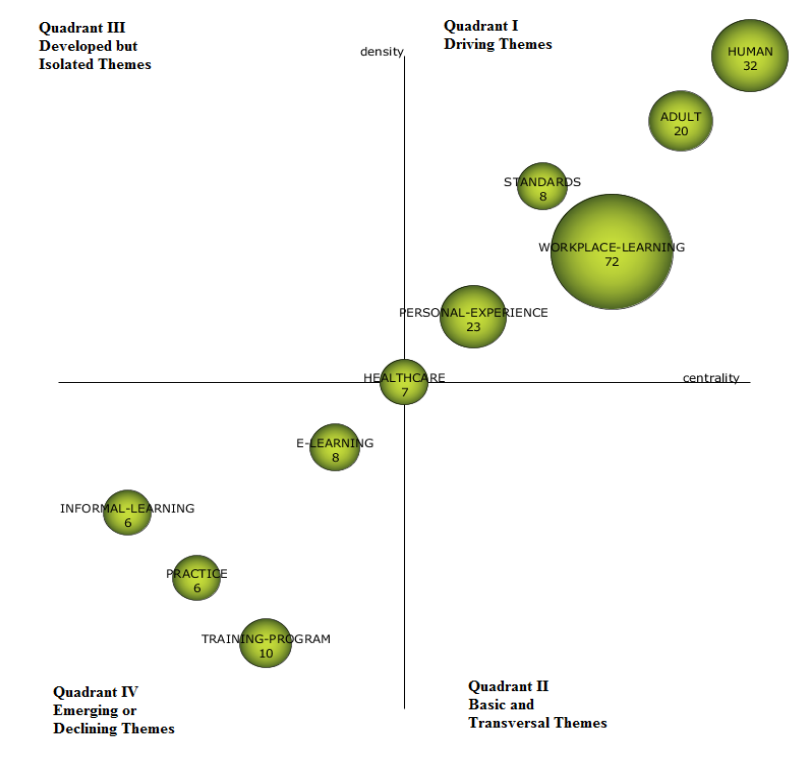
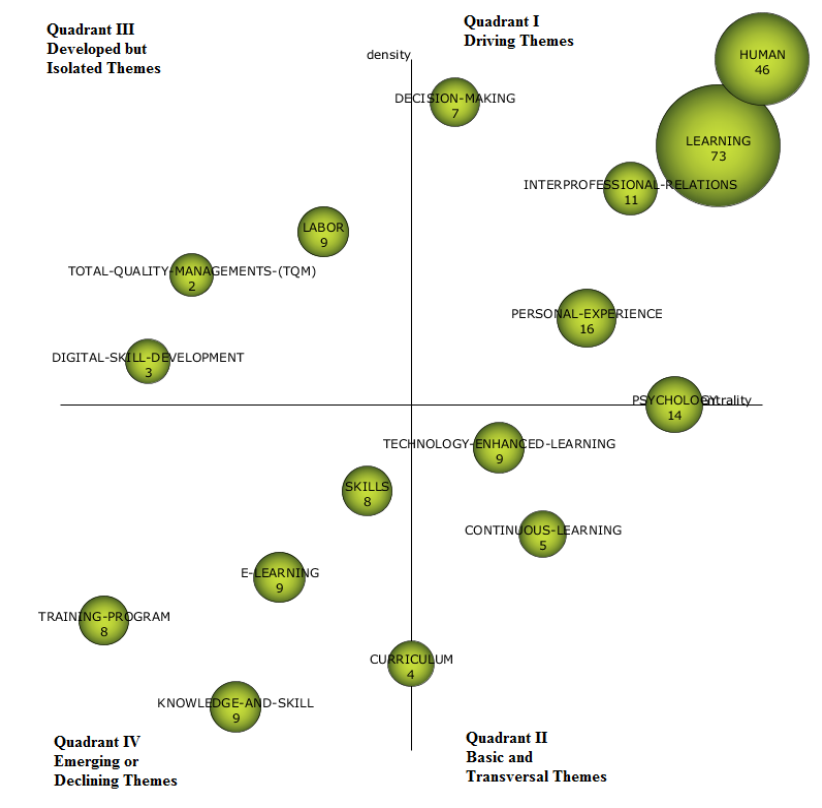
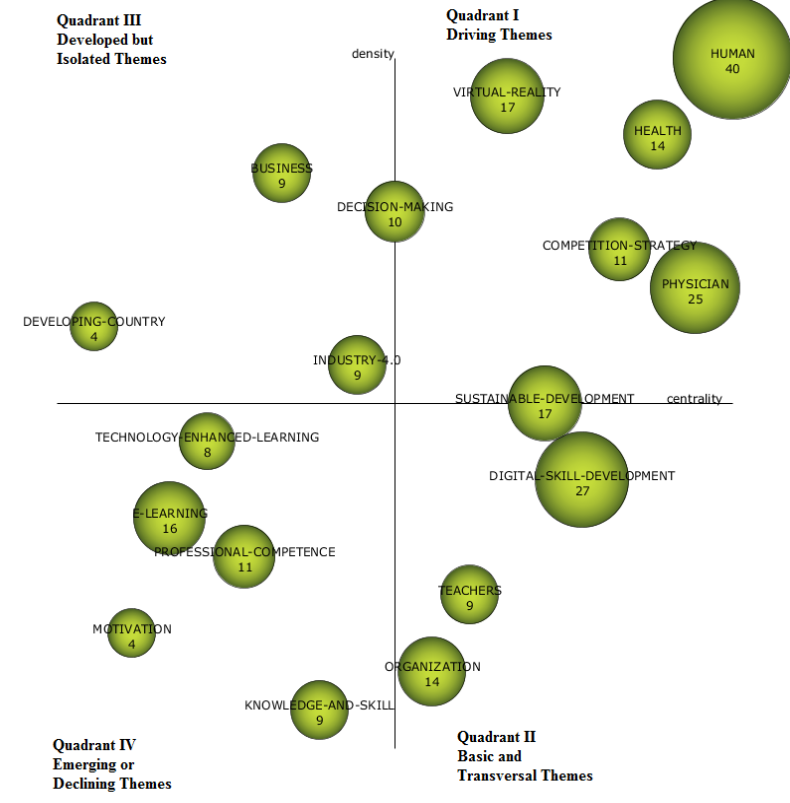
Strategic analysis segments topics into four quadrants according to their centrality and density, so that their structural importance and degree of internal development can be assessed (Aria & Cuccurullo, 2017; Cobo et al., 2011). Each node in the diagram (Figure 9. A,b,c,d) represents a topic, and the size of the sphere is related to the number of documents that comprise it.
The upper right quadrant (Quadrant I) corresponds to driving themes, which are topics with high centrality and density that are well developed and play a key role in structuring knowledge. The lower right quadrant (Quadrant II) groups together basic and cross-cutting themes that are essential due to their high level of connection with other topics, although they are still in the process of theoretical development. The upper left quadrant (Quadrant 3) contains specialized or isolated topics, characterized by high density but low centrality; although mature, they have less connection with the rest of the field. Finally, the lower left quadrant (Quadrant IV) groups together emerging or declining topics, which have low levels of development and thematic articulation and could represent nascent areas with growth potential or lines that have lost research relevance (Cobo et al., 2011; Xie et al., 2020). Table 6 summarizes the findings obtained from the visual analysis shown in Figure 9. The numbers in parentheses in Table 6 represent the total number of documents found associated with each topic.
|
Table 6. Summary of strategic mapping |
|||||
|
Segment |
Themes Drivers |
Core and Cross-cutting Themes |
Developed but Isolated Themes |
Emerging or Declining Themes |
Trend/Explanation |
|
2004-2010 (a) |
-Professional Competence (11) -Performance Analytic (7) |
-Workplac Learning (32) |
-Healthcare (5) |
-Innovation (4) -Corporate Training (12) |
Training stage focused on professional competencies and contextualized learning. Digital technologies have not yet emerged as a central axis, with traditional corporate training approaches predominating. |
|
2011-2015 (b) |
-Workplac Learning (72) -Human (32) -Adult (20) -Standards (8) -Personal Experience (23) |
There are no topics clearly positioned in this quadrant |
There are no topics clearly positioned in this quadrant |
-E-learning (8) -Informal Learning (6) -Practice (6) -Training Program (10) |
Consolidation of situated learning with exponential growth of Workplace-Learning. Evident anthropocentric shift with Human as the second dominant theme. Emergence of e-learning and informal learning as digital concepts, but still peripheral. Healthcare loses position on the border between quadrants. Emphasis on personal experience and andragogical approach (Adult). |
|
2016-2020 © |
-Learning (73) -Human (46) -Interprofessional relations (11) -Personal experience (16) -Psychology (14) -Decision Making (7) |
-Technology Enhanced Learning (9) -Continuous learning (5) -Curriculum (4) |
-Labor (9) -Total Quality Management (2) -Digital Skill Development (3) |
-E-learning (9) -Training program (8) -Knowledge and Skill (9) -Skills (8) |
Significant thematic diversification with integration of psychological and cognitive perspectives. Technology-enhanced learning (TEL) emerges as an integrative concept, Surpassing traditional e-learning. Increased emphasis on nterprofesional relationships and decisional processes |
|
2021-March 2025 (d) |
-Human (40) -Health (14) -Physician (25) -Virtual Reality (17) -Competition Strategy (11) -Sustainable development (17) |
-Digital skill development (27) -Organization (14) -Teachers (9) |
-Business (9) -Decision Making (10) -Industry 4.0 (9) |
-Motivation (4) -Technology Enhanced Learning (8) -E-learning (16) -Professional Competence (11) |
Consolidation of the anthropocentric approach with strong integration of immersive technologies (VR) and sustainability concerns. Emergence of Industry 4.0 as a conceptual framework, but not yet fully integrated. Development of digital skills is positioned as a fundamental pillar while traditional e-learning loses relevance in the face of more integrative models. |
Source: own elaboration.
Central and emerging themes
The strategic analysis reveals an evolution in conceptual approaches and in the degree of technological integration. During the first period (2004–2010), the field was structured mainly around traditional organizational categories, such as workplace learning, professional competence, and performance analytics. These themes, located in the high centrality quadrants, mark a stage dominated by face-to-face models and functional approaches to training, with little presence of technological innovations. This pattern can be interpreted, in part, as a manifestation of what Rogers (2003) describes as the group of laggards, who adopt technology only when it has already been widely disseminated. However, it is also important to consider that many of the technologies currently associated with onboarding, such as virtual reality, standardized e-learning platforms, or intelligent solutions, were not yet fully available or accessible in the organizational environment of that period.
Figure 9.
Strategic mapping periods: 2004-2010 (a); 2011-2015 (b); 2016-2020 (c); 2021-March 2025 (d)
(a) (b)
(c) (d)
Source: own elaboration.
Starting in the second period (2011–2015), there was a shift toward a more individual-centered approach to learning, with human, adult, and personal experience becoming key themes. At the same time, concepts such as e-learning, informal learning, and, for the first time, training programs began to emerge, albeit still from peripheral positions. This transition marks the beginning of technological adoption in the field of training in organizations, in line with the early stages of TAM (Davis, 1989), where users begin to perceive the usefulness and ease of use of technologies, but still require contextual reinforcements to fully integrate them. In the period 2016–2020, learning consolidated as the structural axis of the field, and more defined technological components such as technology-enhanced learning and digital skill development were integrated. However, it is significant that terms such as training program, e-learning, and skills remained in quadrant IV, suggesting that, despite their growing use, these concepts have not yet achieved a solid theoretical articulation within academic discourse. From the perspective of the Technology Readiness Index, this could be explained by a mixed state of organizational disposition, in which attitudes such as optimism and innovation coexist with barriers such as insecurity or dissatisfaction with the digitization of learning (Parasuraman, 2000).
Finally, the most recent period (2021–March 2025) shows a thematic reconfiguration where advanced technologies such as virtual reality and a focus on health and sustainability (health, physician, sustainable development) become driving themes. In contrast, technology-enhanced learning falls into the quadrant of emerging or declining themes, and training programs disappear from the strategic map. This change could be interpreted as a progressive specialization of the field, in which generalist terms are displaced by more applied and specific concepts. It may also reflect a change in the perception of usefulness, where organizations prioritize more immersive tools or those with immediate impact in critical environments (such as the healthcare sector), as predicted by TAM when perceived usefulness exceeds the adoption barrier (Davis, 1989). Therefore, the thematic evolution paints a picture of a structural transformation of the field: from a focus on organizational processes and general competencies to a more technological, immersive, and contextualized learning ecosystem.
Quantitative characteristics of publications
Quantitative analysis revealed significant patterns in the evolution of publications on onboarding and converging technologies. With annual growth of 3.15%, the field shows sustained development, more moderate than other converging technological domains that have reported rates above 10% (Aria & Cuccurullo, 2017). This notable growth began in 2016 and peaked at an unprecedented level in 2024 (more than 140 articles). This growth pattern reflects rising academic and practical interest, likely due to factors such as the accelerated digitization of work environments, the COVID-19 pandemic, and the consolidation of the Industry 4.0 paradigm.
The average of 16.69 citations per document indicates a moderate-high level of impact, comparable to other fields of research in organizational knowledge management (Donthu et al., 2021). However, the distribution of these citations is asymmetrical, with a clear concentration on pioneering works such as Lee et al. (2011) with 466 citations, which established fundamental theoretical frameworks for the acceptance of e-learning systems. This concentration reflects what Merton (1968) described as the “Matthew effect” in science, where early works accumulate significant citation advantages.
The diversity of publication sources (647 different journals) highlights the multidisciplinary nature of the field, which transcends the traditional boundaries of human resource management to integrate perspectives from education, technology, psychology, and health sciences. This dispersion can be interpreted as a strength according to Tranfield et al. (2003), who argue that emerging fields require cross-fertilization between disciplines to achieve theoretical maturity.
The high level of international collaboration (22.09%) and the average of 3.03 co-authors per document reflect the global and collaborative nature of research in this field. The geographical concentration, with the United States leading (11.0%), followed by the United Kingdom (7.2%) and Australia (6.3%), reflects the structural advantages of these countries in terms of research infrastructure and early adoption of educational technologies (OECD, 2019).
Structural and evolutionary aspects
Structural analysis reveals a significant transformation in the conceptual architecture of the field during the period analyzed. The transition from an approach focused on specific professional competencies to a more complex and integrated ecosystem of converging technologies suggests a process of “creative destruction,” in the Schumpeterian sense, where traditional paradigms are replaced by more adaptive and technologically sophisticated conceptual frameworks (Schumpeter, 1942).
During the period 2021–March 2025, emerging clusters associated with advanced technologies such as virtual reality, artificial intelligence, and learning analytics are identified, indicating a phase of technical specialization. This evolution marks the transition toward organizational onboarding that is more immersed in digital transformation, in which employee experience, data analysis, and automation take center stage.
The thematic overlap map reflects a pattern of progressive accumulation of knowledge, with a high degree of conceptual continuity between the periods analyzed, for example, an 83.9% thematic overlap between 2004–2010 and 2011–2015. This finding suggests that the field has evolved gradually rather than disruptively, building on consolidated foundations rather than undergoing complete paradigm shifts (Kuhn, 1962).
The persistence of terms such as workplace learning and human throughout all the periods analyzed, remaining as driving or basic themes, reveals the existence of stable conceptual nuclei that act as axes for new lines of research. This thematic stability shows that, despite technological innovations, the fundamentals centered on human experience and organizational learning remain pillars of the field (Nonaka & Takeuchi, 1995). Likewise, the analysis of co-occurrence networks shows an evolution from relatively simple and centralized thematic structures toward denser, more distributed, and complex configurations.
Finally, the emergence of terms such as Industry 4.0 and sustainable development in strategic positions during the last period suggests a reorientation towards macro-structural frameworks, in which organizational onboarding is linked to larger-scale socio-technical dynamics. This evolution is consistent with Schwab’s (2016) vision of the Fourth Industrial Revolution, where converging technologies redefine the way organizations learn, adapt, and transform.
DISCUSSION
The findings of this study have direct implications for human resource development and strategic management. The evolution identified from traditional onboarding models to technology-mediated learning ecosystems reflects a gradual improvement of existing practices and a deeper structural transformation in how onboarding is conceptualized within organizations.
In this regard, onboarding is no longer a discrete, short-term administrative process, but increasingly emerges as a continuous, technology-enabled learning ecosystem that shapes how employees acquire knowledge, develop skills, and integrate into organizational contexts. The emergence of themes such as digital skill development, learning analytics, and technology-enhanced learning indicates that onboarding has evolved into a strategic HRD intervention that influences the entire employee lifecycle. This aligns with strategic HRD frameworks that position onboarding as a critical lever for building organizational capacity and competitive advantage (Bauer, 2010; Klein et al., 2015; Malik et al., 2024).
Importantly, the persistence of themes such as workplace learning and human across all the periods analyzed suggests that this transformation is not purely technological. Rather, it reflects a hybrid configuration in which technological capabilities and human-centered learning processes coexist and reinforce each other. This challenges purely technocentric approaches and supports the interpretation of onboarding as a socio-technical system, where effective HRD practice depends on balancing technological sophistication with humanistic principles that prioritize employee experience and social integration (Ahakwa et al., 2021; Mann, 2011).
Likewise, the progressive integration of converging technologies—from basic e-learning (2011–2015) to immersive environments and AI-driven analytics (2021–2025)—implies that HRD professionals must assume a more strategic and technically informed role. This includes developing capabilities to evaluate and select technologies based on learning science principles, designing experiences that leverage technological affordances while preserving meaningful human interaction, and using learning analytics to continuously optimize onboarding effectiveness. The transition patterns observed provide insight into current organizational challenges related to technological readiness (Parasuraman, 2000), positioning HRD professionals as key change agents responsible for ensuring that technological adoption enhances learning outcomes rather than merely digitizing existing processes.
In line with the above, the thematic convergence identified—particularly between employee development, organizational performance, sustainable development, and Industry 4.0—points toward an emerging paradigm in which onboarding serves as the foundation for long-term talent strategy. In this paradigm, onboarding is no longer limited to the transfer of procedural knowledge, but constitutes a transformational learning experience that fosters adaptability, continuous learning, and organizational commitment. Organizations that invest in onboarding powered by converging technologies signal a strategic orientation toward innovation and learning, with positive implications for talent retention, engagement, and the attraction of highly qualified professionals (Ahakwa et al., 2021; Malik et al., 2024).
Furthermore, the diversity of publication sources (647 journals) and the multidisciplinary nature of the field indicate that HRD professionals must act as integrators of knowledge, capable of synthesizing insights from education, information systems, psychology, and organizational sciences to design effective onboarding interventions. The level of international collaboration identified (22.09% co-authorship) reinforces the idea that onboarding practices are increasingly embedded in a global knowledge ecosystem, enabling cross-cultural learning while simultaneously requiring context-sensitive and culturally adaptive implementations.
Finally, the emergence of sustainable development as a driving theme in the most recent period suggests that onboarding must be evaluated not only in terms of efficiency and immediate learning outcomes, but also in relation to its long-term ethical, social, and organizational impact. This opens a new line of inquiry for HRD, where onboarding is understood as a mechanism for promoting inclusive, accessible, and sustainable organizational practices, reinforcing its role as a strategic and systemic component of contemporary organizations.
Taken together, these findings reinforce the contribution of this study beyond descriptive bibliometric reporting. At a conceptual level, they support the reframing of onboarding as a socio-technical learning ecosystem embedded within HRD. At a structural level, the mapping of thematic evolution and longitudinal patterns reveals how the field is reorganizing around emerging paradigms such as technology-enhanced learning, immersive environments, and data-driven decision-making. At a practical level, the results provide actionable insights for organizations seeking to redesign onboarding as a strategic, technology-enabled process aligned with digital transformation. In this sense, the study contributes not only by describing the field, but by explaining its trajectory and clarifying its implications for theory and practice. Ultimately, this study demonstrates that onboarding can no longer be understood as a merely administrative or descriptive organizational practice, but must be reframed as a dynamic, technology-enabled learning ecosystem whose conceptual, structural, and practical dimensions redefine its role as a strategic capability within contemporary organizations.
CONCLUSIONS
This research provided a comprehensive overview of scientific developments in the application of converging technologies in organizational onboarding processes, with a particular focus on their implications for HRD. The findings satisfactorily answer the research questions posed and validate the overall purpose of the study, providing a theoretical basis for academics and HRD professionals.
First, central and emerging themes (RQ1) were identified that reflect a fundamental transformation in how HRD conceptualizes organizational onboarding. The transition from approaches focused on face-to-face training and professional competence to digital, personalized models mediated by immersive technologies represents more than a technological update; it signals a paradigm shift in HRD philosophy. Terms such as e-learning, digital skill development, and technology-enhanced learning have emerged strongly in recent years, revealing that effective HRD practice now requires integrating technological literacy with established principles of learning sciences. For HRD professionals, this evolution suggests that onboarding must be reimagined as a strategic intervention that extends beyond initial orientation. The persistence of themes such as informal learning, lifelong learning, and workplace learning indicates that effective onboarding creates the foundation for continuous development throughout the employment relationship, supporting the conceptualization of onboarding as an entry point to a continuous HRD journey rather than a discrete event.
Regarding the quantitative characteristics of publications (RQ2), the sustained growth of the field at an annual rate of 3.15% and a significant impact measured by the average number of citations (16.69 per document) demonstrate the maturity and global relevance of the topic. The diversity of sources (647 journals), authors (3,022), and international collaboration (22.09%) confirms that research on technologically mediated onboarding transcends the traditional disciplinary boundaries of human resource management to integrate perspectives from education, technology, psychology, and health sciences. For HRD professionals, these patterns indicate the importance of learning from international best practices while adapting approaches to local contexts. The multidisciplinary nature of the publication landscape reinforces that effective HRD practice requires integrative thinking that transcends traditional human resource boundaries. The geographic concentration in technologically advanced economies (US 11.0%, UK 7.2%, Australia 6.3%) suggests that successful implementation requires not only technological infrastructure but also mature HRD systems and research capabilities.
From a structural and evolutionary perspective (RQ3), the SciMAT analysis revealed high thematic continuity between periods (more than 80%) along with disruptive innovations. This pattern suggests that HRD professionals must simultaneously honor foundational principles such as the centrality of human experience, social learning, and reflective practice while embracing technological innovations that improve learning effectiveness. The emergence of Industry 4.0 and sustainable development as strategic themes indicates that HRD is increasingly positioned at the intersection of organizational learning, technological transformation, and social responsibility. The persistence of human and workplace learning as central themes throughout all periods provides comforting validation that technology serves to augment rather than replace the human elements that make onboarding effective. This finding validates HRD approaches that use technology to improve personalization, accessibility, and engagement while maintaining an emphasis on relationships, mentoring, and cultural integration.
With all the above in mind, this study demonstrates that onboarding powered by converging technologies represents a critical frontier for human resource development. For organizations, investing in technology-mediated onboarding offers opportunities to accelerate new employee productivity, improve talent retention through superior learning experiences, build organizational agility through adaptive learning infrastructures, and generate competitive advantage through more effective workforce integration. For HRD scholars, the findings point to research opportunities in understanding how specific technologies influence learning outcomes, how technology-mediated onboarding affects long-term employee development trajectories, and how organizational culture mediates technology adoption in learning contexts. The field would benefit from longitudinal studies examining the relationship between investments in onboarding technology and outcomes such as employee performance, engagement, and retention.
REFERENCES
Ahakwa, I., Yang, J., Agba Tackie, E., & Atingabili, S. (2021). The influence of employee engagement, work environment and job satisfaction on organizational commitment and performance of employees: A sampling weights in PLS path modelling. SEISENSE Journal of Management, 4(3), 34-62. https://doi.org/10.33215/sjom.v4i3.641
Al-Gahtani, S. S. (2016). Empirical investigation of e-learning acceptance and assimilation: A structural equation model. Applied Computing and Informatics, 12(1), 27-50. https://doi.org/10.1016/j.aci.2014.09.001
Aria, M., & Cuccurullo, C. (2017). Bibliometrix: An R-tool for comprehensive science mapping analysis. Journal of Informetrics, 11(4), 959-975. https://doi.org/10.1016/j.joi.2017.08.007
Bauer, T. N. (2010). Onboarding new employees: Maximizing success. Alexandria, VA: SHRM Foundation’s Effective Practice Guidelines Series.
Bauer, T. N., & Erdogan, B. (2011). Organizational socialization: The effective onboarding of new employees. APA Handbook of Industrial and Organizational Psychology, 3, 51–64. https://doi.org/10.1037/12171-002
Billett, S. (2011). Vocational Education: Purposes, Traditions and Prospects. Springer. https://doi.org/10.1007/978-94-007-1954-5
Bok, H. G., Teunissen, P. W., Favier, R. P., Rietbroek, N. J., Theyse, L. F., Brommer, H., & van der Vleuten, C. P.M. (2013). Programmatic assessment of competency-based workplace learning: When theory meets practice. BMC Medical Education, 13(1), 123. https://doi.org/10.1186/1472-6920-13-123
Callon, M., Courtial, J. P., & Laville, F. (1991). Co-word analysis as a tool for describing the network of interactions between basic and technological research: The case of polymer chemistry. Scientometrics, 22(1), 155-205. https://doi.org/10.1007/BF02019280
Chao, G. T., O’Brien, A. M., Walz, P. M., & Klein, H. J. (1994). Organizational socialization: Its content and consequences. Journal of Applied Psychology, 79(5), 730–743. https://doi.org/10.1037/0021-9010.79.5.730
Chen, H., Tsang, Y. P., & Wu, C. H. (2023). When text mining meets science mapping in the bibliometric analysis: A review and future opportunities. International Journal of Engineering Business Management, 15. https://doi.org/10.1177/18479790231222349
Cheng, Y. M. (2012). Effects of quality antecedents on e-learning acceptance. Internet Research, 22(3), 361-390. https://doi.org/10.1108/10662241211235699
Cobo, M. J., López-Herrera, A. G., Herrera-Viedma, E., & Herrera, F. (2011). Science mapping software tools: Review, analysis, and cooperative study among tools. Journal of the American Society for Information Science and Technology, 62(7), 1382-1402. https://doi.org/10.1002/asi.21525
Cobo, M. J., López-Herrera, A. G., Herrera-Viedma, E., & Herrera, F. (2012). SciMAT: A new science mapping analysis software tool. Journal of the American Society for Information Science and Technology, 63(8), 1609-1630. https://doi.org/10.1002/asi.22688
Davis, F. D. (1989). Perceived usefulness, perceived ease of use, and user acceptance of information technology. MIS Quarterly, 13(3), 319-340. https://doi.org/10.2307/249008
Delmas, M. A., & Pekovic, S. (2013). Environmental standards and labour productivity: Understanding the mechanisms that sustain sustainability. Journal of Organizational Behaviour, 34(2), 230-252. https://doi.org/10.1002/job.1827
Donthu, N., Kumar, S., Mukherjee, D., Pandey, N., & Lim, W. M. (2021). How to conduct a bibliometric analysis: An overview and guidelines. Journal of Business Research, 133, 285-296. https://doi.org/10.1016/j.jbusres.2021.04.070
Fuller, A., & Unwin, L. (2004). Expansive learning environments: Integrating organizational and personal development. Workplace Learning in Context, 126–144. https://doi.org/10.4324/9780203571644
Hauptmann, M., Denny, B., Schwartz, J., Bersin, J., Roy, I., & Van Durme, Y. (2019). Learning in the flow of work. Deloitte Insights. https://www.deloitte.com/us/en/insights/topics/talent/human-capital-trends/2019/reskilling-upskilling-the-future-of-learning-and-development.html
Hirsch, J. E. (2005). An index to quantify an individual’s scientific research output. Proceedings of the National Academy of Sciences, 102(46), 16569-16572. https://doi.org/10.1073/pnas.0507655102
Illeris, K. (2011). The Fundamentals of Workplace Learning: Understanding How People Learn in Working Life. Routledge. https://doi.org/10.4324/9780203816257
Kamphuis, C., Barsom, E., Schijven, M., & Christoph, N. (2014). Augmented reality in medical education? Perspectives on Medical Education, 3, 300-311. https://doi.org/10.1007/s40037-013-0107-7
Ketata, I., Sofka, W., & Grimpe, C. (2015). The role of internal capabilities and firms’ environment for sustainable innovation: Evidence for Germany. R&D Management, 45(1), 60-75. https://doi.org/10.1111/radm.12052
Klein, H. J., Polin, B., & Leigh Sutton, K. (2015). Specific onboarding practices for the socialisation of new employees. International Journal of Selection and Assessment, 23(3), 263-283. https://doi.org/10.1111/ijsa.12113
Kuhn, T. S. (1962). The structure of scientific revolutions. University of Chicago Press.
Lave, J., & Wenger, E. (1991). Situated Learning: Legitimate Peripheral Participation. Cambridge University Press. https://doi.org/10.1017/CBO9780511815355
Lee, Y. H., Hsieh, Y. C., & Ma, C. Y. (2011). Adding innovation diffusion theory to the technology acceptance model: Supporting employees’ intentions to use e-learning systems. Educational Technology & Society, 14(4), 124-137.
Malik, P., Malik, P., Meher, J. R., & Yadav, S. (2024). Assessing the relationship between AMO framework and talent retention: Role of employee engagement and transformational leadership. Journal of Organizational Effectiveness: People and Performance, 12(3), 585–609. https://doi.org/10.1108/joepp-12-2023-0557
Mann, K. V. (2011). Theoretical perspectives in medical education: Past experience and future possibilities. Medical Education, 45(1), 60-68. https://doi.org/10.1111/j.1365-2923.2010.03757.x
Marsick, V.J. and Watkins, K.E. (2001), Informal and Incidental Learning. New Directions for Adult and Continuing Education, 25-34. https://doi.org/10.1002/ace.5
Martínez, M. A., Cobo, M. J., Herrera, M., & Herrera-Viedma, E. (2015). Analysing the scientific evolution of social work using science mapping. Research on Social Work Practice, 25(2), 257-277. https://doi.org/10.1177/1049731514522101
Marzi, G., Balzano, M., Caputo, A., & Pellegrini, M. M. (2025). Guidelines for bibliometric-systematic literature reviews: 10 steps to combine analysis, synthesis, and theory development. International Journal of Management Reviews, 27(1), 81-103. https://doi.org/10.1111/ijmr.12381
Merton, R. K. (1968). The Matthew effect in science: The reward and communication systems of science are considered. Science, 159(3810), 56-63. https://doi.org/10.1126/science.159.3810.56
Narin, F., & Hamilton, K. S. (1996). Bibliometric performance measures. Scientometrics, 36(3), 293-310. https://doi.org/10.1007/BF02129596
Noe, R. A., Hollenbeck, J. R., Gerhart, B., & Wright, P. M. (2019). Human Resource Management: Gaining a Competitive Advantage (11th ed.). McGraw-Hill Education.
Nonaka, I., & Takeuchi, H. (1995). The knowledge-creating company: How Japanese companies create the dynamics of innovation. Oxford University Press. https://doi.org/10.1093/oso/9780195092691.001.0001
Noyons, E. C., Moed, H. F., & Van Raan, A. F. (1999). Integrating research performance analysis and science mapping. Scientometrics, 46(3), 591-604. https://doi.org/10.1007/BF02459614
OECD. (2019). {OECD} Skills Outlook 2019: Thriving in a Digital World. OECD Publishing. https://doi.org/10.1787/df80bc12-en
Ottenbacher, M., & Gnoth, J. (2005). How to develop successful hospitality innovation. Cornell Hotel and Restaurant Administration Quarterly, 46(2), 205-222. https://doi.org/10.1177/0010880404271097
Parasuraman, A. (2000). Technology readiness index (TRI): A multiple-item scale to measure readiness to embrace new technologies. Journal of Service Research, 2(4), 307-320. https://doi.org/10.1177/109467050024001
Paul, J., & Criado, A. R. (2020). The art of writing literature review: What do we know and what do we need to know? International Business Review, 29(4), 101717. https://doi.org/10.1016/j.ibusrev.2020.101717
Peters, H. P. F., & Van Raan, A. F. J. (1993). Co-word-based science maps of chemical engineering. Part I: Representations by direct multidimensional scaling. Research Policy, 22(1), 23-45. https://doi.org/10.1016/0048-7333(93)90031-C
Pinco, O., Salanta, I. I., Beleiu, I. N., & Crisan, E. L. (2025). The onboarding process: A review. Vilakshan-XIMB Journal of Management, 22(1), 2-13. https://doi.org/10.1108/XJM-01-2024-0008
Rogers, E. M. (2003). Diffusion of innovations (5th ed.). Free Press.
Schumpeter, J. A. (1942). Capitalism, socialism and democracy. Harper & Brothers.
Schwab, K. (2016). The fourth industrial revolution. World Economic Forum.
Small, H. (1999). Visualising science by citation mapping. Journal of the American Society for Information Science, 50(9), 799–813. https://doi.org/10.1002/(SICI)1097-4571(1999)50:9<799::AID-ASI9>3.0.CO;2-G
Tranfield, D., Denyer, D., & Smart, P. (2003). Towards a methodology for developing evidence-informed management knowledge by means of systematic review. British Journal of Management, 14(3), 207-222. https://doi.org/10.1111/1467-8551.00375
Ullah, R., & Asghar, I. (2023). An integrated methodology for bibliometric analysis: A case study of Internet of Things in healthcare applications. Sensors, 23(1), 67. https://doi.org/10.3390/s23010067
Webel, S., Bockholt, U., Engelke, T., Gavish, N., Olbrich, M., & Preusche, C. (2013). An augmented reality training platform for assembly and maintenance skills. Robotics and Autonomous Systems, 61(4), 398-403. https://doi.org/10.1016/j.robot.2012.09.013
Wenger, E. (1998). Communities of Practice: Learning, Meaning, and Identity. Cambridge University Press. https://doi.org/10.1017/CBO9780511803932
Xie, L., Chen, Z., Wang, H., Zheng, C., & Jiang, J. (2020). Bibliometric and visualised analysis of scientific publications on atlantoaxial spine surgery based on Web of Science and VOSviewer. World Neurosurgery, 137, 435-442.e4. https://doi.org/10.1016/j.wneu.2020.01.171
FINANCING
None.
CONFLICT OF INTEREST STATEMENT
None.
STATEMENT ON THE USE OF ARTIFICIAL INTELLIGENCE
Artificial intelligence tools were used solely for the purpose of assisting with translation and style correction. To this end, Grammarly and Google Translate were used. The final result was consulted with a translator and reviewed by the authors.
AUTHORSHIP CONTRIBUTIONS
Conceptualization: Martha Liliana Torres-Barreto, Camila Alejandra León Vanegas, Fabio Edisson Morera Forero.
Data Curation: Martha Liliana Torres-Barreto, Camila Alejandra León Vanegas, Fabio Edisson Morera Forero.
Formal Analysis: Martha Liliana Torres-Barreto, Camila Alejandra León Vanegas, Fabio Edisson Morera Forero.
Research: Martha Liliana Torres-Barreto, Camila Alejandra León Vanegas, Fabio Edisson Morera Forero.
Methodology: Martha Liliana Torres-Barreto, Camila Alejandra León Vanegas, Fabio Edisson Morera Forero.
Software: Martha Liliana Torres-Barreto, Camila Alejandra León Vanegas, Fabio Edisson Morera Forero.
Supervision: Martha Liliana Torres-Barreto, Camila Alejandra León Vanegas, Fabio Edisson Morera Forero.
Validation: Martha Liliana Torres-Barreto, Camila Alejandra León Vanegas, Fabio Edisson Morera Forero.
Visualization: Martha Liliana Torres-Barreto, Camila Alejandra León Vanegas, Fabio Edisson Morera Forero.
Writing – original draft: Martha Liliana Torres-Barreto, Camila Alejandra León Vanegas, Fabio Edisson Morera Forero.
Writing – proofreading and editing: Martha Liliana Torres-Barreto, Camila Alejandra León Vanegas, Fabio Edisson Morera Forero.