Scientific and Technological Research
doi: 10.58763/rc2026595
The role of artificial intelligence in the training of agricultural engineers: opportunities and challenges
El rol de la inteligencia artificial en la formación de ingenieros agrónomos: oportunidades y desafíos
Carmen Elizabeth Trombetta Silvero1,2  *, Alfredo Patiño Sotelo1 *, José Luis Basili Carreras1 *, María Raquel Pintos Coronel1 *
ABSTRACT
Introduction: The objective of the study was to analyze how artificial intelligence is transforming the training of agricultural engineers, with special attention to the opportunities and challenges arising from its integration in institutions in northeastern Itapúa during 2025.
Methodology: To this end, a descriptive, cross-sectional research study with a quali-quantitative approach was developed, involving 68 students and 14 faculty members who responded to previously validated questionnaires distributed digitally. Knowledge, forms of use, perceptions, and training needs related to AI tools in the academic setting were examined.
Results: The results revealed high familiarity with these technologies and broad willingness for their pedagogical incorporation, with a majority of faculty members using them to generate teaching materials and facilitate instructional processes, while students recognized their usefulness for improving learning. However, critical aspects were identified, such as the risk of inappropriate use, insufficient technical training, and the absence of clear institutional policies.
Conclusions: It was concluded that AI holds great potential to personalize learning, strengthen analytical competencies, and support decision-making in agronomic contexts. Its effective implementation required faculty training, ethical guidance, and a curricular approach that integrated digital agriculture.
Keywords: agricultural education, agricultural research, artificial intelligence, digital transformation, higher education.
JEL Classification: I23, O33, Q16
RESUMEN
Introducción: El objetivo del estudio fue analizar la manera en que la inteligencia artificial está transformando la formación de ingenieros agrónomos, poniendo especial atención en las oportunidades y desafíos que derivaron de su integración en instituciones del nordeste de Itapúa durante el año 2025.
Metodología: Para ello, se desarrolló una investigación descriptiva, de corte transversal con enfoque cuali-cuantitativo, que involucró a 68 estudiantes y 14 docentes, quienes respondieron cuestionarios previamente validados y distribuidos digitalmente. Se examinaron el conocimiento, las formas de uso, percepciones y necesidades formativas relacionadas con herramientas de IA en el ámbito académico.
Resultados: Los resultados revelaron una alta familiaridad con estas tecnologías y una amplia disposición para su incorporación pedagógica, con una mayoría de docentes utilizándolas para generar materiales didácticos y facilitar procesos de enseñanza, mientras que los estudiantes reconocieron su utilidad para mejorar el aprendizaje. No obstante, se identificaron aspectos críticos, como el riesgo de uso inadecuado, la insuficiente capacitación técnica y la ausencia de políticas institucionales claras.
Conclusiones: Se concluyó que la IA mostró gran potencial para personalizar el aprendizaje, fortalecer competencias analíticas y apoyar la toma de decisiones en contextos agronómicos. Su implementación efectiva requirió capacitación docente, orientación ética y un enfoque curricular que integrara la agricultura digital.
Palabras clave: educación superior, enseñanza agrícola, inteligencia artificial, investigación agronómica, transformación digital.
Clasificación JEL: I23, O33, Q16.
Submitted: 18-08-2025 Revised: 28-10-2025 Accepted: 15-12-2025 Published: 02-01-2026
Editor:
Alfredo Javier Pérez Gamboa
1Universidad Católica Nuestra Señora de la Asunción. María Auxiliadora, Paraguay.
2Universidad Autónoma de Encarnación. Encarnación, Paraguay.
Cite as: Trombetta Silvero, C. E., Patiño Sotelo, A., Basili Carreras, J. L. y Pintos Coronel, M. R. (2026). El rol de la inteligencia artificial en la formación de ingenieros agrónomos: oportunidades y desafíos. Región Científica, 5(1), 2026595. https://doi.org/10.58763/rc2026595
INTRODUCTION
The emergence of artificial intelligence (AI) in higher education has significantly transformed teaching and learning processes, creating new opportunities and challenges through systems capable of generating content, providing feedback, and performing automated data analysis—thereby reshaping how academic knowledge is produced and managed (Diaz Tito et al., 2021; Luckin et al., 2018; Zawacki-Richter et al., 2019). Tramallino and Zeni (2024) present a systematic literature review on the educational use of AI in higher education, noting that the field of Agronomic Engineering is not exempt from this trend. Technological innovation and interdisciplinary work are essential pillars of this discipline; consequently, integrating AI-based tools could represent a qualitative leap in professional training. Agronomic education, in particular, faces a complex situation: it must train professionals for an increasingly digitized agricultural sector—characterized by the integration of climate and soil data, imagery, and predictive models—while simultaneously safeguarding essential human capabilities such as critical thinking, intellectual autonomy, and ethical professional conduct (Rolnick et al., 2022; UNESCO, 2023).
Various studies indicate that AI offers opportunities to tailor learning processes to individual students and enhance academic work through analytics and automation; however, they also warn of risks such as the potential for excessive technological dependency, algorithmic bias, threats to academic integrity, and inequalities regarding access and digital literacy (Cotton et al., 2023; Eaton, 2023; European Commission, 2022; Kasneci et al., 2023).
Despite recent advances, a gap in empirical evidence persists in northeastern Itapúa (Paraguay) regarding the use, perceptions, and training needs associated with artificial intelligence in university education; this highlights the need for contextualized studies to guide curricular and academic management decisions in the field of agronomy (UNESCO, 2023).
In light of the above, the objective of this research is to analyze the role of artificial intelligence in the training of agronomists, as well as the opportunities and challenges it presents in the department of Itapúa, Paraguay, in 2025.
METHODOLOGY
A descriptive, cross-sectional, non-experimental study with a mixed-methods approach was conducted. The study population consisted of faculty members and students from the Agronomic Engineering program at universities in the Northeast Itapúa region during 2025. Non-probability convenience sampling was used, facilitated by institutional invitations and electronic dissemination; the sample size was estimated with a 95% confidence level and a 5% margin of error, resulting in a final sample of 68 students and 14 faculty members. Inclusion criteria for participation covered currently enrolled students and active faculty members of the Agronomic Engineering program at the participating institutions. Conversely, exclusion criteria applied to participants from degree programs other than Agronomic Engineering, as well as questionnaires showing significant incompleteness, duplicate responses, or a lack of informed consent.
Data collection involved the use of two questionnaires (one for faculty and one for students) developed and validated by the Research and Extension Committee of the María Auxiliadora Pedagogical Unit at the Catholic University “Nuestra Señora de la Asunción.” These instruments—administered concurrently to both groups—featured closed-ended items using a 5-point Likert scale (Strongly Agree, Agree, Neutral, Disagree, Strongly Disagree) alongside open-ended questions. Quantitative analysis of the collected data utilized descriptive statistics, employing frequencies and percentages for categorical variables, and measures of central tendency and dispersion for continuous variables, as appropriate.
Quantitative data processing and analysis were performed using the Statistical Package for the Social Sciences (SPSS) software. In contrast, qualitative analysis was based on the open-ended questionnaire responses, employing thematic analysis. The procedure involved a thorough reading and familiarization with the material. Subsequently, an initial coding of responses was conducted, and the resulting codes were grouped into conceptual categories, enabling the review and definition of emerging themes. Finally, representative quotes illustrating the most relevant results were selected.
RESULTS
Analysis of teachers’ responses
Familiarity with the use of AI tools
A high percentage of respondents (85.7%) reported being familiar with the use of artificial intelligence in an educational context. This reflects a high level of exposure to and openness toward new technologies in teaching settings. Another 14.3% stated they were “somewhat” familiar, indicating a potential need for deeper knowledge or practical experience with AI. No participant answered “No,” demonstrating that all respondents have had some degree of contact with these tools.
Areas of AI application in teaching
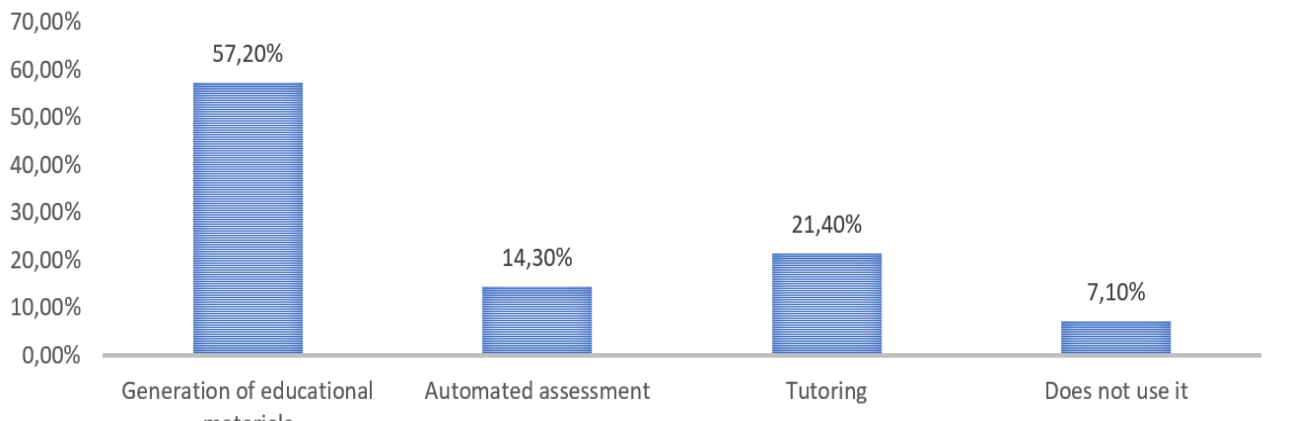
Generating instructional material is the most common use of AI in teaching practice, suggesting that educators leverage the technology to create content, guides, presentations, and educational resources. AI-based student monitoring (such as virtual tutoring, progress analysis, or automated feedback) is gaining ground, with 21.4% of active users. Automated assessment remains a less explored area, though it holds potential (14.3%). The 7.1% who have not used AI in any specific area may be due to a lack of adapted tools or a lack of awareness regarding available applications (Figure 1).
Figure 1.
Areas of AI application in the teaching of Agronomic Engineering
Source: own elaboration.
This landscape reinforces the need to strengthen training in specific AI applications beyond content creation—such as assessment or student support—to achieve a more balanced and pedagogically meaningful integration.
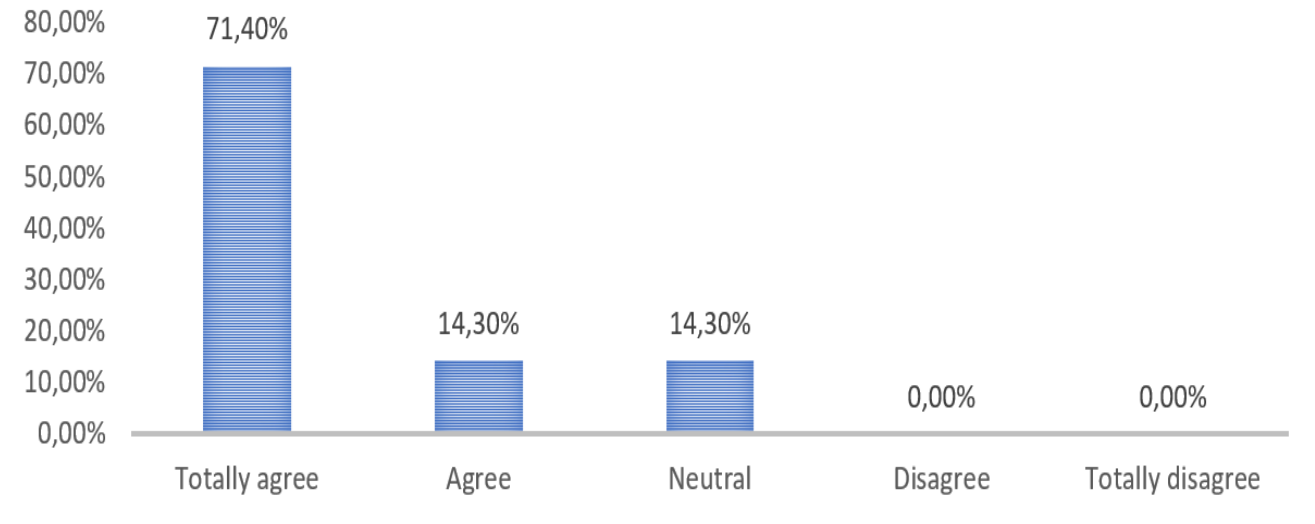
AI in teaching as a learning facilitator
A significant majority (71.4%) is fully convinced that AI can facilitate their teaching work, indicating a strong perception of the tool’s utility. Combining the “Totally agree” and “Agree” responses reveals that 85.7% of respondents approve, representing highly positive support for its integration into teaching. The remaining 14.3% remain neutral, which may stem from a lack of practical experience, unfamiliarity, or a stance that is still taking shape (Figure 2). This result is crucial for underpinning initiatives related to training, institutional adoption, and the development of internal policies on the ethical and pedagogical use of AI, given the teaching staff’s near-total willingness and openness.
Figure 2.
AI in teaching as a learning facilitator
Source: own elaboration.
Key challenges regarding the use of AI in teaching
All respondents (100%) expressed a willingness to undergo training on the pedagogical use of artificial intelligence. This result is particularly significant for educational institutions, as it provides a solid foundation for designing and implementing targeted training programs on the pedagogical application of AI. Given this high level of readiness, any training initiative would likely be met with a highly receptive response.
Challenges of using AI in teaching
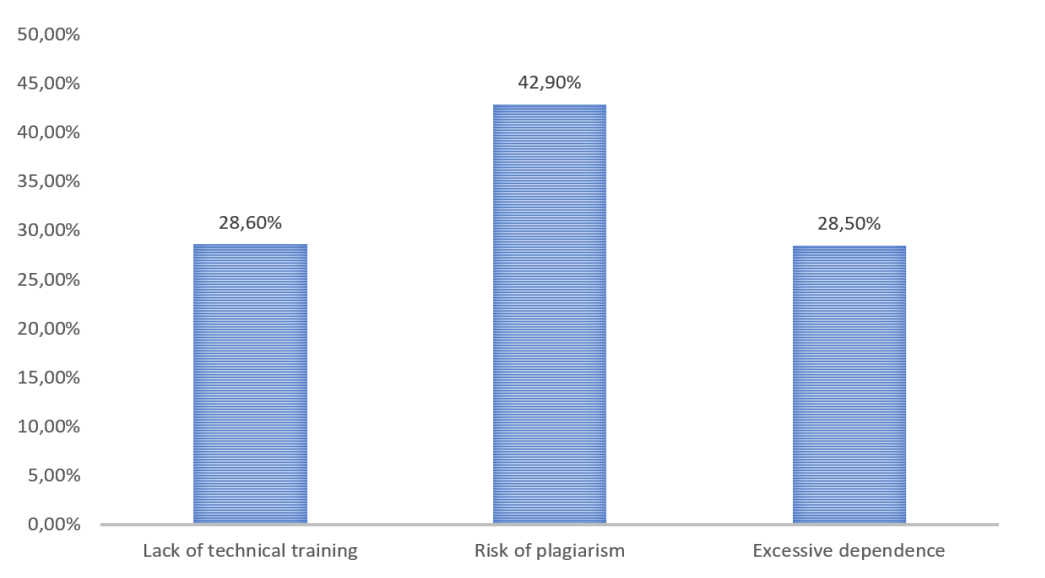
The risk of plagiarism or misuse by students is the most frequently cited challenge (42.9%), highlighting concerns regarding the unethical or superficial use of AI in academic assignments (Figure 3). Both a lack of technical training and over-reliance were cited by 28.6% of respondents, indicating that teachers also recognize their own limitations as well as the pedagogical risks associated with using these tools in an uncritical or ill-founded manner.
Figure 3.
Challenges of using AI in teaching
Source: own elaboration.
In this regard, González Fernández et al. (2025) emphasize the importance of integrating robust ethical frameworks to regulate the use of AI in education. Despite their many benefits, the indiscriminate or unguided use of these technologies can entail risks such as a loss of student autonomy, academic plagiarism, or over-reliance on automated tools. For this reason, it is crucial to invest in teacher training and design institutional policies that ensure responsible use.
A high percentage of respondents (92.9%) consider it necessary to establish clear policies regarding the use of AI in the university setting. Only 7.1% stated they did not consider it necessary, and none expressed uncertainty (0% “Not sure”). This result demonstrates a strong consensus on the need to regulate AI usage from both ethical and pedagogical perspectives.
What benefits could AI bring to teaching in the Agronomic Engineering program?
The responses provide a broad and realistic overview of AI’s potential in this field of study. Benefits frequently cited included increased process efficiency, access to up-to-date information, and support in analyzing large volumes of data. Its contribution to comprehensive professional training—encompassing simulations, tutoring, and the development of production-oriented projects—was also highly valued. Faculty members acknowledged that understanding AI serves primarily as a pedagogical and technical support tool that aligns perfectly with the demands of the professional field.
Analysis of student responses
Knowledge of AI and its application
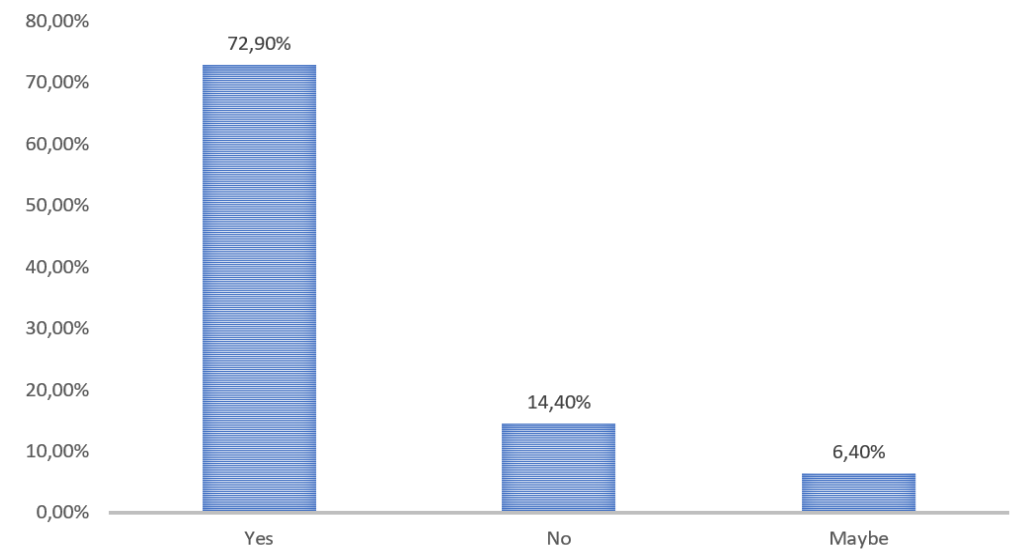
The largest percentage of students (79.2%) state that they are knowledgeable about AI and its academic application, demonstrating a high level of familiarity with the concept and its utility (Figure 4). A total of 14.4% have no knowledge of the subject—indicating a low level of unfamiliarity—while 6.4% report having partial or limited knowledge; this presents an opportunity to enhance training and disseminate concrete examples of AI use in an educational context.
Figure 4.
Knowledge of AI and its application
Source: own elaboration.
This result indicates that the concept of artificial intelligence is already widely known within the academic community and that the environment is favorable for its adoption. However, it is advisable to implement awareness-raising and practical training programs, particularly for those who have only a partial understanding of its potential.
Most widely used AI tools
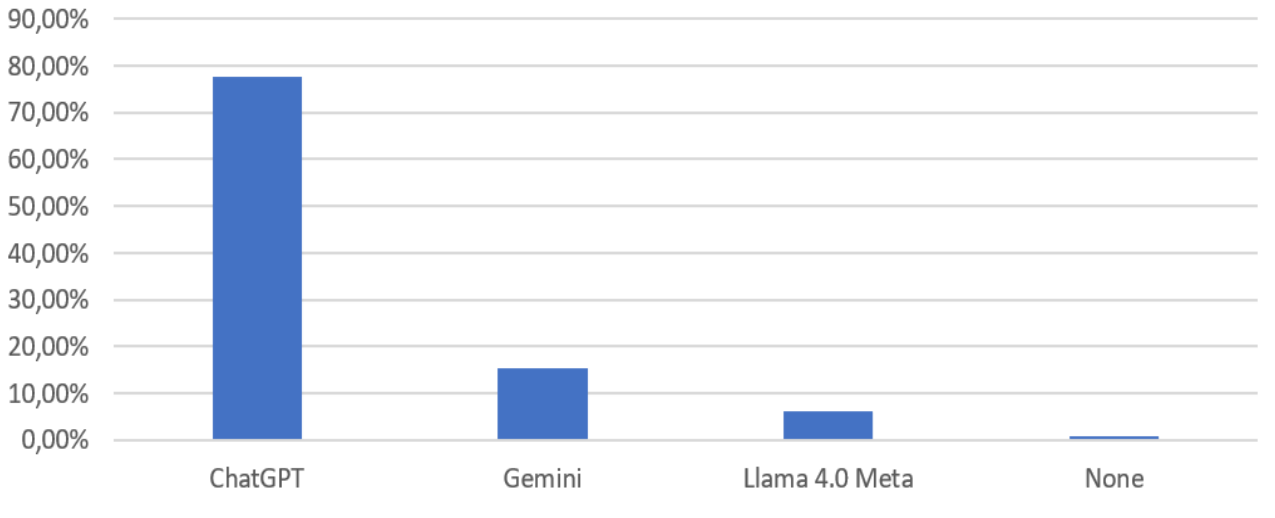
ChatGPT is, by a wide margin, the AI tool most frequently used by respondents (77.8%), demonstrating its strong presence and standing in both academic and general spheres (Figure 5). Gemini (Google) ranks second at 15.3%, indicating some diversification in the use of AI technologies, albeit at a level far below that of ChatGPT. Llama 4.0 (Meta) and the group of respondents who have not used any tool account for very small percentages (4.2% and 2.7%, respectively), reinforcing the idea that access to and exploration of these technologies are already underway for the majority.
Figure 5.
AI awareness and application
Source: own elaboration.
AI as a tool for enhancing learning
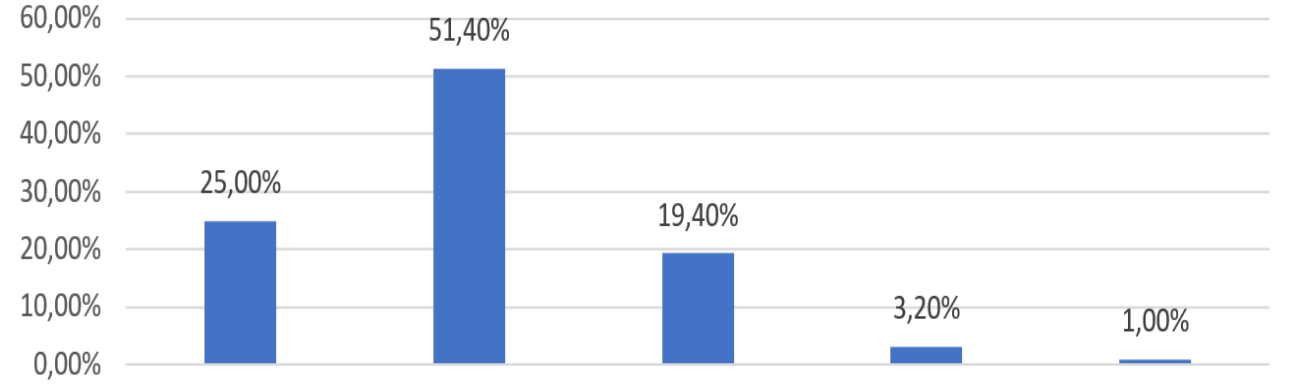
76.4% of the student body (51.4% + 25%) agrees that AI can enhance their learning, reflecting a positive perception of its educational potential. 19.4% remain neutral, likely due to limited experience or a lack of information regarding specific applications within the Agronomic Engineering program. Only 4.2% expressed some degree of disagreement, representing a minority that may harbor ethical, technical, or pedagogical reservations (Figure 6). The results clearly show that students recognize the value of AI as a tool to support learning; however, there is also an opportunity to further explore its pedagogical use by fostering guided experiences that enable its critical and effective adoption.
Figure 6.
AI as a tool for enhancing learning
Source: own elaboration.
Risks of AI use
Almost half of the respondents (47.2%) acknowledged the risk of potential negative effects on skills such as critical thinking, reasoning, and creativity due to the excessive use of AI. Another 36.1% partially share this concern, reflecting a balanced perspective that recognizes the value of AI while simultaneously acknowledging the potential risks if it is not properly regulated. Only 16.7% perceive no risks, representing a minority that places full trust in this technology. All of this indicates that, while students view the use of artificial intelligence favorably, they also recognize the importance of using it with moderation and good judgment. These findings highlight the need for ethical and pedagogical training regarding AI use to help preserve the development of essential cognitive skills.
In your opinion, how should AI be used in the degree program to truly benefit students?
Students do not reject AI, but they are fully aware that its use must be combined with critical thinking, personal effort, and guidance from instructors. Responses also highlight specific uses within agronomic contexts, demonstrating a reasonable understanding of its current professional application. Some students also warned about AI errors and limitations, emphasizing the importance of validating information and supplementing it with other reliable sources.
The student community recognizes that artificial intelligence is a powerful tool but also understands that its effectiveness depends on how it is used—whether as a guide or support for research, a tool for understanding complex topics, a resource for structuring lessons, or a valuable means of developing skills.
DISCUSSION
The results of this study confirm that both faculty and students in the Agronomic Engineering program demonstrate a high level of familiarity with and acceptance of Artificial Intelligence (AI) tools. This aligns with findings in international literature, which state that the use of AI in higher education has altered academic learning dynamics, generating significant benefits while also presenting new ethical and educational challenges for the educational community (UNESCO, 2023; Vieriu & Petrea, 2025). This perspective indicates that the institutions analyzed are in an early stage of technological adoption, characterized by the practical use of AI tools—primarily to support the preparation of academic assignments and the consultation of content.
Regarding students, Chávez Urbina et al. (2025) reported a positive perception of AI use in agronomic training internationally, highlighting its significant contribution to understanding complex agronomic concepts and fostering more personalized learning experiences. Similarly, at the local level, Cardozo (2025) shows that Paraguayan university students also recognize benefits associated with AI use—particularly regarding learning support, time optimization, and access to relevant academic information—aspects that align with the views expressed by the students participating in this study.
From the faculty perspective, Buele & Llerena-Aguirre (2025) note that educators internationally value the utility of AI, yet they also report technical uncertainty, ethical dilemmas, and difficulties in integrating it pedagogically due to limited training and a lack of clear institutional policies; these findings also fully align with the views expressed by the faculty members consulted in this study. At the national level, Benítez González (2025) reports similar findings, showing that Paraguayan university professors possess varying levels of knowledge and experience regarding AI usage. This impacts their ability to effectively incorporate AI into teaching, highlighting the need for specific training and institutional strategies to harness AI’s potential for enhancing educational quality, personalizing learning, and fostering inclusion.
From both perspectives, the results also reflect concerns regarding the negative impact of improper AI use, specifically the risk of creating high dependency and impairing cognitive abilities. In this regard, Kasneci et al. (2023) and Cotton et al. (2023) warn that the indiscriminate use of algorithms and generative systems can compromise students’ cognitive autonomy in the absence of clear pedagogical and ethical frameworks; this underscores the importance of integrating AI as a complementary tool—rather than a substitute—within the learning process.
From an educational perspective, it is noteworthy that both faculty and students agree on the need for specific training in the responsible use of AI. Previous studies support this need, maintaining that AI literacy should be part of professional digital competencies, particularly in fields involving the management of complex systems, such as agronomy (European Commission, 2022; Zawacki-Richter et al., 2019).
In this regard, a review article on ethics and academic integrity regarding AI use by Guaman Chavez (2025) indicates that the lack of clear guidelines and specific training on the ethical use of these tools poses risks such as plagiarism, misinformation, a lack of source transparency, and data privacy violations; furthermore, recurring malpractices—such as the use of AI-generated content without attribution—have been observed. The same study emphasizes that technological dependence, in the absence of adequate training, can impair creativity and critical thinking; it therefore recommends the implementation of specific ethical codes and training programs for students and faculty to safeguard academic integrity.
In the field of agriculture, AI offers distinct opportunities related to the analysis of production data, climate information management, decision-making support, and the simulation of agricultural scenarios (Wolfert et al., 2017). However, regarding the students surveyed in the Agronomic Engineering program, while they acknowledge that AI offers promising solutions to enhance the educational experience, these advanced applications have not yet been fully integrated into their university training. This finding aligns with reports by Chávez Urbina et al. (2025), highlighting the persistent gap between technological potential and its effective curricular application. This limitation is also noted by Rolnick et al. (2022), who emphasize the need to link AI with real-world local challenges to maximize its educational and social impact. Furthermore, it is worth noting that in this study, both faculty and students express widespread concern regarding the ethical issues surrounding the use of AI—a concern mirrored in other research.
According to the study by Macías Lara et al. (2023), the general perception of AI as a resource requiring institutional regulation underscores the importance of having clear academic policies. These policies should define criteria for permissible use and citation mechanisms, as well as guide the redesign of assessment strategies. Similarly, Eaton (2023) highlights that traditional assessments based solely on written work are particularly vulnerable to the unethical use of AI tools; consequently, a shift toward authentic assessments—such as projects, case studies, oral defenses, and contextualized problem-solving—is recommended.
These findings align closely with international and regional literature, confirming that AI offers a strategic opportunity for educational innovation in the training of agronomists. They also suggest a need for the program’s curricular policies to explicitly incorporate content regarding the ethical and pedagogical use of AI, while strengthening faculty training and promoting teaching and assessment strategies that integrate AI as a supportive tool without replacing the development of critical thinking and the professional competencies essential to the field.
Study limitations
The research has limitations inherent to a cross-sectional study, which preclude the establishment of causal relationships. Furthermore, the data are based on self-reports—potentially introducing social desirability bias—while the use of non-probability convenience sampling and the study’s territorial scope limit the generalizability of the findings to similar contexts. Future studies should incorporate longitudinal designs, performance measurement, and triangulation with classroom-based evidence.
CONCLUSIONS
The findings reveal a high level of familiarity with AI tools and a favorable attitude toward their incorporation into agronomic education among both faculty and students, creating an institutional environment conducive to advancing pedagogical integration strategies. AI is perceived as particularly useful for supporting material development, information access, and data analysis—aspects that align with the demands of digital agriculture.
However, the study also confirms critical challenges, such as concerns regarding plagiarism and misuse, technological dependency, and gaps in technical training. These issues necessitate that adoption not be spontaneous or individual, but rather guided by institutional policies and ethical frameworks. From an educational standpoint, AI should not replace student reflection or reasoning; instead, it should complement them through activities focused on developing critical thinking, verifying sources, constructing arguments, and solving real-world problems within the local territory.
RECOMMENDATIONS
• Implement training programs for faculty and students on the pedagogical and ethical use of AI;
• Establish clear academic integrity policies and guidelines regarding citation and permitted use;
• Promote the curricular integration of digital agriculture competencies and AI literacy.
FUTURE RESEARCH DIRECTIONS
• Evaluate the impact of training interventions (pre- and post-intervention);
• Explore effects across different subjects or academic levels;
• Analyze evidence of academic performance and professional competencies associated with the guided use of AI.
REFERENCES
Benítez González, M. C. (2025). Implementación de Inteligencia Artificial en Educación Superior: Percepciones, experiencias y opiniones docentes. Educación y Ciencia, 29(1). https://doi.org/10.19053/uptc.0120-7105.eyc.2025.29.e17775
Buele, J., & Llerena-Aguirre, L. (2025). Transformations in academic work and faculty perceptions of artificial intelligence in higher education. Frontiers in Education, 10, 1603763. https://doi.org/10.3389/feduc.2025.1603763
Cardozo, S. (2025). Inteligencia artificial desde la perspectiva de estudiantes universitarios paraguayos: Un análisis segmentado sobre conocimiento, acceso y prácticas éticas. Revista Científica en Ciencias Sociales, 7, 01-12. https://doi.org/10.53732/rccsociales/e701123
Chávez Urbina, J. C., Zambrano Hidalgo, M. C., Valencia Chávez, F. A., & Camacho Rivadeneira, L. D. (2025). El impacto de la inteligencia artificial en los estudiantes de agronomía. Sinergia académica 8(1). 447-457. https://sinergiaacademica.com/index.php/sa/article/download/434/890/1722
Cotton, D. R. E., Cotton, P. A., & Shipway, J. R. (2023). Chatting and cheating? Ensuring academic integrity in the era of ChatGPT. Innovations in Education and Teaching International, 60(4), 1–12. https://doi.org/10.1080/14703297.2023.2190148
Diaz Tito, L. P., Tito Cárdenas, J. V., Garcia Curo, G., & Boy Barreto, A. M. (2021). Inteligencia artificial aplicada al sector educativo. Revista Venezolana de Gerencia, 26(96), 1189–1200. https://doi.org/10.52080/rvgluz.26.96.12
Eaton, S. E. (2023). Academic integrity in the age of artificial intelligence. 2023 Open Technology in Education, Society, and Scholarship Association (OTESSA) Annual Conference. https://ucalgary.scholaris.ca/items/2faa48ce-21be-456e-b97f-76ac361d0b85
European Commission. (2022). Ethical guidelines on the use of artificial intelligence (AI) and data in teaching and learning for educators. Publications Office of the European Union. https://education.ec.europa.eu/news/ethical-guidelines-on-the-use-of-artificial-intelligence-and-data-in-teaching-and-learning-for-educators
González Fernández, M. O., Romero-López, M. A., Sgreccia, N. F., & Latorre Medina, M. J. (2025). Marcos normativos para una IA ética y confiable en la educación superior: Estado de la cuestión. RIED-Revista Iberoamericana de Educación a Distancia, 28(2). https://doi.org/10.5944/ried.28.2.43511
Guaman Chavez, R. E. (2025). Ética e integridad académica en el uso de la inteligencia artificial generativa en la educación superior.: Ethics and academic integrity in the use of generative artificial intelligence in higher education. Revista Científica Multidisciplinar G-nerando, 6(1). https://doi.org/10.60100/rcmg.v6i1.392
Kasneci, E., Sessler, K., Küchemann, S., Bannert, M., Dementieva, D., Fischer, F., Gasser, U., Groh, G., Günnemann, S., Hüllermeier, E., Krusche, S., Kutyniok, G., Michaeli, T., Nerdel, C., Pfeffer, J., Poquet, O., Sailer, M., Schmidt, A., Seidel, T., & Kasneci, G. (2023). ChatGPT for good? On opportunities and challenges of large language models for education. Learning and Individual Differences, 103, 102274. https://doi.org/10.1016/j.lindif.2023.102274
Luckin, R., Holmes, W., Griffiths, M., & Forcier, L. B. (2018). Intelligence unleashed: An argument for AI in education. Pearson.
Macías Lara, R. A., Solorzano Criollo, L. R., Choez Calderón, C. J., & Matamba, B. E. (2023). La inteligencia artificial; análisis del presente y futuro en la educación superior.: Artificial intelligence; analysis of the present and future in higher education. Revista Científica Multidisciplinar G-nerando, 4(1). https://revista.gnerando.org/revista/index.php/RCMG/article/view/98
Rolnick, D., Donti, P. L., Kaack, L. H., Kochanski, K., Lacoste, A., Sankaran, K., Ross, A. S., Milojevic-Dupont, N., Jaques, N., Waldman-Brown, A., Luccioni, A., Maharaj, T., Sherwin, E. D., Mukkavilli, S. K., Kording, K. P., Gomes, C., Ng, A. Y., Hassabis, D., Platt, J. C., & Creutzig, F. (2022). Tackling climate change with machine learning. ACM Computing Surveys, 55(2), Article 42. https://doi.org/10.1145/3485128
Tramallino, C. P., & Zeni, A. M. (2024). Avances y discusiones sobre el uso de inteligencia artificial en educación superior. Educación, 33(64), 29–54. https://doi.org/10.18800/educacion.202401.M002
UNESCO. (2023). Guidance for generative AI in education and research. UNESCO Publishing. https://unesdoc.unesco.org/ark:/48223/pf0000386693
Vieriu, A. M., & Petrea, G. (2025). The Impact of Artificial Intelligence (AI) on Students’ Academic Development. Education Sciences, 15(3), 343. https://doi.org/10.3390/educsci15030343
Wolfert, S., Ge, L., Verdouw, C., & Bogaardt, M.-J. (2017). Big Data in Smart Farming – A review. Agricultural Systems, 153, 69–80. https://doi.org/10.1016/j.agsy.2017.01.023
Zawacki-Richter, O., Marín, V. I., Bond, M., & Gouverneur, F. (2019). Systematic review of research on artificial intelligence applications in higher education – where are the educators? International Journal of Educational Technology in Higher Education, 16(1), 39. https://doi.org/10.1186/s41239-019-0171-0
FINANCING
Universidad Católica Nuestra Señora de la Asunción.
CONFLICT OF INTEREST STATEMENT
None.
ACKNOWLEDGMENTS
The authors express their sincere gratitude to the Universidad Católica Nuestra Señora de la Asunción for the institutional support provided for the development of this research. Likewise, they acknowledge the support of the Unidad Pedagógica María Auxiliadora, whose academic and technical backing was fundamental to the execution of the study. Finally, they appreciate the valuable participation of the faculty and students of the Agronomic Engineering program, who collaborated by completing the research instruments, thereby contributing significantly to the results presented.
STATEMENT OF ARTIFICIAL INTELLIGENCE USE
The authors declare having used ChatGPT 5.2 and QuillBot to assist with reviewing the wording, refining the style, and improving the clarity of the text. These tools were used exclusively as linguistic aids and did not in any way replace the authors’ own processes of analysis, interpretation, and communication.
AUTHORSHIP CONTRIBUTION
Conceptualization: Carmen Elizabeth Trombetta Silvero, Alfredo Patiño Sotelo, José Luis Basili Carreras, María Raquel Pintos, Coronel.
Data curation: Carmen Elizabeth Trombetta Silvero.
Formal analysis: Carmen Elizabeth Trombetta Silvero, José Luis Basili Carreras.
Acquisition of funds: Alfredo Patiño.
Research: Carmen Elizabeth Trombetta Silvero, Alfredo Patiño Sotelo, María Raquel Pintos Coronel.
Methodology: María Raquel Pintos Coronel.
Resources: María Raquel Pintos Coronel, Alfredo Patiño Sotelo.
Software: José Luis Basili Carreras.
Supervision: Alfredo Patiño Sotelo.
Validation: Carmen Elizabeth Trombetta Silvero, José Luis Basili Carreras.
Visualization: María Raquel Pinto Coronel.
Writing – original draft: Carmen Elizabeth Trombetta Silvero.
Writing – proofreading and editing: Alfredo Patiño Sotelo, José Luis Basili Carreras, María Raquel Pintos Coronel.