doi: 10.58763/rc2026589
Review Article
Transformations of digital work: artificial intelligence and the community manager in the gig economy. A systematic literature review
Transformaciones del trabajo digital: inteligencia artificial y community manager en la economía gig. Una revisión sistemática de literatura
Andrés
Camilo Aponte López1  *
*
ABSTRACT
Introduction: The expansion of the gig economy and the integration of artificial intelligence have transformed the digital work of community managers by altering their roles, competencies, working conditions, and degree of autonomy. This study analyzed these transformations and identified patterns and gaps in the literature.
Methodology: A qualitative, descriptive-analytical, and interpretive systematic review was conducted, guided by PRISMA. Articles were searched for in Scopus and Google Scholar, published between 2015 and 2024, in Spanish or English. Of the 134 initial records, 50 studies made up the final corpus. Quality was assessed based on conceptual coherence, methodological clarity, thematic relevance, and theoretical contribution. The synthesis was conducted using inductive thematic coding.
Results: Artificial intelligence automates routine tasks, such as basic writing, standardized responses, and elementary content production, while shifting value toward analysis, supervision, curation, and strategy. At the same time, pressure regarding availability, reputational dependence, risk transfer, and exposure to opaque algorithmic systems is increasing. Algorithmic governance shapes visibility, evaluation, and the allocation of opportunities.
Conclusions: Artificial intelligence redefines, but does not eliminate, the role of the community manager. Its sustainability depends on ongoing training, algorithmic transparency, and regulatory frameworks that provide effective protection and appeal mechanisms.
Keywords: Gig economy, Community Manager, Artificial Intelligence, Digital platforms, Freelance work.
JEL Classification: J24, L86, O33, M31.
RESUMEN
Introducción: La expansión de la economía gig y la incorporación de inteligencia artificial han transformado el trabajo digital del community manager, al modificar sus funciones, competencias, condiciones laborales y márgenes de autonomía. El estudio analizó estas transformaciones e identificó patrones y vacíos en la literatura.
Metodología: Se realizó una revisión sistemática cualitativa, descriptivo-analítica e interpretativa, guiada por PRISMA. Se buscaron artículos en Scopus y Google Académico, publicados entre 2015 y 2024, en español o inglés. De 134 registros iniciales, 50 estudios conformaron el corpus final. La calidad se evaluó mediante coherencia conceptual, claridad metodológica, relevancia temática y contribución teórica. La síntesis se efectuó mediante codificación temática inductiva.
Resultados: La inteligencia artificial automatiza tareas rutinarias, como redacción básica, respuestas estandarizadas y producción elemental de contenidos, mientras desplaza el valor hacia el análisis, la supervisión, la curaduría y la estrategia. Paralelamente, aumentan la presión por disponibilidad, la dependencia reputacional, la transferencia de riesgos y la exposición a sistemas algorítmicos opacos. La gobernanza algorítmica condiciona la visibilidad, la evaluación y la asignación de oportunidades.
Conclusiones: La inteligencia artificial redefine, pero no elimina, el rol del community manager. Su sostenibilidad depende de formación continua, transparencia algorítmica y marcos regulatorios con protección y apelación efectivas.
Palabras clave: Economía gig, Community Manager, Inteligencia Artificial, Plataformas digitales, Trabajo Independiente.
Clasificación JEL: J24, L86, O33, M31.
Submitted: 14-09-2025 Revised: 18-10-2025 Accepted: 15-12-2025 Published: 02-01-2026
Editor:
Alfredo Javier Pérez Gamboa
1Corporación Universitaria Minuto de Dios. Ibagué, Colombia.
Cite as: Aponte-López, A. C. (2026). Transformaciones del trabajo digital: inteligencia artificial y community manager en la economía gig. Una revisión sistemática de literatura. Región Científica, 5(1), 2026589. https://doi.org/10.58763/rc2026589
INTRODUCTION
Technological advancements have radically transformed how people work, interact, and generate value. The arrival of digital platforms and the COVID-19 pandemic have driven a new economy, known as the platform or gig economy. This economy is characterized by flexible, short-term employment relationships mediated by digital applications (Fierro-Moreno, 2021; Vallas & Schor, 2020).
This new economic model offers benefits such as greater autonomy and income diversification, but it is also accompanied by increased job insecurity and limited access to social protection (López Estupiñán & Peña Mesa, 2023). In this context, artificial intelligence (AI) has become increasingly integrated into organizational processes, automating routine tasks, optimizing data management, and redefining virtually all organizational roles. Its greatest advantage is the time saved in task execution (Eloundou et al., 2023).
Therefore, the role of the community manager (CM) has evolved. This professional is currently responsible for managing communication, interacting with users, and building the corporate reputation of brands in digital environments. However, AI presents new challenges and opportunities in community management, particularly regarding replaceable tasks and new complementary or unaffected skills (Tan et al., 2021; Teutloff et al., 2025).
In this sense, the objective of this research is to analyze the transformations that artificial intelligence has brought to the role of the community manager within the gig economy. The following sections are presented: 1. Gig Economy and Algorithmic Governance, 2. Generative AI and Reconfiguration of Work on Platforms, and 3. AI-Mediated Community Management.
Gig economy and algorithmic governance
The advancement of ICTs, which gave rise to Industry 4.0, has irrevocably impacted production and consumption models. With the arrival of digital platforms, individuals have taken on a leading role in commercial relationships through this medium. This new economy, also known as the collaborative or peer-to-peer market, has grown in all sectors, especially in accommodation, transportation, professional services, finance, and domestic services (Blázquez et al., 2024; Muldoon & Raekstad, 2023).
Initially, these platforms were used to share, exchange, donate, rent, lend, or sell products and services without expecting financial compensation, but over time they have become an attractive business model (Kerikmäe et al., 2022).
The gig economy directly connects providers and consumers through digital platforms (Davies, 2020). Transactions typically involve short-term, on-demand tasks with variable compensation depending on the service (Bulian, 2021). In this context, the platform plays a key intermediary role, organizing work activities through algorithms and evaluation systems based on user interaction data (Arriagada et al., 2023; Celentano, 2023).
Platforms utilize identity verification, reputation review, and performance evaluation systems. Other important techniques include biometric authentication, official document validation, and public reviews. These mechanisms foster user trust, increase transparency, and reduce risks for all participants (Blázquez et al., 2024; Muldoon & Raekstad, 2023).
Similarly, digital work through platforms offers benefits such as the flexibility to work from anywhere, at any time, where the focus is on completing tasks or deliverables. Another opportunity arises when international clients can be served virtually, opening the possibility of increasing income from currency exchange, which promotes financial stability. Although this flexibility is presented as a competitive advantage, it is highly dependent on the stability of demand and the degree of economic dependence of the worker on the platform, which impacts their job satisfaction (Kerikmäe et al., 2022; Yu & Hamid, 2024).
On the other hand, the gig economy allows workers to dedicate themselves to this type of work full-time, part-time, or even on a part-time basis, while continuing to hold their traditional jobs. Kuhn et al. (2021) highlight that workers in emerging economies can benefit when they signal high-quality service to clients in developed markets, which can open the market to receive foreign currency that, when exchanged, increases their income.
However, platform work clearly shifts leadership and authority from humans to algorithmic systems, a phenomenon known as “algocracy.” More than a simple technical mechanism, “algocracy” represents a displacement of decision-making authority from human supervisors to opaque computational systems. This transition is not neutral; it redefines who interprets performance and under what criteria, an issue rarely discussed by the platforms themselves (Kinder et al., 2019). Kinder et al. (2019) describe algocracy as a form of organizational optimization. This interpretation omits the distributive implications pointed out by Alvarez de la Vega et al. (2021), particularly regarding decisional autonomy.
This algorithmic governance system continuously monitors and regulates the worker experience through the use of technologies such as cameras, tracking algorithms, and artificial intelligence (Celentano, 2023). In practice, monitoring is not limited to visible productivity. It includes location tracking, audio analysis, biometrics, and other forms of data capture that extend the scope of observation beyond the task itself (Sum et al., 2024). This analysis argues that the centrality of the algorithm not only reorganizes task allocation but also reconfigures the relationships of economic dependence between worker and platform.
Algorithmic surveillance in the gig economy raises serious privacy implications, given that platforms collect vast amounts of data to manage performance, pace, and labor availability. In this process, users play a decisive role when they evaluate, report, and comment on their perceptions of the services they have purchased. This reinforces information asymmetries and pressures workers to strive to maintain a good reputation, sometimes at the expense of their own safety (Sannon et al., 2022).
Under this model, some significant metrics for understanding worker productivity are response times, task quality, acceptance rates, and customer ratings. With this information, the algorithm evaluates worker performance and, in response, sends job opportunities or may even penalize workers with negative metrics. This becomes more complex when the platform does not offer workers a mechanism to appeal task rejections or negative ratings (Lata et al., 2023).
Rating systems play a crucial role in task allocation within platforms, distributing projects and tasks based on reputation, past performance, competitiveness, and location. These algorithm-driven evaluations directly influence the opportunities available to each individual. This reduces the likelihood of workers choosing projects or tasks of interest, particularly for those with lower visibility or lower ratings. This leads to unequal power dynamics and a lack of transparency in the algorithmic criteria (Alvarez de la Vega et al., 2021).
Another factor determined by the algorithm is the price of the services or tasks offered, which it adjusts in real time according to supply and demand (Celentano, 2023). This practice limits workers’ bargaining power and exacerbates information asymmetries, as key decisions regarding classification, evaluation, and pricing are rarely explained. Thus, algorithmic control is configured as an automated form of managerial power (Kinder et al., 2019).
Similarly, this system has the capacity to monitor worker behavior and their compliance with platform rules. If there is non-compliance or poor performance, the algorithm can restrict their access to tasks or orders, even automatically closing their account without direct human intervention (Alvarez de la Vega et al., 2021).
In this sense, the algorithm that governs the platform significantly reduces workers’ ability to question both established rules and criteria and the decisions it makes. The reality is that there is no room for negotiation or human intervention. With the automation of task assignment, evaluations, and sanctions, workers lose control over their workday and their working conditions. The absence of human interaction increases vulnerability to potential system errors, which can lead to penalties or dismissals without the opportunity for appeal or redress for injustices (Arriagada et al., 2023; Vallas & Schor, 2020).
The intensive use of technology to manage work can also generate social isolation, as many workers operate independently and lack the interactions typical of traditional work environments (Kuhn et al., 2021). Furthermore, algorithmic surveillance and invasive monitoring can lead to work overload, frustration, and privacy violations, sometimes outweighing the benefits offered by these platforms. Faced with this situation, some workers and unions have promoted actions to protect rights and limit surveillance, although with still insufficient results (Do et al., 2024; Sannon et al., 2022).
The asymmetry in labor relations is exacerbated when, as Lata et al. (2023) point out, platforms systematically favor clients. Asymmetrical ratings make it difficult for workers to challenge unfair requests or defend themselves against negative feedback. Furthermore, there are no effective mechanisms to prevent wage theft or to contest rejected tasks. The piece-rate payment model and the classification as independent contractors generate income instability, stressful working conditions, and, in many cases, low wages.
From a legal perspective, one of the main challenges lies in labor classification. In numerous countries, this contractual category allows employers to legally circumvent social benefits by classifying workers as self-employed rather than employees (Kerikmäe et al., 2022). This status deprives them of basic benefits such as a minimum wage, access to healthcare and social security, pension funds, health insurance, and workers’ compensation. Consequently, platform workers face risks that, in the traditional labor model, were assumed by employers and the state (Vallas & Schor, 2020; van Doorn, 2024).
Finally, digital platforms act as intermediaries that influence working conditions and market dynamics, transforming how services are provided and acquired. Thus, the gig economy offers workers flexibility in terms of schedules and projects, but it is also limited in terms of job security and benefits. This increases precariousness and fosters an environment of constant uncertainty, with direct effects on their well-being and economic stability.
Generative AI and the reconfiguration of work on platforms
Artificial intelligence (AI) is profoundly transforming the structure of digital employment, extending control mechanisms that complement the algorithmic surveillance described above (Kadolkar et al., 2024). Recent literature proposes measuring these impacts in terms of task ‘exposure’: the degree to which AI can significantly reduce the time required to perform work activities, especially in writing, programming, and information processing tasks (Eloundou et al., 2023).
Liu et al. (2023) demonstrate that the adoption of generative AI models on digital platforms displaces jobs in areas such as programming and writing, and encourages specialization in more complex tasks. Labor demand studies on digital platforms distinguish between substitutable, complementary, and LLM-affected skills, showing that the impact is not uniform across task types (Teutloff et al., 2025).
Similarly, algorithmic systems not only automate tasks but also structure labor relations in the gig economy by assigning tasks, dynamically adjusting prices, and evaluating performance in real time (Liu & Yin, 2024). This generates increasing worker dependence on market rules that change without warning (Kadolkar et al., 2024). Furthermore, the potential impact depends not only on the raw model but also on complementary technologies and organizational redesigns that broaden or restrict its adoption, meaning that technical exposure does not automatically translate into uniform labor effects (Eloundou et al., 2023).
Basavaraj et al. (2024) add that, during crises such as the COVID-19 pandemic, more digitized sectors, such as food and home delivery platforms (Uber Eats or Rappi), on-demand transport services, freelance work on digital platforms (Upwork or Fiverr), virtual education, software development and remote assistance services, demonstrated greater resilience thanks to the use of AI for task allocation, route optimization, demand management and predictive analysis, reinforcing its role as a key element for the sustainability of this economic model.
The growing technological dependence in platform-mediated work introduces operational advantages, but also generates significant risks when workers lack their own tools or when platforms unilaterally modify contractual conditions (van Doorn & Vijay, 2024; Whalley et al., 2024). These transformations reinforce dependency relationships that limit individual bargaining power and increase job insecurity.
In this context, the incorporation of generative artificial intelligence tools has been analyzed from diverse perspectives. Khan and Khan (2024) point out that applications like ChatGPT can improve freelancers’ performance by automating repetitive tasks and optimizing communication with clients. However, this improvement in efficiency is not without consequences. Shaji George et al. (2023) warn that automation contributes to reducing operating costs for platforms, while at the same time potentially intensifying job insecurity. Similarly, Demirci et al. (2023) show that AI tends to replace routine functions, such as writing or basic design, concentrating freelance work on increasingly specialized tasks.
From a comparative perspective, Lancaster (2024) equates the use of ChatGPT with online forums, highlighting that, although AI provides quick, data-driven responses, it lacks the contextual and relational exchange characteristic of human communities. This difference is relevant because, as Liu et al. (2023) demonstrate, the adoption of generative AI on digital platforms not only displaces certain job profiles but also redefines the nature of the jobs that remain, increasing the technical and cognitive demands on workers who continue to be active in the market (Fiers, 2024). These roles must specialize, acquire advanced technical skills, and develop adaptability to remain relevant in the age of automation.
In a complementary way, Muldoon and Raekstad (2022) analyze this phenomenon from a normative perspective, introducing the concept of algorithmic domination. This describes the capacity of automated systems to unilaterally impose labor rules and contractual decisions, leaving no room for human negotiation. Contradicting the promise of flexibility and decentralization, platforms manage task allocation, performance evaluation, and condition worker autonomy through an asymmetrical power structure in the digital environment.
While much of the literature has highlighted the risks associated with automation, opportunities arising from the integration of AI into the freelance market have also been identified. However, this impact is far from uniform. As Liu et al. (2023) and Whalley et al. (2024) point out, while certain roles have been displaced, the demand for professionals capable of operating, adjusting, and optimizing AI systems within digital platforms has increased. This suggests a reconfiguration of work rather than a simple contraction of employment.
Along these lines, Reljic et al. (202) propose interpreting this process not as a direct replacement of labor, but as a transformation in the structure of required skills. Analytical, supervisory, and technological adaptation skills become increasingly important when greater human control and validation are needed. In fact, Liu et al. (2023) show that, while generative AI has reduced the demand for repetitive programming and basic writing, it has opened new avenues in model supervision and training, strategic monitoring and editing of AI-generated content, the design of prompts aligned with organizational goals, and the building of relational communities—tasks that require human judgment, communicative sensitivity, and strategic capacity.
Empirical evidence indicates that the effects vary depending on the type of task. Activities such as writing basic content, producing SEO-optimized text, or programming simple scripts have experienced a notable decline, given that generative tools can produce functional results with minimal human intervention (Demirci et al., 2023; Teutloff et al., 2025). A similar trend is observed in basic graphic design, where automated logo generation and image editing have reduced the demand for low-complexity projects (Shaji George et al., 2023).
However, a parallel shift towards more specialized profiles is also observed. Whalley et al. (2024) document an increase in demand for experts in model development and maintenance, algorithmic optimization, and monitoring of AI-generated content. Similarly, Liu and Yin (2024) highlight the growing relevance of skills related to AI governance and ethics, particularly on platforms where automation directly influences employment decisions.
This process is not merely technical but also adaptive. Teutloff et al. (2025) report increases in clusters associated with artificial intelligence and machine learning, while Khan and Khan (2024) emphasize that workers’ attitudes toward tools like ChatGPT affect their adaptability and performance. Therefore, technological adoption depends not only on the availability of tools but also on individual dispositions and prior training.
Taken together, these findings suggest that AI in the gig economy is producing an internal redistribution of labor. It reduces the demand for standardized tasks but intensifies competition in highly skilled segments. However, as Shaji George et al. (2023) warn, increased productivity does not guarantee better working conditions; without clear regulatory frameworks, the same technology that expands opportunities can deepen precarious working conditions. Demirci et al. (2023) agree that the replacement of certain tasks by AI is reshaping competition within the sector, as many companies use these systems to generate content drafts and hire freelancers only for final editing and refinement.
AI-mediated community management
The rise of the internet and social media has profoundly transformed business communication and social interaction (Pilatti et al., 2024). Online communication has surpassed traditional communication in importance, modifying daily life, perceptions, and relationships between people, companies, and institutions (Flores-Jaramillo & Trabadela-Robles, 2023).
The success of platforms like Facebook, X, YouTube, Pinterest, Instagram, TikTok, and LinkedIn lies in their ease of use, their entertainment value, and their ability to connect people globally. These networks offer attractive audiovisual advertising spaces for brands, which use them to communicate with their audience and market products and services (Martín García, 2021).
This is in addition to the global trend of the digitalization of daily life, which shows that the average person in the world spends 7 hours online per day, of which 2 hours and 25 minutes are spent on social media. The Colombian case is representative because it is a hyper-connected country, with an average of 10 hours of daily internet connection and 3 hours spent on social media (Kemp, 2024).
Brands see this as a market potential that leads them to create channels that allow them to connect with customers. To fulfill this purpose, the role of the community manager (CM) has emerged, responsible for managing the digital presence of organizations. This role involves building and maintaining relationships with the public in digital environments. Their work is not limited to social media management; it also involves aligning the corporate strategy with the interests, expectations, and interaction patterns of users, managing communication on blogs, virtual communities, and institutional accounts, as well as planning and evaluating actions aimed at strengthening the organizational image (Wood & Lehdonvirta, 2021).
However, this role has experienced a progressive expansion of functions. Over time, the community manager role has evolved from simply managing communities to encompass tasks related to content production, direct customer service, and engagement with diverse stakeholders (Martín García, 202). This expansion has not been without its ambiguities. As Fulker and Riedl (2024) point out, there is no clear consensus on the specific boundaries and responsibilities of the position, which requires these professionals to operate with high levels of knowledge, influence, and credibility to generate effective content and maintain stable digital relationships with their audiences.
This role requires communication skills, active listening, and interpersonal connection, with backgrounds in Communication, Journalism, Marketing, Humanities, or Business Administration being common. It is also known as a Social Media Manager, community manager, or community facilitator (Mañas-Viniegra & Jiménez-Gómez, 2019).
The Community Manager must possess skills such as initiative, networking, transparency, time management, a global perspective, and the ability to handle uncertainty. They must have a thorough understanding of the company and its products and services, be able to align business strategy with customer needs, and possess soft skills such as empathy, versatility, leadership, influence, motivation, and conflict resolution. Experience with social media and the internet is also required, as well as technical skills in writing, content production, creativity, communication, argumentation, and expression (Wood & Lehdonvirta, 2021).
According to Martín García (2021), the most prominent skills in academic publications on Community Management (CM) are: social skills (86.6%), communication skills (85%), creativity (67%), knowledge of corporate strategy (64.6%), good writing skills (52.4%), leadership (45.1%), web programming skills (25.6%), and knowledge of internet legislation (14.6%).
Community Managers work in a dynamic and digital environment, exposed to risks such as pressure to deliver results, lack of organizational support, social isolation, work overload (Contreras Fernández, 2020; Jiménez et al., 2023), difficulty balancing work and personal life (Rosales-Veítia, 2021), technological stress, and mental exhaustion (Blázquez et al., 2024; Duggan et al., 2023). Vallas and Schor (2020) point out that, in many cases, these professionals assume responsibilities typical of Occupational Safety and Health (OSH), such as preventing risks, protecting physical integrity, and managing digital reputation in the face of work-related incidents.
The global trend in occupational safety and health (OSH) has historically prioritized risk identification and control, preventive training, audits, and regulatory compliance (Jiménez et al., 2023). However, these institutional structures rarely consider workers embedded in platform dynamics, such as community managers (CMs), who must individually manage their own safety and job security. This exclusion is significant given the strategic nature of their role: they manage organizations’ digital presence, build reputation, and strengthen customer loyalty, all under conditions marked by contractual instability and the pressures characteristic of the gig economy (van Doorn, 2024).
In an accelerated digital environment, where digital interaction is constant and platforms are increasingly numerous, the work of the CM faces new demands. The arrival of AI not only facilitates certain tasks but also modifies how the CM responds, prioritizes activities, and demonstrates their performance, leading to a profound transformation of their professional role. Although the literature on the gig economy, algorithmic governance, and the automation of digital work has grown steadily, analytical gaps remain regarding how these technologies are specifically modifying the functions of community managers, their relationship with audiences, and the conditions under which they manage digital communities.
From this perspective, it is insufficient to analyze AI solely as a productivity tool. It is necessary to understand how its integration redefines responsibilities, redistributes risks, and alters the boundaries of professional autonomy. Addressing these dimensions allows us to move toward a more comprehensive understanding of the community manager’s role in AI-mediated digital environments, considering not only its operational transformations but also its labor and organizational implications.
METHODOLOGY
This study adopts an interpretive perspective aimed at critically understanding how academic literature has conceptualized and analyzed the transformations of digital work in platform-mediated contexts. Rather than identifying empirical regularities or establishing causal relationships, the analysis focused on the meanings attributed to digital work, the predominant theoretical approaches, and the analytical frameworks used by the reviewed studies. This choice reflects an interest in examining how the problem is constructed in the literature, rather than quantitatively measuring its effects.
In accordance with this purpose, a documentary research project was developed, employing a qualitative approach and a descriptive-analytical scope, based on a systematic literature review. This design allowed for the reflective organization and analysis of a broad range of studies, recognizing both convergences and tensions in the interpretations proposed by different authors.
To structure the review process, the PRISMA guidelines (Preferred Reporting Items for Systematic Reviews and Meta-Analyses) were used as a reference, serving as a methodological reporting framework rather than a quantitative synthesis protocol. Their application facilitated the transparent organization of the study identification, screening, eligibility, and inclusion phases without requiring statistical aggregation of results, given that the synthesis was conducted from a qualitative and interpretive perspective.
As part of this process, a flowchart was developed, and the PRISMA 2020 checklist was completed and included as supplementary material to systematically document the selection criteria and methodological decisions adopted throughout the review. Although the main corpus included literature published up to 2024, recent studies were also considered to contextualize emerging trends related to the topic.
Information sources and search strategy
The databases used for the information search were Scopus and Google Scholar. The review sought indexed, peer-reviewed documents related to the topics of digital communication, platform work, and applied technology, published in Spanish and English, between 2015 and 2024. This was carried out using structured search equations with Boolean operators.
Search equations used
Scopus:
(“gig economy” OR “platform work” OR “digital labour”)
AND (“community manager” OR “social media manager”)
AND (“artificial intelligence” OR “algorithmic management” OR “AI”)
Filters applied:
• Peer-reviewed articles
• Full text access
• Language: Spanish or English
• Areas: Social Sciences, Communication, Business, Psychology, Computer Science
• Period: 2015–2024
Google Scholar:
(“economía gig” OR “trabajo en plataformas”)
AND (“community manager”)
AND (“inteligencia artificial” OR “gestión algorítmica”)
Filters:
• Academic articles with identifiable publishers (scientific journals), excluding grey literature.
• Period: 2015–2024
A manual secondary search was also conducted using reference tracing to identify additional studies not captured in the primary search.
Inclusion and exclusion criteria
To ensure rigor and consistency in the selection of studies, the following criteria were defined:
Inclusion
- Peer-reviewed articles.
- Publications from 2015 to 2024.
- Empirical or theoretical studies related to the gig economy, platform work, digital community management, and/or artificial intelligence.
- Full text available.
- Conceptual and analytical relevance to the study’s objectives, demonstrated by an explicit connection to the adopted theoretical framework.
Exclusion
- Non-academic documents: theses, reports, blog posts, book chapters.
- Duplicate articles.
- Studies that only superficially mention concepts without analyzing them.
- Research unrelated to platform work or digital community management.
Bias assessment, relevance and quality
Each article was evaluated using a quality matrix based on four criteria:
- Conceptual coherence
- Methodological clarity
- Thematic relevance to the analysis of digital work transformations in the gig economy, with an emphasis on the role of the community manager and the incorporation of artificial intelligence.
- Theoretical contribution to the analysis of the phenomenon.
Of the 65 articles assessed in full text, 15 were excluded during the eligibility phase. In 9 of these cases, exclusion was due to their failure to meet the established minimum quality threshold (at least three of the four defined criteria). In the final corpus (n = 50), 28 studies met all four quality criteria, and 22 met three of the four. No study meeting fewer than three criteria was included in the analysis. This procedure ensured a minimum standard of conceptual and methodological consistency across the reviewed set.
Each criterion was assigned a binary rating (meets/does not meet), and only studies meeting at least three of the four criteria were included.
Bias control:
• Language bias: only articles in English or Spanish
• Publication bias: only peer-reviewed articles
• Availability bias: only studies with full-text access
• Selection bias: screening was performed in two consecutive stages (title/abstract and full text) by the author, systematically recording the reasons for exclusion to ensure consistency in selection.
Given the documentary nature of the study, no human participants were involved; scientific articles were the unit of analysis. Supplementary materials include the PRISMA 2020 checklist and a detailed table of the database search strategy, with complete equations and execution dates, to reinforce the traceability and replicability of the process.
Selection and analysis of information
The initial search yielded 134 documents. After applying the screening and eligibility criteria, 50 studies were included in the final analysis. The information from each article was organized into an extraction matrix developed according to the review’s objective. This matrix allowed for the systematization of variables such as bibliographic reference, year of publication, methodological approach, geographical context, conceptualization of digital work, characterization of the community manager’s role, algorithmic management, dimensions analyzed, and main findings reported. The use of an analysis matrix facilitated the systematic comparison between the included studies and the subsequent construction of a thematic synthesis. This tool allowed for the organization of relevant information and the establishment of relationships between approaches, concepts, and findings present in the reviewed literature.
The analysis was developed through a thematic coding process supported by this matrix, specifically designed for the study’s objectives. The coding was carried out by the principal investigator following a two-phase procedure. In the first stage, a thorough reading of the full texts was conducted, aimed at identifying recurring concepts related to the transformations of digital work, the community manager’s role, and the use of AI. In a second stage, these records were compared and progressively reorganized, allowing for the delimitation of common analytical categories and the refinement of their interpretive scope.
The coding process was carried out in two stages. In the first phase, recurring concepts in the full texts were identified, related to the automation of digital work, algorithmic management, reputational capital, and forms of self-management of labor. These initial records allowed for the recognition of common patterns in the reviewed literature.
In the second stage, the identified codes were compared and reorganized through a process of progressive grouping, resulting in broader analytical categories. From this procedure, the three dimensions that structure the study’s results were defined. During this process, cases of conceptual ambiguity or overlap between categories arose. These situations were addressed through iterative recoding and review of the entire corpus, prioritizing the internal coherence of the analysis and its correspondence with empirical evidence, until a level of interpretive stability considered sufficient for synthesis was reached.
Since a single researcher conducted the analysis, specific strategies were adopted to strengthen analytical consistency, including repeated recoding of texts, systematic review of the entire corpus, and the creation of methodological memos. These records allowed for the documentation of analytical decisions, the articulation of interpretive assumptions, and the maintenance of reflective control over the process.
While the coding approach was predominantly inductive, the final synthesis was organized around the main emerging analytical axes in order to present the results in an orderly and coherent manner, consistent with the study objectives, without forcing predefined categories. The process of identifying, screening, eligibility, and including studies is presented in Figure 1, following the PRISMA 2020 flow diagram for new systematic reviews, which included searches of databases and other sources.
Figure 1.
PRISMA 2020 flowchart of the study selection process
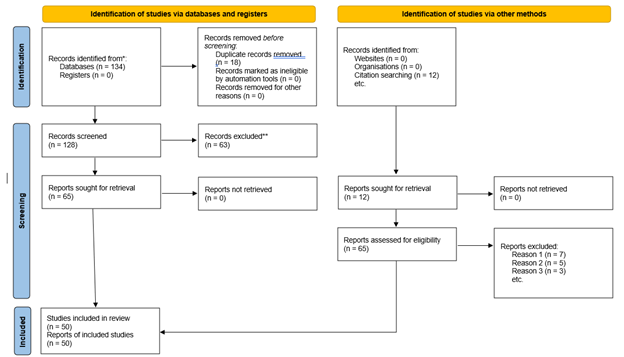
Source: Prepared by the author based on PRISMA 2020.
Note: The figure appears in its original language.
RESULTS AND DISCUSSION
General characteristics of the analyzed corpus
Table 1, entitled General characteristics of the analyzed corpus, summarizes the temporal, methodological, geographical, and thematic distribution of the 50 included studies and allows contextualizing the general patterns of the corpus that support the interpretive results presented below.
|
Table 1. General characteristics of the analyzed corpus |
|||
|
Characteristic |
Category |
n |
% |
|
Publication period |
2015-2019 |
9 |
18 |
|
|
2020-2025 |
41 |
82 |
|
Type of study |
Qualitative empirical |
26 |
52 |
|
|
Quantitative empirical |
9 |
18 |
|
|
Theoretical/review |
15 |
30 |
|
Region of analysis |
Europe/North America |
25 |
56 |
|
|
Latin America |
10 |
20 |
|
|
Other/Global |
12 |
24 |
|
Main thematic focus |
Algorithmic governance and control |
16 |
32 |
|
|
Precariousness and working conditions |
14 |
28 |
|
|
Transformation of work and AI |
12 |
24 |
|
|
Profiles and digital work (incl. CM) |
8 |
16 |
Source: Prepared by the author based on bibliographic analysis.
Of the 50 documents used in this study, it is possible to analyze key trends related to the research topic. As shown in Table 1, the academic output is concentrated primarily in the period 2020–2025 (82%), demonstrating a growing interest among researchers in recent years regarding the platform economy, digital work, freelancing, and the impact of AI.
Regarding the type of study, qualitative empirical approaches predominate (52%), followed by theoretical or review articles (30%), and, to a lesser extent, quantitative empirical studies (18%). This suggests that the field is in a phase of exploration and conceptual problematization, where the analysis of experiences and work practices plays a central role, while quantitative studies remain relatively scarce.
With respect to the region of analysis, most studies focus on Europe and North America (56%), reflecting a geographical concentration of the knowledge produced. However, a significant presence of research conducted in Latin America (20%) and in global or comparative contexts (24%) is observed, pointing to a growing openness toward transnational approaches.
Finally, the analysis by thematic areas shows that algorithmic governance and control mechanisms constitute the main focus of research (32%), followed by studies on precariousness and working conditions (28%) and on the transformation of work and the impact of artificial intelligence (24%). To a lesser extent, studies focused on profiles and digital work, including community management, are identified (16%). Taken together, these results demonstrate an academic emphasis on power relations, working conditions, and the structural changes associated with the digitalization of work.
Dimension 1. Transformations of the community manager role: functions, skills and professional requirements
Finding 1. Displacement of routine tasks and recomposition of the value of work
The analysis of the reviewed literature shows a progressive shift away from routine tasks associated with the adoption of generative artificial intelligence in digital work. Several studies agree that AI is absorbing the demand for activities such as basic content writing, elementary graphic design, and simple programming (Demirci et al., 2023; Shaji George et al., 2023), thus reshaping specific segments of the labor market, although this interpretation is not uniform across the literature.
While some authors argue that this shift does not imply a direct destruction of jobs, but rather a recomposition of the value of work toward analytical, supervisory, and content curation skills generated by AI, others warn that this recomposition tends to concentrate opportunities in profiles with greater educational and technological capital, reducing the viability of intermediate career paths (Lancaster, 2024). In this regard, empirical evidence observed in freelance markets following the emergence of tools like ChatGPT shows a significant drop in demand for easily replaceable tasks, especially short-term assignments, suggesting a growing polarization of digital work (Teutloff et al., 2025).
This behavior can be interpreted through the task exposure approach, which posits that large-scale language models differentially impact the more routine and standardized components of work, particularly those of a linguistic nature (Eloundou et al., 2023). At the same time, this approach underscores the increasing relevance of human functions associated with verification, monitoring, and contextual judgment—dimensions that are not fully replaceable by automated systems.
From this perspective, this pattern takes on specific significance in the case of Community Management (CM). Part of their operational work, such as copywriting, standardized responses, initial audience segmentation, and the creation of basic content, tends to be automated. In contrast, the importance of functions related to metrics analysis, data-driven decision-making, monitoring of automated content, and strategic coordination between brand, community, and AI tools increases. Consequently, the community manager’s role is being redefined less by the manual execution of tasks and more by the ability to guide, evaluate, and correct automated processes, shifting professional value toward communicative judgment, contextual understanding, and reputational responsibility. This reconfiguration, however, is not neutral, as it introduces new forms of internal differentiation within the role itself.
Finding 2. New professional demands and precariousness of the community manager’s work
Despite this repositioning toward roles of greater strategic value, the reviewed literature indicates that a significant proportion of Community Managers face these new demands without sufficient institutional training, mental health support, or clear strategies for managing digital risks. This situation highlights a structural tension in platform-mediated and AI-powered work: while opportunities to specialize in analytical and strategic tasks expand, so do the demands for continuous adaptation, self-directed learning, and constant availability (Kadolkar et al., 2024; Kellogg et al., 2020).
Several studies warn that when these processes of automation and functional reconfiguration are not accompanied by job security, organizational recognition, or a clear redefinition of responsibilities, they tend to reinforce precarious working conditions (Duggan et al., 2023; Liu et al., 2023). From this perspective, the incorporation of AI not only transforms the tasks performed by Community Managers but also how the risks associated with professional performance are distributed. The need to constantly update skills, manage relational overload, and respond to increasingly demanding performance metrics falls largely on the worker, consolidating a model of self-responsibility that weakens job security (van Slageren & Herrmann, 2024).
Based on the analyzed studies, this paper argues that the transformation of the community manager’s role cannot be understood solely as a process of professional sophistication, but rather as an ambivalent reconfiguration in which increased strategic responsibilities coexist with greater exposure to unregulated occupational risks. This tension constitutes a central feature of the community manager’s work in the AI-mediated gig economy (Vallas & Schor, 2020; van Doorn, 2024).
Dimension 2. Platform-mediated interaction, reputational capital, and self-management of work
Finding 3. Centrality of reputational capital in platform-mediated interaction
The reviewed literature concurs that reputational capital has become a central resource within the gig economy (Lehdonvirta et al., 2019; Vallas & Schor, 2020). In environments mediated by digital platforms, visibility, task allocation, and job security depend on data-driven evaluation and reputation systems. Several studies show that those who fail to build and maintain a trustworthy image face greater barriers to accessing opportunities in highly competitive markets, which contributes to reinforcing pre-existing technological and socioeconomic inequalities (Pilatti et al., 2024).
However, beyond its function as a signaling mechanism, reputation also operates as an indirect control device. On platforms governed by metrics and rankings, performance translates into visible scores that condition not only the selection of workers but also their scope of action. This logic shifts some decision-making power to automated systems and constant evaluation by third parties, transforming the employment relationship into a dynamic of permanent exposure (Duggan et al., 2023; Kellogg et al., 2020).
In the case of community managers, this reputational structure takes on a particularly intense character. Their performance is not measured solely by technical indicators, but by the ability to maintain trust, credibility, and community cohesion in public and highly reactive environments (Mañas-Viniegra & Jiménez-Gómez, 2019; Martín García, 2021). Speed in responses, discursive coherence, and the ability to contain conflicts or communication crises are expected in a context marked by constant evaluation through performance metrics (Duggan et al., 2023; Kellogg et al., 2020). AI, in this context, can facilitate the automation of repetitive interactions and the optimization of response times; However, it also amplifies the pressure for continuous availability and compliance with increasingly demanding productivity metrics (Khan & Khan, 2024; Liu et al., 2023).
Based on this review, it can be argued that reputational capital functions not only as a competitive incentive but also as an infrastructure that reorganizes the conditions of the community manager’s professional performance, intensifying emotional exposure and dependence on non-negotiable evaluation systems.
Finding 4. Risk transfer and self-management in high-demand relational environments
A second pattern that clearly emerges in the literature is the progressive transfer of risks from platforms to workers. Flexibility, frequently presented as a distinctive advantage of the gig economy, in practice implies the individual assumption of economic, training, and emotional costs that in traditional employment models fell on employers (Basavaraj et al., 2024; Peetz, 2019). This redistribution of responsibilities produces asymmetrical labor relations, in which recognition and continuity depend on external evaluations and constantly updated performance metrics.
However, the literature does not present a completely uniform interpretation of this process. While some studies highlight the autonomy and organizational capacity that self-management can offer (Kuhn et al., 2021; Vallas & Schor, 2020), others warn that this autonomy is conditioned by algorithmic infrastructures and competitive dynamics that limit the real margins of decision-making (Kellogg et al., 2020; Wood & Lehdonvirta, 2021). In this sense, self-management appears as an ambivalent form of work regulation, expanding individual responsibility but not necessarily effective control over working conditions (Muldoon & Raekstad, 2023).
In the case of Community Managers, this transfer of risks takes on a particularly marked relational dimension. In addition to managing technical and strategic tasks, Community Managers must moderate conflicts, attend to heterogeneous audiences, and maintain organizational reputation in environments of constant exposure, in a context where risks and responsibilities tend to shift toward the worker (Vallas & Schor, 2020; van Doorn, 2024). The literature on algorithmic management and workplace well-being warns that this intensification can lead to overload, pressure to meet targets, and burnout (Blázquez et al., 2024; Duggan et al., 2023), especially when automation introduces new expectations of efficiency and continuous availability (Liu et al., 2023).
Based on the studies analyzed, it can be stated that platform-mediated interaction not only redefines how community managers relate to audiences and clients, but also redistributes the risks associated with professional performance.
Dimension 3. Community management under algorithmic governance
Finding 5. Algorithmic governance and the intensification of technological domination
The review shows that the incorporation of AI into the gig economy is not limited to the automation of operational tasks, but also introduces structured mechanisms for regulating and controlling work. Through algorithmic governance systems, AI intervenes in core processes such as task allocation, performance evaluation, and pricing, generally using algorithms whose criteria are not entirely transparent (Celentano, 2023; Liu & Yin, 2024). Within this framework, several authors link these dynamics to forms of algorithmic domination, understood as configurations in which labor decision-making shifts to automated systems that operate as “invisible employers” (Muldoon & Raekstad, 2022).
However, the literature does not entirely agree on the assessment of this process. While some studies emphasize the efficiency and scalability that algorithmic systems offer in work organization (Kellogg et al., 2020; Vallas & Schor, 2020), others underscore that the opacity of decision-making criteria reduces the possibilities for negotiation, appeal, or strategic adaptation by workers (Celentano, 2023; Newlands, 2021). This tension is central, since algorithmic governance not only organizes workflow but also redefines the conditions under which professional autonomy is exercised, frequently in forms of subordinate agency (Muldoon & Raekstad, 2023; Wood & Lehdonvirta, 2021).
In the case of community management, these dynamics translate into a direct dependence on platform rules that exceed individual control (Kinder et al., 2019; Newlands, 2021). Visibility, reach, recommendation, and automated moderation criteria influence daily performance and can amplify, restrict, or penalize content without fully explicit parameters (Kellogg et al., 2020). Consequently, community management ceases to be merely a communicative exercise and becomes conditioned by technical infrastructures that mediate the impact of human decisions. Based on this review, it can be stated that algorithmic governance does not act as a simple operational framework, but rather as a structure that reorganizes the community manager’s scope of action.
Finding 6. Algorithmic opacity and regulatory gaps as a structural condition of digital work
Beyond the intensification of control, the literature identifies a persistent problem: the lack of clarity regarding the criteria governing the operation of these platforms. Studies indicate that it is not precisely explained how tasks are assigned, rates are set, or performance is evaluated, which reinforces power asymmetries between platforms and workers (Alvarez de la Vega et al., 2021; Sannon et al., 2022). This lack of transparency is not a peripheral issue, but rather a constitutive element of the business model of many digital platforms.
The absence of clear mechanisms to challenge automated decisions increases job vulnerability, given that sanctions, account blocks, or reductions in visibility can occur without detailed explanations or effective appeals processes. This scenario is particularly problematic in emerging economies, where platform work constitutes a significant source of income and regulatory frameworks are limited or incipient (Kerikmäe et al., 2022; Kuhn et al., 2021). In these contexts, economic dependence amplifies the impact of automated decisions that are not always subject to review.
In the case of community managers, algorithmic opacity operates on two levels. As employees, they may be subject to unstable contractual conditions and opaque automated evaluations; as community managers, they depend on visibility and interaction rules that define the reach of content and audience response (Duggan et al., 2023; Newlands, 2021). This double exposure limits strategic planning and reduces decision-making power, as communicative effectiveness becomes partially subordinated to uncontrolled algorithmic dynamics (Kellogg et al., 2020; Wood & Lehdonvirta, 2021).
Based on the body of studies analyzed, it can be argued that opacity and regulatory gaps are not anomalies, but rather structural features of AI-mediated digital work. In this sense, the reconfiguration of the CM’s role not only implies a functional transformation, but also an insertion into an environment regulated by technical logics that redistribute power and responsibility asymmetrically.
CONCLUSIONS
The findings derived from the analysis of the three dimensions suggest that the intersection of the gig economy, artificial intelligence, and the work of the community manager is producing a structural reconfiguration of the professional role, observable at three distinct levels.
First, as evidenced in Dimension 1, AI is displacing routine tasks, such as the basic production of content and standardized responses, and shifting the value of the work toward skills in strategic analysis, supervision of automated processes, and communicative decision-making. This shift does not imply the disappearance of the community manager role, but rather its redefinition in terms of greater technical complexity and reputational responsibility. However, Finding 2 showed that this transformation is developing unevenly, especially when there are no mechanisms for continuous training or sufficient institutional support, which can intensify precarious situations.
Second, as analyzed in Dimension 2, the consolidation of reputational capital as a central resource on digital platforms is reorganizing the conditions of professional performance. Findings 3 and 4 showed that audience interaction intensifies under constant visibility and evaluation metrics, increasing the pressure for availability, productivity, and emotional management. Self-management, frequently presented as autonomy, appears in the reviewed evidence as a mechanism for transferring risk to the worker, especially in highly competitive environments with little organizational support.
Third, Dimension 3 showed that community management is increasingly conditioned by algorithmic governance systems. Findings 5 and 6 indicate that automation not only organizes tasks but also regulates visibility, assignment, and evaluation through opaque criteria with limited appeals possibilities. This opacity redefines the margins of autonomy for community managers, both as platform workers and as mediators between brands, communities, and technological systems.
Taken together, the analyzed evidence suggests that AI acts not only as a tool for operational efficiency but also as an infrastructure that redistributes value, risks, and power within digital work. The professional viability of community managers in the gig economy depends, according to the results obtained, on three interrelated conditions: access to continuing education, transparency in algorithmic systems, and regulatory frameworks that ensure effective protection and appeal mechanisms. In the absence of these conditions, the identified transformations tend to exacerbate pre-existing labor inequalities rather than generate uniform improvements in professional opportunities.
REFERENCES
Alvarez de la Vega, J., E. Cecchinato, M., & Rooksby, J. (2021). “Why lose control?” A Study of Freelancers’ Experiences with Gig Economy Platforms. Proceedings of the 2021 CHI Conference on Human Factors in Computing Systems. https://doi.org/10.1145/3411764.3445305
Arriagada, A., Bonhomme, M., Ibáñez, F., & Leyton, J. (2023). The gig economy in Chile: Examining labor conditions and the nature of gig work in a Global South country. Digital Geography and Society, 5, 100063. https://doi.org/10.1016/j.diggeo.2023.100063
Basavaraj, N., Foutz, N. Z., & Li, B. (2023). Resilience of gig economy during economic downturn: Insights from location big data. https://doi.org/10.2139/ssrn.4553546
Blázquez, M., Herrarte, A., & Moro-Egido, A. I. (2024). Well-being effects of the digital platform economy: the case of temporary and self-employment. Technological and economic development of economy, 30(6), 1618–1651. https://doi.org/10.3846/tede.2024.21858
Bulian, L. (2021). The gig is up: Who does gig economy actually benefit? Interdisciplinary Description of Complex Systems, 19(1), 106–119. https://doi.org/10.7906/indecs.19.1.9
Celentano, D. (2023). ‘Be your own boss’? Normative concerns of algorithmic management in the gig economy: reclaiming agency at work through algorithmic counter-tactics. Philosophy & Social Criticism, 51(7), 1114-1137. https://doi.org/10.1177/01914537231215680
Contreras Fernández, A. B. (2020). Papel estratégico de la gestión de “nuevos” riesgos. En Enfoques y gestión en seguridad integral (pp. 129–160). Escuela de Posgrados - FAC. https://doi.org/10.18667/9789585996199.05
Davies, A. C. L. (2020). Wages and working time in the ‘gig economy’. King’s Law Journal, 31(2), 250-259. https://doi.org/10.1080/09615768.2020.1790820
Demirci, O., Hannane, J., & Zhu, X. (2025). Who is AI replacing? The impact of generative AI on online freelancing platforms. Management Science, 71(10), 8097–8108. https://doi.org/10.1287/mnsc.2024.05420
Do, K., De Los Santos, M., Muller, M., & Savage, S. (2024). Designing Gig Worker Sousveillance Tools. In Proceedings of the CHI Conference on Human Factors in Computing Systems (pp. 1-19). https://doi.org/10.1145/3613904.3642614
Duggan, J., Carbery, R., McDonnell, A., & Sherman, U. (2023). Algorithmic HRM control in the gig economy: The app‐worker perspective. Human Resource Management, 62(6), 883–899. https://doi.org/10.1002/hrm.22168
Eloundou, T., Manning, S., Mishkin, P., & Rock, D. (2024). GPTs are GPTs: Labor market impact potential of LLMs. Science (New York, N.Y.), 384(6702), 1306–1308. https://doi.org/10.1126/science.adj0998
Fierro-Moreno, E. (2021). La gestión del cambio, la colaboración virtual y la agilidad estratégica organizacional de empresas mexicanas ante los impactos por el COVID-19. Nova Scientia, 13. https://doi.org/10.21640/ns.v13ie.2762
Fiers, F. (2024). Resilience in the gig economy: digital skills in online freelancing. Journal of Computer-Mediated Communication: JCMC, 29(5), zmae014. https://doi.org/10.1093/jcmc/zmae014
Flores-Jaramillo, S., & Trabadela-Robles, J. (2023). Community manager en centros educativos de infantil y primaria. Un estudio de caso. Revista Latinoamericana De Tecnología Educativa - RELATEC, 22(1), 173-189. https://doi.org/10.17398/1695-288x.22.1.173
Fulker, Z., & Riedl, C. (2024). Cooperation in the gig economy: Insights from Upwork freelancers. Proceedings of the ACM on Human-Computer Interaction, 8(CSCW1), 1–20. https://doi.org/10.1145/3637314
Shaji George, A., Hovan George, A. S., & Gabrio Martin, A. S. (2023). ChatGPT and the Future of Work: A Comprehensive Analysis of AI’s Impact on Jobs and Employment. Partners Universal International Innovation Journal, 1(3), 154-186. https://doi.org/10.5281/zenodo.8076921
Jiménez, A., Romero, R., & Thabet, D. (2023). Diagnóstico para la implementación de un sistema de gestión de seguridad y salud en el trabajo en el sector de la construcción. Técnica administrativa, 22(93), 4.
Kadolkar, I., Kepes, S., & Subramony, M. (2024). Algorithmic management in the gig economy: A systematic review and research integration. Journal of Organizational Behavior, 46(7), 1057–1080. https://doi.org/10.1002/job.2831
Kellogg, K. C., Valentine, M. A., & Christin, A. (2020). Algorithms at work: The new contested terrain of control. Academy of Management Annals, 14(1), 366–410. https://doi.org/10.5465/annals.2018.0174
Khan, A. N., & Khan, N. A. (2024). The gig economy’s secret weapon: ChatGPT. Technological Forecasting and Social Change, 209, 123808. https://doi.org/10.1016/j.techfore.2024.123808
Kemp, S. (2024). Digital 2024: Global overview report. DataReportal – Global Digital Insights. https://datareportal.com/reports/digital-2024-global-overview-report
Kerikmäe, T., Kajander, A., Gil, M. G., & CIDOB. (2022). hacia un cambio en su clasificación jurídica. Revista CIDOB d Afers Internacionals, (131), 117–140. https://www.jstor.org/stable/27186237
Kinder, E., Jarrahi, M. H., & Sutherland, W. (2019). Gig platforms, tensions, alliances and ecosystems: An actor-network perspective. Proceedings of the ACM on Human-Computer Interaction, 3(CSCW), 1–26. https://doi.org/10.1145/3359314
Kuhn, K. M., Meijerink, J., & Keegan, A. (2021). Human resource management and the gig economy: Challenges and opportunities at the intersection between organizational HR decision-makers and digital labor platforms. In Research in Personnel and Human Resources Management (pp. 1–46). Emerald Publishing Limited. https://doi.org/10.1108/s0742-730120210000039001
Lancaster, T. (2024). The Gig’s Up: How ChatGPT Stacks Up Against Quora on Gig Economy Insights.
Lata, L. N., Burdon, J., & Reddel, T. (2023). New tech, old exploitation: Gig economy, algorithmic control and migrant labour. Sociology Compass, 17(1), e13028. https://doi.org/10.1111/soc4.13028
Lehdonvirta, V., Kässi, O., Hjorth, I., Barnard, H., & Graham, M. (2019). The global platform economy: A new offshoring institution enabling emerging-economy microproviders. Journal of Management, 45(2), 567–599. https://doi.org/10.1177/0149206318786781
López Estupiñán, A. M., & Peña Mesa, L. (2023). Inteligencia Artificial: el futuro del empleo. Revista Lecciones Vitales, lv0103. https://doi.org/10.18046/rlv.2023.6118
Liu, J., Xu, X., Nan, X., Li, Y., & Tan, Y. (2023) “Generate” the Future of Work through AI: Empirical Evidence from Online Labor Markets. https://doi.org/10.2139/ssrn.4529739
Liu, R., & Yin, H. (2024). How algorithmic management influences gig workers’ job crafting. Behavioral Sciences, 14(10), 952. https://doi.org/10.3390/bs14100952
Mañas-Viniegra, L., & Jiménez-Gómez, I. (2019). Evolución del perfil profesional del community manager durante la década 2009-2018. Profesional de la información, 28(4). https://doi.org/10.3145/epi.2019.jul.03
Martín García, A. (2021). Análisis de la figura del community manager como voz de las marcas en las redes sociales. Universidad de Valladolid. https://doi.org/10.35376/10324/52084
Muldoon, J., & Raekstad, P. (2023). Algorithmic domination in the gig economy. European Journal of Political Theory: EJPT, 22(4), 587–607. https://doi.org/10.1177/14748851221082078
Newlands, G. (2021). Algorithmic surveillance in the gig economy: The organization of work through lefebvrian conceived space. Organization Studies, 42(5), 719–737. https://doi.org/10.1177/0170840620937900
Peetz, D. (2019). Digitalisation and the Jobs of the Future. En The Realities and Futures of Work (pp. 83-112). ANU Press. https://doi.org/10.22459/rfw.2019
Pilatti, G. R., Pinheiro, F. L., & Montini, A. A. (2024). Systematic literature review on gig economy: Power dynamics, worker autonomy, and the role of social networks. Administrative Sciences, 14(10), 267. https://doi.org/10.3390/admsci14100267
Reljic, J., Evangelista, R., & Pianta, M. (2025). Digital technologies, employment, and skills. Industrial and Corporate Change, 34(3), 385–406. https://doi.org/10.1093/icc/dtab059
Rosales-Veítia, J. (2021). Evolución histórica de la concepción de la gestión de riesgos de desastres: algunas consideraciones. Revista Kawsaypacha: Sociedad y Medio Ambiente, (7), 67–81. https://doi.org/10.18800/kawsaypacha.202101.004
Sannon, S., Sun, B., & Cosley, D. (2022). Privacy, surveillance, and power in the gig economy. In Proceedings of the 2022 CHI Conference on Human Factors in Computing Systems (pp. 1-15). https://doi.org/10.1145/3491102.3502083
Sum, C. M., Shi, C., & Fox, S. E. (2025). “it’s always a losing game”: How workers understand and resist surveillance technologies on the job. Proceedings of the ACM on Human-Computer Interaction, 9(2), 1–32. https://doi.org/10.1145/3710902
Tan, Z. M., Aggarwal, N., Cowls, J., Morley, J., Taddeo, M., & Floridi, L. (2021). The ethical debate about the gig economy: A review and critical analysis. Technology in Society, 65, 101594. https://doi.org/10.1016/j.techsoc.2021.101594
Teutloff, O., Einsiedler, J., Kässi, O., Braesemann, F., Mishkin, P., & del Rio-Chanona, R. M. (2025). Winners and losers of generative AI: Early Evidence of Shifts in Freelancer Demand. Journal of Economic Behavior & Organization, 235, 106845. https://doi.org/10.1016/j.jebo.2024.106845
Vallas, S., & Schor, J. B. (2020). What do platforms do? Understanding the gig economy. Annual Review of Sociology, 46, 273–294. https://doi.org/10.1146/annurev-soc-121919-054857
van Doorn, N. (2024). The contingencies of platform power and risk management in the gig economy. Internet Policy Review, 13(2). https://doi.org/10.14763/2024.2.1778
van Doorn, N., & Vijay, D. (2024). Gig work as migrant work: The platformization of migration infrastructure. Environment and Planning A: Economy and Space, 56(4), 1129–1149. https://doi.org/10.1177/0308518x211065049
van Slageren, J., & Herrmann, A. M. (2024). Skill specificity on high-skill online gig platforms: Same as in traditional labour markets? Social Forces, 102(4), 1332–1351. https://doi.org/10.1093/sf/soad153
Whalley, J., Stocker, V., & Lutz, C. (2024). A platform for doers? Fiverr and the gig economy. https://doi.org/10.2139/ssrn.4800456
Wood, A., & Lehdonvirta, V. (2021). Antagonism beyond employment: how the ‘subordinated agency’ of labour platforms generates conflict in the remote gig economy. Socio-Economic Review, 19(4), 1369–1396. https://doi.org/10.1093/ser/mwab016
Yu, J., & Abdul Hamid, R. (2024). Gig workers’ psychological contracts and turnover intention: A mediated path analysis of organizational identification and job satisfaction. Acta Psychologica, 251, 104587. https://doi.org/10.1016/j.actpsy.2024.104587
FINANCING
The study did not receive external funding.
CONFLICT OF INTEREST STATEMENT
The author declares no conflicts of interest.
STATEMENT ON THE USE OF ARTIFICIAL INTELLIGENCE
In preparing this document, the author used the ChatGPT tool (OpenAI) solely to assist in reviewing formal aspects of the text, seeking ideas to clarify certain expressions and organize some paragraphs. Its use was limited to suggestions for writing and style improvements. The academic content of the work, however, was developed entirely by the author. All conceptual and methodological decisions reflect the author’s own research and reflection process. Each section of the document was carefully reviewed, and all citations and references were directly verified against their original sources. The author assumes full responsibility for the content presented and for the academic rigor of the manuscript.
ACKNOWLEDGMENTS
The author thanks the Corporación Universitaria Minuto de Dios (UNIMINUTO) for its institutional support.
AUTHORSHIP CONTRIBUTION
Conceptualization: Andrés Camilo Aponte-López.
Data curation: Andrés Camilo Aponte-López.
Formal analysis: Andrés Camilo Aponte-López.
Investigation: Andrés Camilo Aponte-López.
Software: Andrés Camilo Aponte-López.
Supervision: Andrés Camilo Aponte-López.
Validation: Andrés Camilo Aponte-López.
Visualization: Andrés Camilo Aponte-López.
Writing – original draft: Andrés Camilo Aponte-López.
Writing – proofreading & editing: Andrés Camilo Aponte-López.