doi: 10.58763/rc2026561
Scientific and Technological Research Article
Mediación artística a través de la danza y conductas de riesgos para el desarrollo de adicciones en estudiantes de una preparatoria del Sur de Jalisco
Artistic mediation through dance and risk behaviors for the development of addictions in high school students in Southern Jalisco
Irma Elisa Alva Colunga1  *, Jayanit Elizabeth Grajeda Santana2
  *, Danny Echerri
Garcés1 *
*, Danny Echerri
Garcés1 *
RESUMEN
Introducción: El presente estudio tuvo como objetivos analizar la relación entre la mediación artística a través de la danza y las conductas de riesgo para el desarrollo de adicciones, en una institución educativa del Sur de Jalisco, México.
Metodología: El enfoque metodológico utilizado fue el hermenéutico-constructivista y la técnica central de análisis de información fue el análisis temático.
Resultados: Los hallazgos principales de la investigación apuntan a que no hay respuestas acabadas para las problemáticas encontradas; más bien se abre un abanico de necesidades que interpelan de manera urgente al cambio y a la transformación social y humana. La mayoría de los jóvenes de esta comunidad educativa presentan conductas que los predisponen al consumo, siendo mayor la tendencia en los hombres. Se considera además que estos influyen en la iniciación del consumo de las mujeres a través de la presión social ejercida en el marco de las relaciones de pareja. El vapeador, el cigarro, el alcohol y el cannabis son las drogas que con más frecuencia se consumen, y esta última detona áreas de tensión que implican a las normativas escolares, familiares y jurídicas. La situación que se presenta es vivenciada por los maestros como un escenario de conflicto ante las posturas de normalización, el limbo jurídico en el que se encuentran ante el consumo de la marihuana y las posturas familiares frente a la situación.
Conclusiones: Aparece como alternativa de cambio y primer espacio de agencia la mediación artística, que a través de experiencias dancísticas previas demostró ser un mapa que mueve a nuevas rutas, y se rescata como proyecto de intervención para atender las necesidades encontradas.
Palabras clave: Danza, conductas de riesgo, intervención educativa, adolescencias.
Clasificación JEL: I0, I12.
ABSTRACT
Introduction: The present study aimed to analyze the relationship between artistic mediation through dance and risk behaviors associated with the development of addictions in an educational institution in southern Jalisco, Mexico.
Methodology: The methodological approach used was hermeneutic-constructivist, and the central technique for information analysis was thematic analysis.
Results: The main findings of the research suggest that there are no definitive answers to the problems identified; rather, a range of needs emerges that urgently call for social and human change and transformation. Most of the young people in this educational community exhibit behaviors that predispose them to substance use, with a higher tendency among males. It is also considered that males influence the initiation of substance use among females through social pressure exerted within romantic relationships. Vaping devices, cigarettes, alcohol, and cannabis are identified as the substances most frequently consumed. The latter, in particular, triggers areas of tension involving school regulations, family norms, and legal frameworks. Teachers experience this situation as a conflicting scenario due to the normalization of these practices, the legal ambiguity surrounding marijuana use, and the differing family positions regarding the issue.
Conclusions: Artistic mediation emerges as an alternative for change and a first space for agency. Through previous dance experiences, it has demonstrated itself as a map that opens new pathways and is proposed as an intervention project to address the identified needs.
Keywords: Dance, risk behaviors, educational intervention, adolescence.
JEL Classification: I0, I12.
Received: 30-08-2025 Revised: 14-11-2025 Accepted: 15-12-2025 Published: 02-01-2026
Editor: Carlos
Alberto Gómez Cano
1Universidad Pedagógica Nacional. Ciudad Guzmán, México.
2Universidad de Guadalajara. Guadalajara, México.
Cite as: Alva Colunga, I. E., Grajeda Santana, J. E. y Echerri Garcés, D. (2026). Mediación artística a través de la danza y conductas de riesgos para el desarrollo de adicciones en estudiantes de una preparatoria del Sur de Jalisco. Región Científica, 5(1), 2026561. https://doi.org/10.58763/rc2026561
INTRODUCTION
The World Health Organization has conducted a comprehensive study on the connection between art, health, and well-being, in which numerous health benefits were identified (Ávila Valdés, 2024; OMS, 2019; Sajnani & Fietje, 2023). Consequently, it calls upon governments and authorities to implement policies aimed at enhancing collaboration between the health and arts sectors. The implementation of artistic experiences as an intervention strategy has, in fact, been underway in countries such as Cuba and Spain for decades.
Artistic mediation is an educational and therapeutic process that utilizes art as a tool to foster reflection, emotional expression, and personal development. This methodology has proven effective in contexts involving the prevention and promotion of emotional health (Fernández-Guayana et al., 2024; López-Martínez et al., 2026).
From a sociocultural perspective, Vygotsky (1978) highlights the role of symbolic mediation in human development. Cultural tools—such as language, symbols, and art—act as bridges between internal experience and social reality, thereby enabling emotional processing and the construction of meaning. In this sense, artistic mediation serves as a privileged avenue through which adolescents can explore their emotions, give them form, and reframe their meaning within a safe environment.
The multiple intelligences approach broadens the concept of human capability to include visual-spatial, musical, bodily-kinesthetic, and interpersonal intelligence (Keates & Pearson, 2024). This entails recognizing that many adolescents who may not excel in traditional educational settings can find in art a legitimate channel for expressing their inner world and developing fundamental life skills.
Studies such as those conducted by Arriaga et al. (2024) and Xue & Syed Abdullah (2025) have indicated that art-based approaches not only facilitate emotional expression but also promote self-regulation, critical thinking, empathy, and a sense of community. These competencies are essential for building protective factors against risk behaviors associated with drug addiction.
|
Figure 1. Artistic mediation and its relationship with personal development |
|
|
|
Note: the figure appears in its original language. |
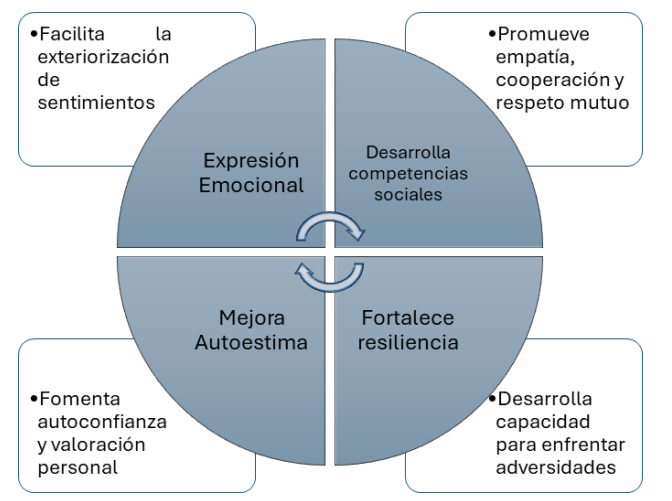
Artistic mediation through dance as an activity to intervene in risky behaviors related to addictions
Artistic mediation can strengthen protective factors in adolescents, such as self-esteem, effective communication, and conflict resolution. By engaging in artistic experiences, young people develop socio-emotional skills that enable them to confront high-risk situations positively (Collins et al., 2023; Moula, 2020).
The context of this study is grounded in the creation of safe and collaborative spaces where adolescents can explore and express their emotions. Art facilitates introspection and the externalization of feelings that might otherwise remain repressed. This conscious emotional expression is key to reducing anxiety, depression, and other risk factors associated with substance use.
According to Moula (2020), the development of social and emotional competencies is another prominent benefit of artistic mediation. Activities such as painting, music, dance, or theater foster empathy, cooperation, and mutual respect. These collective experiences strengthen a sense of belonging and social support, acting as a protective factor against situations of vulnerability.
Furthermore, resilience is enhanced through art. The capacity to confront and overcome adversity is cultivated through creative problem-solving and the acceptance of mistakes as an integral part of the artistic process. This approach fosters a growth mindset and self-confidence in adolescents.
Recent international studies conducted in India, the Netherlands, and Romania—involving participants ranging from adolescents aged 12 to 14 to adults, depending on the specific study, and presenting with various substance use disorders and psychological conditions within the context of addiction treatment settings—assert that artistic mediation aids in processing trauma, improving self-regulation, and activating the brain’s reward system to facilitate recovery from substance use disorders (Abbing et al., 2023; Quinn, 2025; Tache-Codreanu & Tache-Codreanu, 2024).
Specifically, dance helps improve mood, boost self-confidence, and regulate emotions through the body’s physical and chemical responses; consequently, it is considered a potentially useful tool for addressing risk behaviors linked to emotional and behavioral issues. It has also been demonstrated to possess therapeutic potential for improving emotional and behavioral patterns—a finding that could be highly relevant for interventions targeting substance use risk behaviors. Finally, these studies reveal that dance therapy in forensic settings is utilized to regulate emotions—such as anger—by transforming destructive behaviors into constructive ones (Abbing et al., 2023; Quinn, 2025; Tache-Codreanu & Tache-Codreanu, 2024).
Across various educational institutions within the country, artistic mediation has proven to be an effective tool for the prevention of substance use. The Arte y Bienestar Juvenil (Art and Youth Well-being) program, implemented in secondary schools throughout Mexico City, facilitated the development of socio-emotional skills among students who participated in theater and music workshops. The results indicated a decrease in anxiety levels and an increase in self-confidence among the participants (González et al., 2020).
The Expresión Creativa para la Prevención (Creative Expression for Prevention) project, conducted in Guadalajara—where adolescents from vulnerable communities participated in community mural-painting activities—fostered an enhanced sense of community belonging and self-esteem; it also promoted the establishment of support networks among the youth and their families (Ramírez & López, 2019).
The Danza para la Vida (Dance for Life) program, implemented in Monterrey, utilized contemporary dance as a medium for emotional expression. Participants reported an increased capacity to manage stress and resolve conflicts assertively, thereby contributing to the development of protective factors (Martínez, 2021).
In these examples from the national context, the mediation of art within personal, social, and community processes proved fundamental to fostering the human development of Mexican adolescents. Consequently, it is regarded as an essential tool for addressing risk behaviors associated with substance use.
Substance use in Mexico
According to ENCODAT (2025), the consumption of psychoactive substances is a phenomenon of global proportions; recent estimates indicate that approximately 2,5 billion young people over the age of 15 consume alcoholic beverages, and 1,245 billion people within the same age range use tobacco products. This highlights the vulnerability of upper secondary education students regarding substance use. Furthermore, ENCODAT notes that 316 million people aged 15 to 65 use psychoactive substances other than alcohol and tobacco.
In Mexico, the lifetime prevalence of any drug use among individuals aged 12 to 65 increased from 10,3 % in 2016 to 14,4 % in 2025. This underscores the need to address the underlying causes and contributing factors of this urgent issue—politically, socially, and in a context-specific manner tailored to the particularities of each region and specific setting. Likewise, the lifetime prevalence of any drug use increased significantly across different regions: in Mexico City, it rose from 10,6 % in 2016 to 19,8 % in 2025; in the Central region, from 9,4 % to 15,0 %; in the Northwest region, from 10,8 % to 19,0 %; in the Northeast region, from 9,2 % to 13,4 %; and in the Northern Peninsula region, from 12,3 % to 22,3 % (ENCODAT, 2025).
Drug use among Mexican adolescents
Among Mexican adolescents, lifetime drug use remained unchanged, with a prevalence of 6,4 % in 2016 and 4,7 % in 2025; however, in the general population, the prevalence of lifetime illegal drug use increased from 9,9 % in 2016 to 13,1 %. It is worth noting that among adolescents, a significant decrease was observed, from 6,2 % to 4,1 %, over the same period; this implies that, although fewer adolescents are using drugs, more targeted strategies are needed to maintain and, ideally, reduce this rate.
Regarding the type of use, according to this survey, cannabis is the most commonly used “decriminalized” drug for personal use in the general population, increasing from 8,6 % in 2016 to 12,0 % in 2025. Use among adolescent girls decreased from 4,8 % in 2016 to 2,1 % in 2025.
ENCODAT (2025) reports a prevalence of 0,2 % for lifetime non-medical fentanyl use, and the prevalence of use in the past year was 0,1 %.
The average age of onset for the use of any illegal drug and cannabis increased in the total population, rising from 17,5 years in 2016 to 19 years in 2025; among adolescents, a general decrease in use is observed compared to other age groups.
It is worth noting that, although the prevalence of use is decreasing according to the data, intervention strategies and programs remain a priority to maintain and reduce levels of use and risky behaviors, thereby ensuring healthy and educated adolescents.
Considering the above and taking into account the issue addressed by this research, the information presented above validates the need for preventive approaches and educational interventions; addictions directly impact the educational context under study, manifesting as low grades, failing grades, absenteeism, isolation, depression, indiscipline, anxiety caused by withdrawal syndrome, and violent behaviors; as well as the risk of traffic accidents and the involvement of these adolescents in criminal groups. Art, in this case dance, is considered a fundamental mediator of adolescents’ personal and social development, enabling the development of protective factors that contribute to reducing risk behaviors that predispose them to addiction.
The participants are adolescents and educational staff from a high school in southern Jalisco. This school has records of students who use drugs.
General Objective
• To understand the relationship between artistic mediation through dance and risk behaviors associated with substance use among adolescents at a high school in southern Jalisco.
Specific Objectives
• To identify risk behaviors that predispose adolescents at a high school in southern Jalisco to drug use.
• To uncover the perceptions, experiences, and positions of educational professionals regarding risk behaviors related to the development of drug use and the importance of artistic mediation through dance for socio-educational interventions.
METHODOLOGY
The following study adopts a predominantly qualitative methodological approach from a hermeneutic-constructivist perspective and also includes an assessment of drug use using the Problem-Oriented Screening Instrument for Teenagers (POSIT) questionnaire, validated in Mexico by Mariño et al. (1998), placing the quantitative data within the socio-educational context to be interpreted.
The hermeneutic approach aims to interpret reality based on principles of understanding otherness. The researcher engages with the issue in a deep and empathetic manner and becomes part of the process of bringing about change. This principle implies a mutual effort to transcend, through the internalization of data and the constant organization and rearrangement of information, in order to bring the world of lived and observed facts closer to the generated ideas and their systematization (Torres Rodríguez et al., 2020).
For its part, constructivism assumes that reality is socially constructed through culture and that intersubjective relationships mediate psychological and social development. In line with the above, it is worth noting that educational agents act as facilitators and guides of processes according to their levels of development within the context where socio-educational interaction takes place (Vygotsky, 1978). This research consists of three research stages.
|
Table 1. Stages of research on artistic mediation through dance and risk behaviors that predispose adolescents to drug |
|
|
Stages |
Research Activities |
|
First Stage
|
• Fieldwork. • Participant observation and field notes aimed at revealing institutional dynamics, discourses, and educational practices related to risky behaviors and drug use. • Administration of the POSIT questionnaire. This instrument aims to assess ten areas of functioning related to risk behaviors that predispose individuals to drug use, through 139 items; it was validated in Mexico in 1998 by Mariño et al. • Analysis of official documents: school records, disciplinary reports, and disciplinary committee minutes, with the aim of identifying risk behaviors, or behaviors perceived as such by educational staff. |
|
Second Stage
|
• Conducting open-ended interviews with school administrators regarding risky behaviors, drug use, and the use of dance as a form of artistic mediation among students. • Conducting in-depth interviews with students who have experience using dance as a tool for personal development. • Focus group on substance use for teachers and administrators to triangulate information. |
|
Third Stage |
• Transcription of interviews and focus group discussions • Analysis of questionnaires • Systematization of the analysis of official documents • Interpretation of results • Triangulation of results • Presentation of the study’s results and conclusions |
Participants
A total of 87 first-semester students participated in this study, and the POSIT questionnaire was administered to them. In-depth interviews were conducted with two students who have participated in the institution’s dance club to assess the impact of art on reducing risky behaviors and drug use. Additionally, the director and the social worker were interviewed, and a focus group was held with seven teachers to triangulate information and identify emerging issues related to the problem.
|
Table 2. Teachers participating in the discussion group of the preparatory educational institution of Southern Jalisco |
||
|
Participants |
Subject |
Age |
|
Juan |
Information and Communication Technology |
35 |
|
Simón |
Logic |
42 |
|
Jaqueline |
Reading, Speaking, and Writing I |
34 |
|
Arturo |
Chemistry I |
40 |
|
María |
English I |
34 |
|
Ernestina |
Algebra |
30 |
|
Hernán |
Physical Education |
37 |
Data analysis
Thematic analysis was selected for this study. This method allows for the identification of themes related to the categories of study (Braun & Clarke, 2006). Therefore, risk behaviors in adolescents, addictions, and dance as a mediator for potential interventions were identified as fundamental analytical axes, based on the recurrence of the identified ideas and their ranking by significance and repetition. The Excel program was also used to calculate the frequencies of the dimensions of the administered questionnaire.
Ethical considerations
According to the Ley General de Salud (2026), regarding health research, Article 17 outlines the risk levels for participants. Based on these levels, this study poses minimal risk; furthermore, when working with adolescents, the standards NOM-047-SSA2-2015 and NOM-028-SSA2-2009 must be followed. The first standard addresses adolescent health, and the second addresses the prevention and treatment of addictions.
In accordance with Articles 36 and 37 of the Ley General de Salud (2026), informed consent from parents and assent from students were obtained. Participants are free to withdraw from the study at any time they choose.
RESULTS and DISCUSSION
According to data from the POSIT survey, 63 % of the students surveyed are male, and 36 % are female, making it an institution with a predominantly male student body. The areas most affected are educational attainment (90 %), which relates to student retention and continuity of studies, and contributes to school dropout rates—an issue the school identifies as its greatest concern.
The second most affected area is peer relationships, at 89 %, followed by aggressive-delinquent behavior, at 76 %. Scores were higher across all dimensions for males than for females; therefore, regarding gender, strategies must involve an analysis of context, gender, and their impact on predisposition to substance use, as it was found that 55 % of students exhibited risk behaviors related to drug use overall, with a higher prevalence among males, which is consistent with studies that delve into the relationship between gender and predisposition to drug use.
What is expected from gender construction implies social demands that influence how substances are used. Social and romantic relationships provide a framework that could explain consumption behaviors and patterns; patriarchal gender norms position men in a role as protectors and providers, as well as embodying competition, tenacity, security, and the public sphere. In the case of women, they are expected to fulfill the reproductive role, providing care and emotional support, and to be more oriented toward empathy, the emotional, and the private. However, conformity to this model has entered a crisis, and analysis of the specific context and situation will determine the greater or lesser degree of adherence. A systematic review on the influence of gender and sex on the modulation of addiction vulnerability has demonstrated that strict adherence to traditional gender roles increases risky behaviors, and that the mismatch between assumed gender identity and social expectations predisposes individuals to stress, trauma, and, consequently, substance use as a means of escape to cushion unresolved or ongoing personal processes (Rius Leiva et al., 2025). These findings open the door to future studies on the relationship between gender and risk behaviors among adolescents at this institution, also considering how romantic relationships are established based on traditional gender roles among students and their implications for initiating substance use.
“In the case of female students, the influence of boyfriends is very significant when they are older than the girls: they invite them to the disco, they invite them to use drugs, and at that age, social life is very important to them. They need to feel that they can do it too, and, honestly, they do it to fit in with social groups” (Teacher Armando).
Based on the analysis of interviews with administrators and teachers, the most significant issue that emerged was the high dropout rate, which, in their view, is linked to failing grades and absenteeism—situations that, in turn, were being caused, to some extent, by substance use. The identified substance use preferences were primarily alcohol, cigarettes, vaping, and illegal drugs, with vaping being the most common, as 69 students were identified as regular users.
Teachers and administrators noted that students generally use substances via e-cigarettes and also highlighted alcohol as the most common substance. They further pointed out that this implies students perceive themselves as having a privileged social status that sets them apart from those who cannot afford drugs due to financial constraints, a phenomenon closely linked to identity formation at this stage of development and the informal role models that shape their vision of success.
“Yes, students share e-cigarettes; cigarettes have always been a complement to alcohol, but now kids no longer want to smell like tobacco or marijuana, and in that sense, e-cigarettes are more discreet” (Teacher Armando).
This construction of their identity processes is shaped by the presence of aggressive and delinquent behaviors, peer pressure, and the influence of role models in their social, family, and school environments.
“Students turn to substances to escape their family problems. Their environment also plays a role due to the friends they have. Another influencing factor is the culture and the false perception that everything is very easy in that environment. They desperately need to feel that they belong to a group, and sharing a vape gives them that feeling. It’s also as if they were saying, ‘If my friend can do it, so can I’” (Academic Vice Principal).
These results are consistent with studies showing that substance use can also be explained by psychological constructs such as self-esteem, self-worth, social-emotional skills, emotional control and self-regulation, and empathy, as well as by social relationships (friendships, romantic partners, family) and the influence of the culture and community in which adolescents develop (Maldonado Osuna et al., 2025; Govea Ireta et al., 2025).
Figure 2 illustrates the fundamental interrelated dimensions as perceived by the key informants in the study.
|
Figure 2. Interrelationship among the dimensions analyzed in the study |
|
|
|
Note: the figure appears in its original language. |
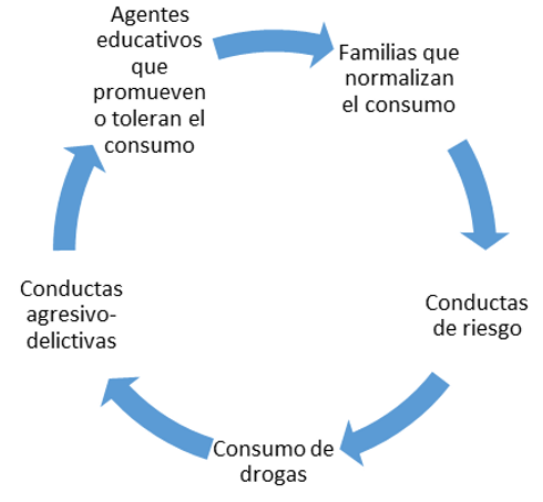
The educational community reports that it has sought alternative ways to raise awareness and has attempted to involve families in the process; several acknowledge that at home they often use it recreationally and in combination with alcohol, assume that this is not illegal, and have a low perception of the risks and the impact of these behaviors on their children and family dynamics. The school’s position was to enforce school regulations. The interviews also revealed the case of a teacher who, arguing in favor of free personality development, allowed and encouraged use at gatherings she organized outside of school. This resulted in an increase in the number of students using drugs in her class, and also put the health of two students who were taking medication at risk.
Educators responding to the situation noted that the inadequate management of these behaviors, coupled with a low perception of risk among certain families and this teacher, had contributed to escalating the situation to a critical point of substance use. Regarding potential solutions, they noted that the situation offered significant room for improvement. They had observed that students involved in activities such as dance reduced these behaviors; the school had a dance club that had previously had a positive impact on the students, according to the teachers’ perception.
Based on the systematization of the information, the most relevant themes that emerged are presented for discussion and are addressed in accordance with the dimensions shown in figure 2.
|
Figure 3. The relationship between artistic mediation and the dimensions of analysis |
|
|
|
Note: the figure appears in its original language. |
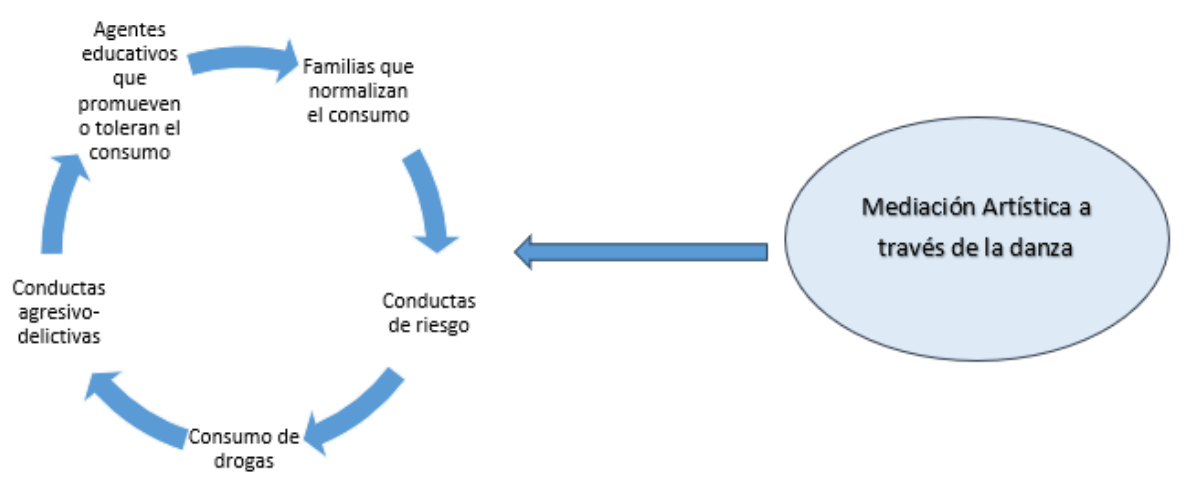
School policies, families, and the community in response to drug use
The issue of regulations governing drug use within the institution was a recurring theme, linked to the role of the family in addressing the problem and to the broader community context.
In the rules, regulations, and protocols established at various levels of educational and public policy administration, it is noted that federal guidelines stipulate that schools must serve as a protective factor.
The educational institution where this research was conducted directly adheres to federal guidelines. However, it is important to note that dialogues could also be established with state authorities to align more effective processes and mechanisms for supervision, control, and prevention of the problem. In accordance with the regulations and the school’s Internal School Regulations, Chapters I and II establish a code of honor and a set of clear provisions regarding drug use. Articles 44 through 51, for example, define the institution as a 100 % smoke-free space, prohibiting the use of tobacco, e-cigarettes, and any narcotics. Measures such as the administration of toxicological tests (Article 45) are stipulated, and sanctions are graded according to the severity of the offense, ranging from written warnings to permanent expulsion (Articles 46–51), for those who introduce, distribute, or consume substances (Sánchez Ortega, 2023).
It is a system in which the regulations are clear regarding sanctions and rules concerning drug use on school premises. However, in practice, the implementation of the regulation faces a set of contradictions that must be resolved from social, political, family, educational, legal, and community perspectives.
Criticisms of the role of regulations align with studies confirming that rules disconnected from social reality prove ineffective. According to Rodríguez Romero (2022), regulatory measures to prevent substance use focus on surveillance; however, they lack effectiveness given that data on drug use levels among upper secondary students in Mexico show no improvement. This author, with whom this study concurs, states that high schools must assume social leadership through effective governance processes and transition from primary prevention to educational intervention (Rodríguez Romero, 2022). Consequently, based on this principle, this research advocates for dance as a mediating activity to delve deeper into the causes of substance use, placing high school students at the center, as their transition from adolescence to young adulthood makes them more vulnerable. It also highlights the need to train teachers and administrators on these issues, so that they can reduce potential tendencies toward stigmatization and exclusion and instead focus more on providing assertive support in these cases. Art, specifically, and dance in particular, can constitute—as discussed below—an educational space that sets aside punitive approaches which, as analyzed in the understanding of the phenomenon, prove to be ineffective.
Schools, as the primary regulatory actors, must be aware of the underlying causes. In this case, educators, drawing on their experiences, noted that they sometimes perceive risks when attempting to regulate consumption, as students find an informal protective framework within the dynamics they establish with the community and, in some cases, have family support for their use.
In this regard, it is worth noting that in Mexico, there are legal loopholes, particularly regarding marijuana use, as the law remains in a legal limbo and, for the time being, from a legal standpoint, use is prohibited. This prohibition has faced criticism from the cannabis-using segment of civil society, and the current government has not taken a firm stance on the recreational use of cannabis. Users, civil society, and the cannabis industry have called for the legalization process for recreational cannabis use to be resumed, but this call remains unanswered. Clearly, this situation at the micro level is causing tension among teachers, who are committed to acting within the law but lack legal knowledge regarding the potential “Federal Law for the Regulation of Cannabis” of 2021.
According to Sánchez-Pájaro et al. (2025), legalizing recreational use could be beneficial for the health of Mexico’s population, as it would allow for the regulation of provisions regarding density limits and the location of retail outlets, operating hours, taxation, price regulation, the use of flavorings and edibles, and certification regarding contaminants. Considering that the proposal to legalize the recreational use of cannabis aligns with the “free development of personality,” it argues that the State must guarantee this right to all Mexicans. Similarly, they propose that these public health recommendations would safeguard the right to health protection, which is fundamental.
The trend described above is met with resistance from school settings, and in this specific context under investigation, current regulations are considered to comply with existing legislation; however, they are challenged by the community, some teachers, and family members who support or accept the change in marijuana consumption legislation per se.
This issue opens the door to new discussions that would serve as areas for further analysis in future studies on school regulations, legal norms, and cannabis use among high school students in southern Jalisco.
The family in the context of consumption: permissiveness and normalization
The second issue that emerged as significant and was frequently mentioned by educational professionals is the family and its role in relation to risky behaviors, particularly those in which students engage in activities where drug use is part of adolescent socialization and family dynamics in which family members are users. School regulations, in Article 3, extend the obligation of awareness and compliance to parents and guardians. However, reality presents new challenges regarding family dynamics, with the following as key points of analysis:
• Dysfunctional or non-dysfunctional families where drug use is normalized, which contradict school regulations and elevate the issue to a legal level due to the legal limbo created at the state level.
• In some families, the commission of “crimes” is normalized among members; although not frequent, this is significant in terms of drug use and its socialization, which exacerbates the situation.
In cases where recreational drug use was recognized as legal, it highlights how school rules come into direct conflict with family norms. The institution sought an agreement to eradicate risky behavior, while the family legitimized it within their private sphere, shifting the problem to the schools. This results in a significant area of tension regarding the dialogues that must be established at the legal level and among the bodies responsible for creating regulations, protocols, and policies at the federal, state, and local levels. Faced with this, teachers and administrators take a critical stance regarding this gap that overwhelms them and puts them at risk from a personal, social, and legal standpoint:
“The only thing parents do to the kids is create confusion about values (...) in most cases, they allow this use just to keep them close, with the intention of saying: ‘Well, I’m keeping an eye on them; they’re using, but it’s within normal limits (...) but no substance use is normal, and all they do is validate this use, leading the kids to continue using even more harmful substances in the future” (Teacher Zaira).
In the same vein, the academic vice principal notes:
“I believe that, unfortunately, this occurs in families where there is already a substance use problem, since in some cases parents may say ‘no’ with their words, but they don’t change their habits, or they say it’s better here than on the street (...) as a school, we must be firm in our stance to safeguard the well-being of adolescents, at least within the school grounds, and try to raise awareness among them and their parents (...)
There are also reports of families who actively encourage substance use by supplying drugs within the school. This behavior completely exceeds the scope of the internal regulations that are enforced. Faced with this critical situation, the school is called upon to shift from a stance of containment to one of agency:
“(...) We cannot defeat them by confronting a parent who says, ‘If I had known,’ but rather give them the tools through parent education programs or talks on the neurological, medical, and even legal impacts of these substances (...)” (Academic Vice Principal Eliza).
This contradiction between the school’s and the family’s positions on drug use is compounded by the government’s stance, which fails to clarify the legal framework (Sánchez-Pájaro et al., 2025), and a significant tension persists between the human rights of those who use drugs, the health effects of drug use, and school regulations; This legal limbo, particularly regarding cannabis, hinders the development of clear solutions to the conflict scenario involving all educational stakeholders.
Studies conducted in the U.S. highlight that the family plays a fundamental role in adolescent marijuana use, acting as both a protective and a risk factor through various functional and structural dimensions. According to a detailed study of Native American and white adolescents in reservation settings, the analysis of family influence is divided into proximal factors (specific to use) and distal factors (general to the family environment). It is demonstrated that families who are closer to the school and more involved in school activities are associated with lower use, as they act as an additional support mechanism (Swaim & Stanley, 2016). In this specific case, families operate within a context where the legal system offers greater guarantees regarding procedures and protocols to follow. In Mexico, meanwhile, various studies have shown that adolescents from families with substance use issues are more likely to develop risky behaviors and addictions (Govea Ireta et al., 2025; Maldonado Osuna et al., 2025).
Another important aspect regarding parents is the discrepancy between parents and children regarding drug use and the role of the family. A qualitative study was conducted in Mexico, employing discourse analysis to examine perceptions of drug use from the perspectives of parents and adolescents, with participants who were not related to one another (Pulido-Trujillo et al., 2024). The results of this study reveal differing perceptions between parents and children: while parents believe they provide trust, adolescents feel they do not; parents believe their children have sufficient information about substance abuse, while young people are concerned about learning more about the risks; adolescents report not feeling sufficiently loved and cared for (Pulido-Trujillo et al., 2024).
Another study conducted in Panama on the perception of drug use from the perspective of adolescents found that among the causes for using psychoactive substances are social pressure, bullying, and domestic violence; furthermore, they perceive that access to these substances is very easy in school settings, often through individuals outside the institutions (Rodríguez et al., 2024). An unusual finding in the scientific literature was that adolescents do not perceive their parents as a protective factor.
Therefore, given the specific context of Mexico, it is necessary to integrate awareness-raising initiatives regarding risky behaviors, as well as conflict mediation processes in the face of a contentious legal landscape that is reeling from the question: Should cannabis use be legalized or not? The responses must take the form of educational and artistic interventions within this specific institution.
Vulnerable communities and schools as agents of change
This school is located just under 6 kilometers from the municipality’s urban area, within an industrial park, in a building provided on a loan basis. It lacks laboratories, sports fields, practice areas, and administrative, maintenance, or security staff; teachers take on multiple roles. There is a perceived lack of a sense of belonging among students, as well as complaints about the distance from home. The school is not merely a space for teaching and learning; it is also a context for social support. When this fails, the adolescent’s identity becomes diluted within the system, which, in this case, does not help reduce drug use but rather fuels it through a culture that gives voice to risky and sometimes criminal social dynamics. When the term “criminal” is used in this context, the debate over drug legalization remains a cross-cutting issue that permeates all topics.
From the community perspective, the framework of analysis includes consumers’ rights to the free development of their personality and the potential presence of a process of normalizing drug use. The normalization of drug use, according to Jiménez-Moreno and Bolaños-Arias (2025), results from the complex interaction between three processes, involving individual factors such as age, gender, and personality; family factors related to structure, functionality, communication, and parenting styles; social factors, which are explained by peer pressure, social norms within the community, and, in the case of this research, also within the school; and contextual factors, referring to drug availability, access, public policies, and, in this specific case, legal norms.
Amid this complex and normalizing landscape, a narrative of resistance emerges in the face of contexts that transcend the school and shape the problem. Public transportation, for example, is used as an open space for consuming alcoholic beverages, vaping, and smoking marijuana, demonstrating that the problem cannot be addressed from a reductionist or individualistic perspective, but rather as a situation that calls for multidimensional educational interventions and artistic mediation, focused on healthy lifestyles, harmonious coexistence, quality of life, and life development projects. This is achieved through greater community influence and leadership, with a critical awareness of the psychosocial risks affecting the educational community, while also embracing art as a transformative experience that facilitates change.
Artistic mediation through dance as an activity that drives change
“Paktli” means ‘joy’ in Nahuatl; the idea for the “Paktli Dance Project” was conceived in 2017. It emerged as part of an after-school program. Its purpose was to bring together young people interested in developing dance skills across different genres, most of whom had no prior experience. Rehearsals took place in a theater provided by an educational institution; sessions were held on Thursdays from 7:00 to 8:40 a.m. with teenagers in their second semester of high school, aged 14 to 16.
During this time, the group worked on calisthenics, tap dance technique, various dances from the states of Sinaloa, Oaxaca, Tamaulipas, and Jalisco, as well as contemporary dance. The students’ experience in this group had a significant impact on their lives and had a positive effect in reducing risky behaviors. Beginning in 2020, the group began to decline due to the COVID-19 pandemic, eventually dissolving completely in 2022 due to administrative and political issues.
The situation currently facing the institution—marked by rising substance use—led to the revival of this project and its adaptation to the previously identified needs. Reviving “Paktli” represents a potential break from this normalization. Testimonials from students who stopped using substances after joining the dance club suggest that the artistic experience offered a new space for belonging and social recognition—an alternative “status” to that obtained through the use of alcohol or vaping devices.
“Participating in the dance workshop with Teacher Elisa has been very rewarding. I’ve seen a very positive side to it (...) it motivates me to be better because I don’t give up and I want to keep improving. And being in this workshop has helped me a lot with patience and perseverance (...) Being in dance has helped me overcome my fears of performing in public and not just enjoy myself amid laughter and applause” (Student Luz).
In the face of regulations that monitor and families that tend to normalize and sometimes even promote substance use, the artistic mediation project can facilitate a path for dialogue with the potential to build processes of personal and collective reframing regarding substance use and legal contradictions. The project can serve not only as a stage for dancing, but also as a laboratory for mediation and empowerment at the personal, school, and community levels:
(...) Often when it’s time for rehearsals, I feel discouraged, sad, sometimes angry, or I just don’t feel like moving. But when I hear the music or see the group—because some of my classmates are motivated—that drives me (...) That motivation keeps me going (Student Sofía).
Dance strengthens self-esteem and socio-emotional skills, counteracting the immediacy and emptiness of meaning that consumerism attempts to resolve. It is an activity that operates on the symbolic and social levels, fostering satisfaction, a sense of belonging, the development of social-emotional skills, self-esteem, and an awareness of resilience.
(...) I think it has many benefits because, well, when you dance, you not only activate your body, but you also improve your coordination and realize how much you’ve developed in that area. And I also believe it helps us relax and feel better emotionally. It’s a way for us to let off steam, and personally, when I dance, I feel happy, relaxed, and have a lot of fun. It’s an activity I really enjoy and has become a passion for me.
It is, in essence, a response rooted in human development to begin creating spaces that act as catalysts for transformation, and as a trigger for dance and dialogue practices, to bring about change in risky behaviors and their effects on adolescents, while also addressing the resolution of conflicts between school, family, and the community.
CONCLUSIONS
This study, conducted following a visit to this educational institution in southern Jalisco, concludes that there are no definitive solutions to the problems identified; rather, it reveals a range of needs that urgently call for social and human change and transformation.
Most young people in this educational community exhibit behaviors that predispose them to substance use, with a higher tendency among males. It is also believed that males influence females’ initiation into substance use through social pressure exerted within the context of romantic relationships. This represents an educational need that the school must address, from an educational perspective on topics such as symbolic violence, gender, romantic relationships, and drug use.
Vaping, cigarettes, alcohol, and cannabis are considered the most frequently used drugs, and the latter triggers areas of tension involving school, family, and legal regulations.
Teachers experience this situation as a conflict arising from conflicting perspectives on normalization, the legal limbo surrounding marijuana use, and family attitudes toward the issue; all of this reflects a community context that not only enables but also exacerbates the problem. Amid this legal vacuum, teachers find themselves seeking alternative solutions to a socio-educational reality that overwhelms them.
Artistic mediation emerges as an alternative for change and a primary space for agency; through previous dance experiences, it has proven to be a roadmap leading to new paths and is adopted as an intervention project to address the identified needs.
This study, therefore, calls for educational interventions through dance as an experience that strengthens protective factors, to reduce risk factors, risky behaviors, and substance use. This is approached in an integrated and multifactorial manner. The study advocates for dance as a form of mediation not only to strengthen the body and mental health, but also as an activity that drives institutional and community-based change.
REFERENCES
Abbing, A., Haeyen, S., Nyapati, S., Verboon, P., & van Hooren, S. (2023). Effectiveness and mechanisms of the arts therapies in forensic care: A systematic review, narrative synthesis, and meta-analysis. Frontiers in Psychiatry, 14, 1128252. https://doi.org/10.3389/fpsyt.2023.1128252
Arriaga, P., Simões, M. P., Marques, S., Freitas, R., Pinto, H. D., Prior, M. P., Candeias, S., & Rodrigues, M. (2024). From art to insight: The role of a creative arts therapies group workshop on college students’ well-being, self-awareness, and loneliness. The Arts in Psychotherapy, 90, 102188. https://doi.org/10.1016/j.aip.2024.102188
Ávila Valdés, N. (2024). Momentum arte y salud. Revista Comunidad, 26(2). https://doi.org/10.55783/comunidad.260206
Braun, V., & Clarke, V. (2006). Using thematic analysis in psychology. Qualitative Research in Psychology, 3(2), 77–101. https://doi.org/10.1191/1478088706qp063oa
Collins, B., Darewych, O. H., & Chiacchia, D. J. (2023). The efficacy of art therapy on hope and resilience in youth within a secure care centre. International Journal of Art Therapy, 28(3), 97–105. https://doi.org/10.1080/17454832.2022.2145322
Gobierno de México. (2025). Encuesta nacional de consumo de drogas, alcohol y tabaco (ENCODAT) 2025.
Fernández-Guayana, T. G., Pinzón Navarro, M. I., Leal Camacho, D. M., & Delgado Ordóñez, P. C. (2024). Mediaciones pedagógicas a través de la literatura y las artes para la prevención del acoso escolar: Estado del arte. Revista Guillermo de Ockham, 23(1), 225–245. https://doi.org/10.21500/22563202.7006
González, L. M., Pérez, R., & Torres, J. (2020). Arte y bienestar juvenil: Evaluación de un programa de intervención en secundarias. Instituto Nacional de Salud Pública.
Govea Ireta, L. F., Lozano Zúñiga, M. M., Ruiz Recéndiz, M. D. J., & Romero Pérez, B. M. (2025). Percepción de riesgo del consumo de drogas en adolescentes. Ciencia Latina Revista Científica Multidisciplinar, 9(5), 5877–5887. https://doi.org/10.37811/cl_rcm.v9i5.19956
Jiménez-Moreno, J. A., & Bolaños-Arias, G. (2025). Prevención en el uso de drogas: Una mirada desde el bachillerato. Revista Panamericana de Pedagogía, 40, e3387. https://doi.org/10.21555/rpp.3387
Keates, A. M., & Pearson, M. (2024). Multiple intelligences theory and expressive therapies. Journal of Psychologists and Counsellors in Schools, 34(1), 120–129. https://doi.org/10.1177/20556365231216810
Ley General de Salud. (2026). Decreto por el que se reforman disposiciones de la Ley General de Salud. Diario Oficial de la Federación. https://www.diputados.gob.mx/LeyesBiblio//ref/lgs/LGS_ref141_15ene26.pdf
López-Martínez, M. D., Campillo Díaz, M., & Ayala De La Peña, A. (2026). Educational potential of artistic mediation with children at risk of exclusion. Societies, 16(2), 44. https://doi.org/10.3390/soc16020044
Maldonado Osuna, M. G., Norzagaray Benítez, C. C., González Lizárraga, M. G., & López Pérez, G. B. (2025). Construcción y validación de una escala de roles de género en consumo de drogas. Revista Internacional de Investigación en Adicciones, 11(1), 26–36. https://doi.org/10.28931/riiad.2025.368
Mariño, M., González-Forteza, C., Andrade, P., & Medina-Mora, M. E. (1998). Validación de un cuestionario para detectar adolescentes con problemas por uso de drogas. Salud Mental, 21(1), 27–36. https://revistasaludmental.gob.mx/index.php/salud_mental/article/view/690
Martínez, P. (2021). Danza para la vida: Arte y resiliencia en adolescentes. Universidad Autónoma de Nuevo León.
Moula, Z. (2020). A systematic review of art therapy in school settings. International Journal of Art Therapy, 25(2), 88–99. https://doi.org/10.1080/17454832.2020.1751219
NOM-028-SSA2-2009. (2009). Para la prevención, tratamiento y control de las adicciones. Diario Oficial de la Federación. https://www.cndh.org.mx/DocTR/2016/JUR/A70/01/JUR-20170331-NOR20.pdf
NOM-047-SSA2-2015. (2015). Para la atención a la salud del grupo etario de 10 a 19 años. Diario Oficial de la Federación. https://omm.org.mx/wp-content/uploads/2020/04/NOM-047-SSA2-2015.pdf
Organización Mundial de la Salud. (2019). What is the evidence on the role of the arts in improving health and well-being? A scoping review. https://www.who.int/europe/publications/i/item/9789289054553
Pulido-Trujillo, S., De San Jorge-Cárdenas, X., Morales-Contreras, N. I., & Peregrina-Martínez, M. P. (2024). Consumo de drogas: Percepción de padres y adolescentes. Horizonte Sanitario, 23(1), 57–65. https://doi.org/10.19136/hs.a23n1.5644
Quinn, P. (2025). Art therapy’s engagement of brain networks for addiction recovery. Frontiers in Psychiatry, 15, 1458063. https://doi.org/10.3389/fpsyt.2024.1458063
Ramírez, A., & López, M. (2019). Expresión creativa para la prevención. Universidad de Guadalajara.
Rius Leiva, C., Lucas Domínguez, R., Tirado Muñoz, J., García Gómez, L., Prieto Arenas, L., & Vidal Infer, A. (2025). Factores de sexo y género en vulnerabilidad a adicciones. Adicciones, 37(4), 297–310. https://doi.org/10.20882/adicciones.2436
Rodríguez Romero, E. G. (2022). La prevención del uso de sustancias psicoactivas en educación media superior en México. En Gobernanza de la educación media superior (pp. 157–180). https://www.torrossa.com/en/resources/an/5463498
Rodríguez, S., Batista, Y., & Sarco, A. (2024). Percepción sobre consumo de drogas en adolescentes. Revista Semilla Científica, 5, 100–113. https://doi.org/10.37594/sc.v1i5.1373
Sajnani, N., & Fietje, N. (2023). The Jameel Arts & Health Lab. The Lancet, 402(10414), 1732–1734. https://doi.org/10.1016/S0140-6736(23)01959-1
Sánchez Ortega, L. J. (2023). Derechos humanos y reglamentos escolares. https://ceidtamjalisco.gob.mx/derechos-humanos-y-reglamentos-escolares
Sánchez-Pájaro, A., Pérez-Ferrer, C., Cobo-Armijo, F., Pech-Puebla, D., López-Olmedo, N., & Barrientos-Gutiérrez, T. (2025). Legalización de cannabis recreativa. Salud Pública de México, 67(2), 180–189. https://doi.org/10.21149/16292
Swaim, R. C., & Stanley, L. R. (2016). Family factors in marijuana use. Drug and Alcohol Dependence, 169, 92–100. https://doi.org/10.1016/j.drugalcdep.2016.09.028
Tache-Codreanu, D. L., & Tache-Codreanu, A. (2024). Acting and dancing as art therapy. Children, 11(4), 461. https://doi.org/10.3390/children11040461
Torres Rodríguez, A. A., Sánchez Cabrera, E. R., & Moreno Lozano, E. R. (2020). Implicación del investigador. Revista Conrado, 16(74), 72–78.
Vygotsky, L. S. (1978). Mind in society: The development of higher psychological processes. Harvard University Press.
Xue, P., & Syed Abdullah, S. M. (2025). Mindfulness-based art therapy for university students. The Arts in Psychotherapy, 95, 102340. https://doi.org/10.1016/j.aip.2025.102340
FINANCING
None.
CONFLICT OF INTEREST STATEMENT
None.
STATEMENT ON THE USE OF ARTIFICIAL INTELLIGENCE
No artificial intelligence was used in the development of the article.
AUTHORSHIP CONTRIBUTION
Conceptualization: Irma Elisa Alva Colunga, Jayanit Elizabeth Grajeda Santana, Danny Echerri Garcés.
Data curation: Irma Elisa Alva Colunga, Jayanit Elizabeth Grajeda Santana, Danny Echerri Garcés.
Formal analysis: Naun Oseas Onofre Mendoza.
Investigation: Naun Oseas Onofre Mendoza.
Methodology: Naun Oseas Onofre Mendoza.
Software: Irma Elisa Alva Colunga, Jayanit Elizabeth Grajeda Santana, Danny Echerri Garcés.
Supervision: Jayanit Elizabeth Grajeda Santana, Danny Echerri Garcés.
Validation: Irma Elisa Alva Colunga, Jayanit Elizabeth Grajeda Santana, Danny Echerri Garcés.
Visualization: Jayanit Elizabeth Grajeda Santana, Danny Echerri Garcés.
Writing – original draft: Irma Elisa Alva Colunga, Jayanit Elizabeth Grajeda Santana, Danny Echerri Garcés.
Writing – proofreading & editing: Irma Elisa Alva Colunga, Jayanit Elizabeth Grajeda Santana, Danny Echerri Garcés.