doi: 10.58763/rc2026557
Scientific and technological research article
Realidades en la formación dual de competencias genéricas desde la experiencia de profesionales universitarios de Centroamérica y el Caribe
Realities in dual training of generic skills from the experience of university professionals from Central America and the Caribbean
Aydeé
Rivera de Parada1  *,
Elia Elizabeth Pineda1 *,
Débora Mainegra Fernández1 *
*,
Elia Elizabeth Pineda1 *,
Débora Mainegra Fernández1 *
RESUMEN
Introducción: La dinámica de los procesos productivos cambia vertiginosamente y plantea nuevos requerimientos a las instituciones de educación superior y las empresas. Ante este panorama, la formación dual emerge como una alternativa viable.
Objetivo: El objetivo fue analizar la percepción de los profesionales universitarios contratados en los últimos cinco años en siete países de Centroamérica y el Caribe, acerca de la formación dual y las preferencias del sector laboral con respecto a las competencias genéricas del personal que contrata.
Metodología: Se utilizó el método de entrevista abierta semiestructurada para facilitar la obtención de información crítica sobre los procesos en estudio.
Resultados: De forma general, parecen existir inconsistencias en la organización y asunción de roles claros en la formación dual de competencias genéricas por el binomio universidad-empresa y se reconoció la necesidad de actualizar el inventario resultante del Proyecto Alfa Tuning para América Latina 2004-2007, ofreciendo propuestas concretas que se presentan resumidas y fusionadas por las investigadoras.
Conclusiones: Se concluyó la existencia de debilidades significativas en los procesos y acciones formativas integradas, así como en la conciencia de la responsabilidad compartida de ambas entidades con respecto a la continuidad en el aprendizaje de las competencias genéricas por los egresados.
Palabras clave: Educación de calidad, formación profesional, vinculación universidad-empresa, competencias, eficiencia laboral.
Clasificación JEL: A22, I21.
ABSTRACT
Introduction: The dynamics of production processes are changing rapidly and posing new demands on higher education institutions and companies. In this context, dual training emerges as a viable alternative.
Objective: This study aimed to analyze the perceptions of university graduates hired within the last five years in seven Central American and Caribbean countries regarding dual training and the labor sector’s preferences regarding the generic competencies of new hires.
Methodology: Semi-structured open interviews were used to facilitate the collection of critical information on the processes under study.
Results: Overall, there appear to be inconsistencies in the organization and definition of clear roles within the university-company partnership for the dual training of generic competencies. The need to update the inventory resulting from the Alfa Tuning Project for Latin America (2004-2007) was recognized. The researchers present a summary and synthesis of concrete proposals to address this.
Conclusions: The study concluded that there are significant weaknesses in the integrated training processes and initiatives, as well as in the awareness of both entities’ shared responsibility for the continued development of graduates’ generic competencies.
Keywords: Quality education, vocational training, university-business partnership, competencies, job performance.
JEL Classification: A22, I21.
Received: 11-08-2025 Revised: 18-11-2025 Accepted: 15-12-2025 Published: 02-01-2026
Editor:
Alfredo Javier Pérez Gamboa
1Universidad Evangélica de El Salvador. San Salvador, El Salvador.
Cite as: Rivera de Parada, A., Pineda Rivas, E. E. y Mainegra Fernández, D. (2026). Realidades en la formación dual de competencias genéricas desde la experiencia de profesionales universitarios de Centroamérica y el Caribe. Región Científica, 5(1), 2026557. https://doi.org/10.58763/rc2026557
INTRODUCTION
The type of relationship that should exist between academia and production, in order to ensure that the professionals being trained receive the influence of both entities and, as a result, increase their relevance to the context of professional action and the quality of their performance, has been a subject of ongoing debate since the last century. This has been a topic of ongoing debate since the last century. Currently, its importance is increasingly recognized due to the rapid pace of technological transformations in the world of work, which makes it difficult for academia to keep up with the necessary pace.
Apparently, participation in professional training can be an opportunity for companies that provide it, as Bentolila et al. (2020) suggest for the European context, because they can tailor learning to their production processes and attract top talent for their hires.
Dual professional training is an educational model that combines theoretical instruction in technical and/or university institutions with professional practice in real-world work environments. It seeks to ensure that students acquire both academic knowledge and specific and generic skills, thus better preparing them for the world of work.
Some authors describe it as a futuristic pedagogy that addresses the shortcomings in professional training at a time when university enrollment is declining for various reasons (Donaire Martín, 2024; Rodríguez García, 2021).
Reviews on the topic show an increasing presence in professional training, both globally and regionally, particularly in technical fields (Asquerino Lamparero, 2021; Ibaibarriaga Revuelta & Rekalde-Rodríguez, 2021; Sotomayor Vazquez & Sanjuán Roca, 2021).
Zubillaga del Río (2024) succinctly presents its educational potential by stating that this model transforms the world of work into a place where learning takes place because it does not focus the process on the application of prior knowledge, but rather on the construction of knowledge based on what happens within the workplace. Furthermore, he identifies the following as essential elements for this to occur: the people involved (student, academic tutor, and company mentor), the project itself, and the conditions (the employment contract and the mentoring or support).
This approach, in turn, involves close collaboration between educational institutions and businesses, which actively participate in curriculum design. This helps mitigate the mismatch between graduates’ skills and real-world job demands. Some studies on its effectiveness suggest that graduates tend to find employment more easily due to their prior work experience (Climent-Ferrando et al., 2025).
However, there are undeniable challenges that hinder its success, particularly in Latin America, and especially in Central America and the Caribbean. Among these challenges is the lack of shared strategic planning between businesses and universities to define the specific actions each should take in a training process that must be unique and essential, given the importance of its content. Clearly defining the role of each individual in developing specific and generic competencies in future professionals, as well as the mediating role of teachers and company mentors, is crucial (Climent-Ferrando et al., 2025; Cordero-Morales et al., 2024).
According to Villa Sánchez (2020), competency-based learning has contributed to key transformations in the university setting. Shifting from a traditional, teacher-centered approach to one emphasizing greater student initiative and autonomy is a radical transformation that can yield remarkable long-term results, according to this author.
Regarding dual training, most authors consider the mentor figure within the company to be the cornerstone for translating work experience into conscious competency learning. Success stories almost always include the account of an experienced manager or colleague who provided constructive feedback, challenged them, and showed them the inner workings of the organizational environment. However, the lack of training for these mentors is a common weakness in the programs (Beraza Garmendia, 2023).
Furthermore, this study examines generic competencies in relation to dual training, specifically in the Business Administration and Management degree, highlighting that when students undertake the Dual Training Pathway, they better value transversal competencies for their professional future, particularly those related to analytical thinking and critical reflection, the application of acquired knowledge to work, especially decision-making and the issuance of reasoned judgments, supported by the data obtained, and the development of learning skills to become fully independent (Beraza Garmendia, 2023).
This is because, as Rivera de Parada et al. (2024) argue, these competencies are associated with successful performance in all spheres of a person’s life, since they contribute to their definition as a citizen and as a professional, and add value to their active participation in the political, economic, social, and cultural development of the context in which they are integrated and of the country in general.
For Nacif Cuellar and Céspedes Gallegos (2020), one of the most notable aspects of the competency-based approach is the relevance and prominence given to students in the training process. The fact that students are expected to understand their environment, know themselves, and acquire knowledge in the most appropriate way to achieve this implies a whole process of autonomous learning in which they learn how to learn.
The Tuning Latin America Project (Beneitone et al., 2007) provided a list of generic competencies for the region, which Sierra-Alonso and Pérez-Quintanilla (2011) adapted, dividing them into instrumental, interpersonal, and systemic competencies. This division has gained some acceptance among scholars in the field and has generally prevailed in university curricula. It can be consulted at: https://tuningacademy.org/es/competencias/genericas/competencias-genericas-tuning-america-latina-i-ii-iii/competencias-genericas-tuning-al-i-ii-y-iii/
Authors such as Rivera de Parada et al. (2025) define them as cognitive-procedural-attitudinal formations that integrate the personality of human beings as a result of the intra- or extra-familial educational process and that are vitally important for the fulfillment of university graduates in all spheres of their social and professional lives. They also categorize them as open inventories because, as the specific historical and social context of individuals changes, the needs for new generic and specific competencies will also change.
For this reason, there cannot be invariable repertoires of competencies, a fact already acknowledged by the Tuning Project 2004-2007 (Beneitone et al., 2007), which suggested periodic revisions and contextualizations of the competencies they provided.
The authors conducted an international study in seven countries in the Central American and Caribbean region, sponsored and funded by the Centro de Investigación Salud y Sociedad of the Universidad Evangélica de El Salvador. One of the study’s objectives (which is also the focus of this article) was to analyze perceptions of dual vocational training and the labor sector’s preferences regarding the generic competencies of university graduates hired in the last five years.
The countries included in the study, listed alphabetically, were: Costa Rica, Cuba, El Salvador, Guatemala, Honduras, Nicaragua, and the Dominican Republic.
METHODOLOGY
An exploratory, qualitative, descriptive-interpretive study was conducted using interviews. The unit of analysis was professionals with less than five years of employment. This cross-sectional study aimed to understand the generic competencies preferred by employers in the Central American and Caribbean region when making hiring decisions (Dimension 1), as well as the performance achieved through dual training programs between academia and industry (Dimension 2). Although interviews are a qualitative research instrument, the dynamic nature of the topic necessitated some quantitative interpretations of the results to support the analyses.
A non-probabilistic, convenience sampling method was used. A purposive, non-parametric sample was selected, consisting of five professionals who had graduated and been hired within the last five years in each country, for a total of 35. However, in some countries, the number of interviewees exceeded the target, and the decision was made not to discard any records in order to utilize all the information obtained. Therefore, the final sample size was N=44. The required information was collected using a semi-structured open-ended interview questionnaire. The Frascati Manual 2015 (OECD, 2015) was used to classify the employment sectors.
This manual was applied to the selected professionals regardless of age or graduation date, with the aim of obtaining at least one interview per sector type. However, this was not always possible, so it was ensured that at least three sectors and three classifications based on the number of employees (micro, small, medium, and large enterprises) were represented in each country.
|
Table 1. Sample characterization |
|||
|
Classification Criteria |
Category |
Number of Professionals |
Percentage |
|
Number of respondents per country |
El Salvador |
7 |
15,9 % |
|
Guatemala |
7 |
15,9 % |
|
|
Honduras |
5 |
11,4 % |
|
|
Nicaragua |
5 |
11,4 % |
|
|
Cuba |
8 |
18,1 % |
|
|
Dominican Republic |
5 |
11,4 % |
|
|
Costa Rica |
7 |
15,9 % |
|
|
Type of Activity/Position |
Various Activities |
41 |
93,18 % |
|
Human Resources Management |
2 |
4,55 % |
|
|
Management Positions |
1 |
2,27 % |
|
|
Company Size (by number of employees) |
SMEs (2 to 119) |
32 |
72,70 % |
|
Large Companies (>200) |
12 |
27,27 % |
|
|
Institutional Sector (according to the Frascati Manual, 2015) |
Corporations |
10 |
22,73 % |
|
Higher Education |
13 |
29,55 % |
|
|
Public Administration |
9 |
20,45 % |
|
|
Private Non-Profit Institutions |
4 |
9,09 % |
|
|
Other Sectors of Work |
8 |
18,18 % |
|
|
Grand Total |
Total Respondents |
44 |
100 % |
The following inclusion criteria were considered for the sample of professionals hired in the last 5 years:
· University graduates of any specialty, age, gender, religion, ethnicity, race, and nationality, provided they work in the country where the study is being conducted.
· Participants must agree to participate in the research with informed consent.
· Participants must be currently employed at any workplace.
· Participants must have been hired within the five years prior to this study, i.e., from 2019 onward.
The following exclusion criteria were considered for the sample:
· University graduates who do not wish to participate in the research.
· Participants who do not have an employment relationship at the time of the interview.
· Participants who work abroad, either online or in person, at the time of the interview.
The instruments were administered as follows:
· They were printed or administered digitally, depending on the characteristics of the application context.
· Once the list of companies comprising the sample for each country was compiled, in accordance with the specifications outlined above, the managers of these companies were contacted in person or remotely (by phone, email, WhatsApp, Telegram, or other means) to inform them about the study, their selection to participate, and to determine who would be responsible for completing the survey. The date and time of the in-person interview, or the method for sending the instruments and the deadline for their return in the case of remote interviews, were also specified.
· In the case of the professionals interviewed, they were selected from the companies themselves or from other companies, provided they met the inclusion criteria. The method and date of the interview were negotiated directly with them (responses could be oral or written, depending on the interviewee’s preference). When the interview was conducted orally, it was transcribed for processing by the corresponding researcher.
· At the time of application, special attention was paid to obtaining informed consent from the sample, for which purpose the rights of each individual involved were explained orally.
· Participants were not coerced or unduly influenced (coercion occurs when an individual perceives that they could be harmed or punished for refusing to participate in a study). In some cases, coercion can occur subtly and unintentionally; therefore, it was emphasized that participants could withdraw from the process, if they wished, at any time, without the researchers expressing displeasure or any other form of disapproval.
· In this research, no monetary or other incentives were offered for participation, so this did not constitute undue influence on an individual’s decision to participate in the study.
Regarding the ethical handling of the research, it is important to note that the process of obtaining informed consent from participants was carried out carefully and with attention to each individual’s needs. To this end, details regarding the protection of anonymity and privacy of individuals, as well as their lack of responsibility for inferences drawn by the researchers from the summarized information provided by the instruments, were included as part of the heading of the instruments. The research project was submitted to the Comité de Ética de la Investigación en Salud (CEIS) of the Universidad Evangélica de El Salvador, which certified its approval in Act No. 012 of 2024.
The instrument used was validated by experts in scientific research, generic competency development in Higher Education, and human resource management in the business world, selected by collaborators from each participating country for their prestige in each of the aforementioned fields.
Validation was carried out using a questionnaire that covered each item and, in general, the content, logical order, and appropriateness of including or removing questions, in accordance with the variables or indicators defined for the study. Pearson’s Coefficient of Variation (0,1) and Cronbach’s Alpha Reliability Coefficient (0,86) were also applied. Based on the results obtained, the questionnaire was refined. It ultimately consisted of the following questions:
Validated instrument
General information
1-Country _______________________
2-Professional specialty: ________________________
3-Number of employees in your workplace (mark with an x):
2 to 9___ 10 to 49___ 50 to 199___ 200 or more___
4-Quality standards are applied in your workplace such as:
ISO Standards___ Accreditation ___ Other______
5-Classification of your workplace by sector:
Company __, Public Administration ___, Private Non-Profit Institutions ___, Higher Education ____ and Rest of the world ___.
Answer the following questions based on your experience in job searching, the hiring process, and your time working in your current position. If you have any questions, we recommend consulting the appendix at the end of this document (List of Competencies from the Tuning Project, 2004-2007 (Beneitone et al., 2007) and adaptation by Sierra-Alonso and Pérez-Quintanilla, 2011):
6- Briefly describe the selection process for deciding which people to hire at your institution.
Evaluation categories: Compliance with regulations, Yes-No
7- Explain the generic competencies of applicants who are considered for selection. Evaluation categories: The list of generic competencies from the Tuning Project (2004-2007) (Beneitone et al., 2007) was used, and the adaptation of Sierra-Alonso and Pérez-Quintanilla (2011), to mark those mentioned in the responses, in order to quantify them.
8. What competencies are prioritized when selecting a university graduate for employment?
__ Specific (technical-professional) competencies, __ Generic-basic competencies, or __ Both. Explain your answer.
Evaluation categories: The selection criteria were quantified and confirmed through the interpretation of the responses to the open-ended question.
9. Based on your experiences as a university professional: a) How can generic competencies be strengthened? b) Does the institution promote training to improve job performance, specifically in relation to generic competencies?
Evaluation categories: The responses were interpreted to classify the described actions as: Training, On-the-job training, Incentives for excellence in performance, Promotion and/or improvement of working conditions, and Other.
10- Please explain: What generic competencies, not appearing in the lists provided as an Annex, do you consider essential for working in your workplace?
Evaluation categories: All competencies proposed by the interviewed professionals were extracted and scrutinized by the researchers to determine which were truly new, in order to discard those already included in the referenced inventories. Subsequently, they underwent a summarization process where those that were repeated verbatim or referred to similar issues were grouped together, and redundant ones were eliminated or merged, improving the scope and precision, which made it possible to suggest an update to the existing list.
The application period extended from April to June 2024 and was carried out with the support of a collaborator in each of the participating countries, following a protocol established through a Research Manual, developed to achieve the greatest possible consistency in the process.
The steps followed in data collection were:
1. Identification of the generic competencies that served as the basis for the study.
2. Formulation of these competencies in terms of professional competence.
3. Development of questionnaires for their evaluation.
4. Selection of the professionals to be interviewed according to the sample requirements.
5. Obtaining informed consent from the study participants.
6. Administration of the questionnaire.
7. Data entry in Excel.
The following methods were used in the qualitative analysis of the interview:
1. Content analysis method (Krippendorff, 2018)
Objective: To quantify and categorize discursive elements in the interviewed professionals that allow for the interpretation of their perceptions of the process.
Steps:
· Manifest content: Analyze what is explicitly stated (frequency of use of words like joint training, mentoring, skills development, preparation).
· Latent content: Interpret underlying meanings (veiled criticisms of lack of support, lack of guidance, disinterest in “social” and “transferable” skills, etc.).
2. Semantic Differential (SD) (Hernández-Sampieri et al., 2018)
Objective: To evaluate subjective connotations (attitudes, perceptions, or meanings) toward concepts, objects, or processes using Likert scales.
· The researcher’s interpretation was used to classify the responses according to the aspects being evaluated.
The data from interviews with professionals who graduated and were hired within the last 5 years were processed using descriptive statistics, specifically percentage analysis, tables, and graphs.
RESULTS
The analysis of job postings and the processes leading to their awarding revealed that, of all sectors, higher education demonstrated the highest quality, adhering to the relevant regulations stipulated in each country’s labor laws. Conversely, private, non-profit institutions stood out, according to the responses from the study sample.
Regarding the preferences of hiring managers in relation to general competencies, a significantly higher percentage (93,18 %) selected specific competencies related to their profession. While this can be partially understood, it must be noted that not all vacancies are specifically tailored to the graduates’ profiles, given the complexities of the current job market. Furthermore, considering that generic competencies guarantee comprehensiveness and, often, flexibility in training profiles, this partiality can hinder the quality of the selected personnel.
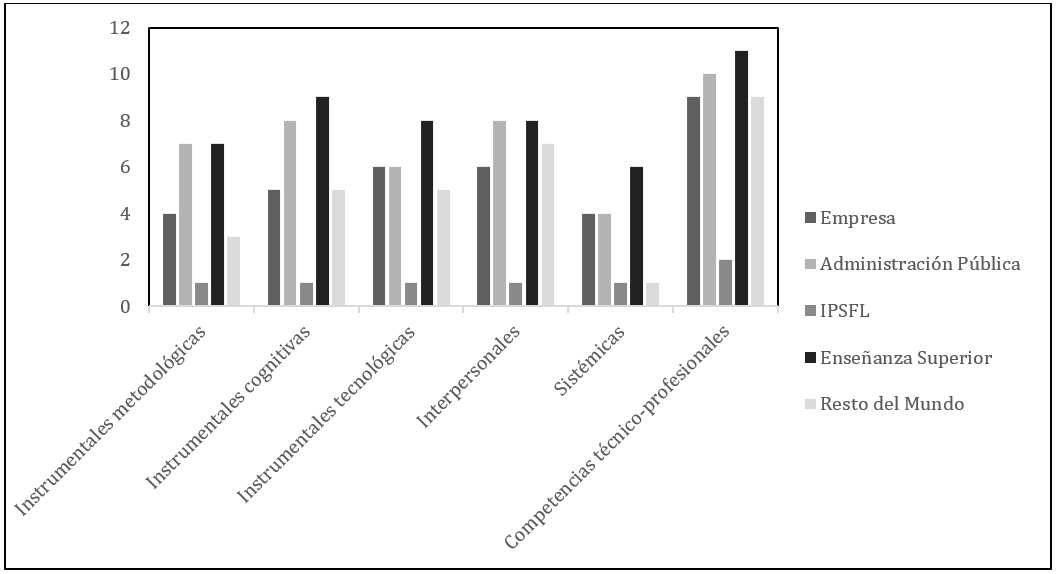
Within the generic competencies themselves, the preference for interpersonal (68,18 %) and instrumental (63,6 %) skills is evident; these are followed by technological skills (59 %) and, finally, systemic skills (36,3 %), which appear to be minimized in personnel selection processes, but include a range of added values such as leadership, entrepreneurship, and effective quality management. All of this is illustrated in figure 1.
|
Figure 1. Skills preferred by employers in Central America and the Caribbean, according to professionals hired in the last 5 years |
|
|
|
Note: the figure appears in its original language |
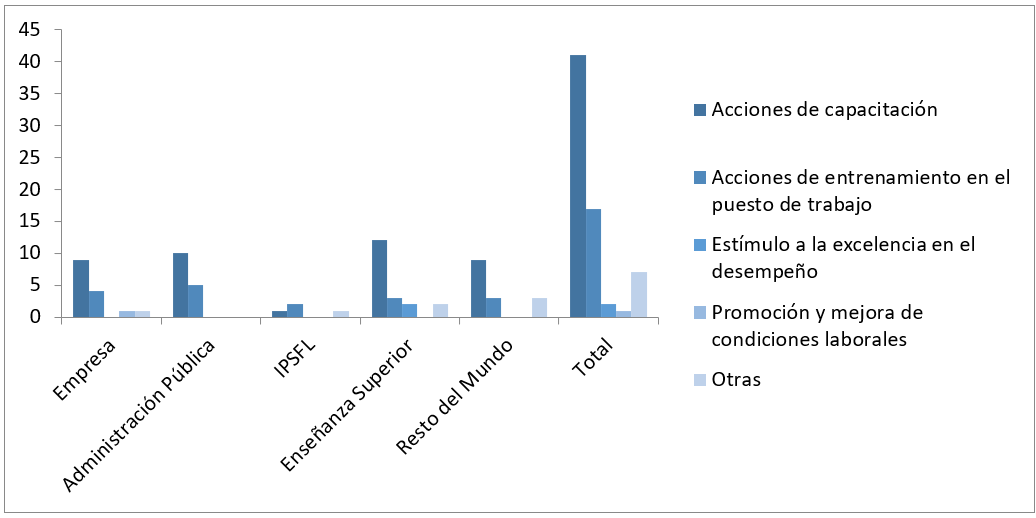
Regarding the company’s performance and its role in the dual training model (questions 9 and 10), as represented by its efforts to guarantee the continuous training of its employees (figure 2), as well as the types of actions it plans to achieve this, the responses seem to indicate that training is paramount (93,18 %), especially in public administration and higher education, followed at a considerable distance (38,6 %) by on-the-job training. It is important to highlight the limited use of the moral and material incentives offered by promotions to positions of greater responsibility or improvements in working conditions (2,27 %).
The interviewees acknowledged the importance of work experience in their training process, but in most cases (68,18 %), the workplace where they gained experience does not align with their new responsibilities. There was also no assessment of continuing training needs (93,18 % negative responses), no scheduled initial counseling by experienced staff (100 % negative responses), and no inquiry into strengths and weaknesses relevant to the job (68,18 % negative responses).
The figures do not indicate significant differences between countries regarding the practices of different labor sectors in developing generic skills for young people newly entering the workforce.
Because of the involvement of these professionals in the various labor sectors of the studied region (Central America and the Caribbean), it was considered very important to analyze their impressions about the current state of the list of generic skills offered by the Alfa Tuning-Latin America Project 2004-2007, hence the inclusion of an open question regarding the requirements in their workplace, of other skills not declared in the aforementioned inventory (Beneitone et al., 2007). The interviewees offered a total of 78 proposals, which were rearranged according to the researchers’ interpretation of their meaning, to eliminate repetitions, ambiguities and inaccuracies, resulting in a list of ten, recently published in the Conrado Journal (Rivera de Parada et al., 2025), which is perfected in the present article, after a reinterpretation that made possible its classification and the reworking of number 4 (which appears here as number 10): Physical quality and appearance suitable to the position, due to its subjectivity and potential to foster biases.
|
Figure 2. Actions developed by the labor sectors to strengthen the training of generic skills |
|
|
|
Note: the figure appears in its original language |
Suggestions for new generic competencies to be incorporated into the list of the Alfa Tuning-Latin America Project 2004-2007 for Central America and the Caribbean (Beneitone et al., 2007)
I. Personal and attitudinal skills
1. Competence in self-control and stress management in crisis work situations: Ability to manage emotions, remain calm, and make effective decisions under pressure or in adverse scenarios.
2. Synergistic, proactive, and results-oriented work attitude: Willingness to collaborate, initiative to anticipate problems, and dedication focused on results and shared objectives.
II. Relational and environmental adaptation skills
3. Verbal, nonverbal, and empathetic communication skills focused on the client/user: Ability to convey messages clearly, use appropriate body language, and understand the needs of external and internal stakeholders.
4. Understanding of the institutional and legal culture of the work area: Ability to understand and operate within the norms, values, procedures, and specific legal framework of an organization or professional sector.
III. Methodological and management skills
5. Inquiry and reflective-analytical skills conducive to finding solutions: Ability to investigate, critically and reflectively analyze information, and generate solutions to complex problems.
6. Strategic, organizational, and time-based work planning: Competence in organizing tasks, managing time, and aligning actions with personal and team strategic objectives.
7. Knowledge, understanding, and willingness to work on projects: Mastery of project phases and a willingness to integrate into work teams with defined goals and deadlines.
IV. Adaptation and continuous development skills
8. Adaptability to Technological Change: Ability and willingness to learn and apply new technologies, as well as to adapt flexibly to innovative processes and evolving work environments.
V. Ethical Competencies and Professional Values
9. Moral Values and Qualities Appropriate to the Job: Internalization and practice of principles such as integrity, responsibility, confidentiality, and professional ethics specific to the position.
10. Professional Presentation and Assertiveness: Encompasses nonverbal communication, professional language, and the ability to represent the institution in different contexts appropriately.
Interviews with professionals hired in Central America and the Caribbean over the past five years suggest significant weaknesses in the region’s dual training system, despite the urgent need to bridge the gap between the various labor sectors and academia. This collaboration aims to make curricula increasingly relevant and contextualized, enabling professionals to address the unavoidable challenges that the rapidly changing future holds for societies in this geographic area. To this end, updating the inventories of both specific and generic competencies used in professional training programs is essential.
DISCUSSION
The findings of this research offer a critical and nuanced view of the state of dual training in generic skills in Central America and the Caribbean, confirming, complicating, and expanding previous theoretical debates. The discussion is structured around three main axes: the gap between the discourse on university-industry integration for dual training and actual practice, the outdated nature of generic skills frameworks, and the region’s structural challenges.
In general, this result appears to coincide with the criteria of Climent-Ferrando et al. (2025) and Cordero-Morales et al. (2024), as it questions the quality of dual training in the area, specifically regarding graduate follow-up and continuous professional development in the workplace. However, considering the characteristics of the sample, the authors recommend a more in-depth study of the problem, given the implications of both specific and generic skills for the professional success of university graduates.
We agree with Ibaibarriaga Revuelta and Rekalde-Rodríguez (2021) and Sotomayor Vazquez and Sanjuán Roca (2021) regarding the growing acceptance of dual training as an emerging pedagogy worldwide; as well as with Bentolila et al. (2020) concerning the advantages that shared training between academia and the world of work can have, both for the labor sector and for graduates in the studied context (Central America and the Caribbean), preferably with a properly trained mentor or tutor and the minimum conditions established by Zubillaga del Río (2024), namely, an employment contract and ongoing support from the dual academia-industry mentoring.
However, the results obtained reveal a fundamental contradiction. While the literature (Bentolila et al., 2020; Zubillaga del Río, 2024) posits dual training as an integrated system of co-responsibility, the experience of professionals reveals a fragmented duality. The marked preference of employers for specific competencies (93,18 %) over generic ones, and the almost complete absence of training needs assessments (93,18 % negative) or structured mentoring programs (100 % negative) at the start of employment, indicate that companies do not assume a proactive pedagogical role.
This validates the observations of Cordero-Morales et al. (2024) regarding coordination challenges. In the regional practice analyzed, dual training is frequently reduced to extended professional practice or ad hoc training, lacking the intentional pedagogical design and shared strategic planning that define the model.
The role of the company mentor, a cornerstone of the model according to Beraza Garmendia (2023) and Rivera de Parada et al. (2024), appears to be absent or inadequately trained in Central America and the Caribbean, hindering the translation of work experience into reflective learning of generic competencies. The workplace is a performance arena, but not necessarily, as Zubillaga del Río (2024) aspires, a learning arena constructed consciously and collaboratively.
One of the most significant contributions of this study is the empirical evidence demonstrating the inadequacy of the Tuning Latin America Project list (Beneitone et al., 2007), and its adaptations, such as that of Sierra-Alonso and Pérez-Quintanilla (2011), to address the real demands of the current labor market in Central America and the Caribbean.
The 10 emerging competencies identified by professionals (Rivera de Parada et al., 2025) are not merely subcomponents of the previous lists, but rather responses to specific contextual needs. Competencies such as self-control and stress management in crisis work situations, and an understanding of the institutional and legal culture of the work area, reflect the realities of work environments characterized by high uncertainty, complex regulatory frameworks, and, in some cases, fragile institutions, typical of the region. Empathetic, client-oriented communication and a synergistic and proactive work attitude point to the evolution toward service economies and the need for skills that go beyond basic teamwork.
These findings support Rivera de Parada et al.’s (2025) position that generic competencies cannot be a closed inventory, and confirm that the Tuning Project, by suggesting periodic reviews, anticipated this necessary evolution. The predominance of preferences for interpersonal and instrumental skills, and the undervaluation of systemic skills (such as leadership and entrepreneurship), could indicate an employer bias focused on immediate adaptation rather than the potential for innovation and transformation.
The results go beyond university-business coordination problems and point to structural challenges. First, the predominance of small and medium-sized enterprises (SMEs), characteristic of the informal employment so common in the region studied, is a significant factor, as 72,7 % of professionals work in them. This sector, while dynamic, tends to have less capacity to invest in structured dual training and mentoring programs. This necessitates flexible and low-cost models that do not overburden these companies.
Secondly, the weakness of integrated continuing education is evident, since the almost exclusive reliance on training (93,18 %), compared to modalities such as on-the-job training or promotion, reveals a traditional view disconnected from continuous development. There is no bridge between initial training (dual or otherwise) and lifelong learning.
Thirdly and finally, the disconnect between pre-professional practice and employment is apparent, given that for 68,18 % of professionals, their work-based training does not coincide with their first job. This calls into question the effectiveness of traditional internships and underscores the need for dual training to generate experiences that develop transferable competencies, not just skills for a specific position.
This research suggests that the promise of dual training in Central America and the Caribbean remains unfulfilled. To move forward, tripartite committees (Government-University-Business) are needed to establish clear protocols for roles, financial responsibilities, and joint evaluation systems, going beyond mere declarations, with a particular focus on training business mentors.
Universities and accreditation systems must also urgently update their generic competency frameworks, incorporating those identified in this and other regional studies. Education must prepare individuals for crises, uncertainty, and the specific cultural diversity of the environment.
Furthermore, given the region’s productive structure, viable variations of the dual education model should be designed for SMEs and the public sector (20,45 % of the sample), perhaps through business consortia or shared mentoring arrangements. Companies should develop induction and professional development plans that provide continuity in generic competency learning, using methodologies that are more diverse than formal training.
The reality of dual training in generic skills, as experienced by professionals in Central America and the Caribbean, is that of a model with potential, hampered by the inconsistency between theory and practice, outdated frameworks, and structural challenges in the region’s production environments. Overcoming this situation requires not only goodwill but also a collaborative and contextualized reinvention of the training model, starting with an honest acknowledgment of the gaps outlined here and the urgent need to close them in order to build a truly competitive and relevant human capital for the specific context of the field of study.
CONCLUSIONS
All interviewees recognize the dual training model. However, significant shortcomings are evident in the integrated training processes and actions, as well as in the awareness of the shared responsibility of both entities regarding generic competencies and their importance as a foundation for individual and social development. The necessary trend is toward strategic university-business-public sector alliances that co-design curricula, define profiles of generic competencies relevant to the region, train mentors, and develop credible evaluation and certification systems for both sectors.
The Central American and Caribbean professional of the 21st century not only needs to be competent in their field; they must also be agile, resilient, innovative, and possess a global and regional perspective. A well-developed dual training model appears to be one of the best ways to achieve this.
Mastering generic competencies is of paramount importance for the effective practice of the profession. However, the responses do not reflect an emphasis on the continuity of postgraduate training for these individuals, whether through the workplace or the university.
The interviewed sample considered the lists of generic competencies from the Tuning Project 2004-2007 for Latin America, even with the aforementioned adjustments, to be outdated. Although many of the competencies listed remain valid, the interviewees made new proposals, most of which were ratified as valid by the researchers after an analysis of the 78 competencies that comprised the total. These new competencies are reinterpreted, classified, and defined for the first time in this article. However, it is recognized that the dimensions and the non-parametric nature of the sample do not allow for absolute statements regarding the population. However, the alert it represents is considered valid, in relation to the shortcomings in the dual training of generic skills in university professionals by the various labor sectors and academia, in the Central American and Caribbean area. It is recommended that more comprehensive research on the subject be carried out, either by country or at a regional level.
REFERENCES
Asquerino Lamparero, M. J. (2021). La formación dual universitaria: Impresiones iniciales. Temas Laborales: Revista Andaluza de Trabajo y Bienestar Social, (156), 187–216. https://dialnet.unirioja.es/servlet/articulo?codigo=7929292
Beneitone, P., Esquetini, C., González, J., Marty, M., Siufi, G., & Wagenaar, R. (Eds.). (2007). Reflexiones y perspectivas de la educación superior en América Latina: Informe final – Proyecto Tuning – América Latina 2004–2007. Universidad de Deusto; Universidad de Groningen. https://tuningacademy.org/wp-content/uploads/2014/02/RefEducation_LA_SP.pdf
Bentolila, S., Cabrales, A., & Jansen, M. (2020). ¿Qué empresas participan en la formación profesional dual? Papeles de Economía Española, (166), 94–104. https://dialnet.unirioja.es/servlet/articulo?codigo=7745423
Beraza Garmendia, J. M. (2023). Development of transversal competences in dual training in the degree in BA. Journal of Management and Business Education, 6(1), 96–121. https://doi.org/10.35564/jmbe.2023.0006
Climent-Ferrando, V., Altuna, J., Galarza, J., & Urkia, I. (2025). Radiografía de la formación dual en España 2025. Fundación Bertelsmann. https://www.fundacionbertelsmann.org/publicaciones/radiografia-de-la-formacion-dual-universitaria-en-espana-2025/
Cordero-Morales, D., Carmona-Díaz, A., & Gómez-Borrero, Y. (2024). Diversidad y educación inclusiva: Nexos del Proyecto Tuning y el sistema educacional cubano. Educación y Sociedad, 22(1), 184–205. https://doi.org/10.5281/zenodo.10578432
Donaire Martín, F. (2024). FP dual: ¿La formación profesional del futuro? Cuadernos de Pedagogía, (557). https://dialnet.unirioja.es/servlet/articulo?codigo=9795902
Hernández-Sampieri, R., Fernández-Collado, C., & Baptista-Lucio, P. (2018). Metodología de la investigación (4.ª ed.). McGraw-Hill Interamericana.
Ibaibarriaga Revuelta, N., & Rekalde-Rodríguez, I. (2021). Una mirada retrospectiva a la formación profesional dual. En EDUNOVATIC 2021: Conference proceedings – 6th Virtual International Conference on Education, Innovation and ICT (pp. 966–967).
Krippendorff, K. (2018). Content analysis: An introduction to its methodology (4th ed.). SAGE Publications.
Nacif Cuellar, D. L., & Céspedes Gallegos, S. (2020). Análisis de las competencias profesionales de acuerdo al Proyecto Tuning en el ingeniero industrial en una IES. Innovación y Desarrollo Tecnológico. Revista Digital, 12(4).
Organización para la Cooperación y el Desarrollo Económicos. (2015). Frascati manual 2015: Guidelines for collecting and reporting data on research and experimental development. OECD Publishing. https://doi.org/10.1787/9789264239012-en
Rivera de Parada, A., Mainegra Fernández, D., & Pineda Rivas, E. E. (2024). Competencias genéricas de los profesionales universitarios priorizadas por el sector laboral: Estudio referencial. Cooperativismo y Desarrollo, 12(1), e670. https://coodes.upr.edu.cu/index.php/coodes/article/view/670
Rivera de Parada, A., Mainegra Fernández, D., & Pineda Rivas, E. E. (2025). Competencias genéricas de los graduados universitarios priorizadas por los empleadores de Centroamérica y el Caribe. Revista Conrado, 21(102), e4055. http://scielo.sld.cu/scielo.php?script=sci_arttext&pid=S1990-86442025000100037
Rodríguez García, M. (2021). Formación profesional dual: Una apuesta por el futuro. Seguritecnia, (488), 42–43. https://www.seguritecnia.es/tecnologias-y-servicios/formacion-profesional-dual-una-apuesta-por-el-futuro_20210807.html
Sierra-Alonso, M. I., & Pérez-Quintanilla, D. (2011). Desarrollo y evaluación de competencias genéricas en los estudiantes universitarios. Dykinson.
Sotomayor Vázquez, A., & Sanjuán Roca, M. M. (2021). Formación profesional dual: De sus inicios a la actualidad. En M. A. Santos Rego & M. M. Lorenzo Moledo (Coords.), La educación en red: Realidades diversas, horizontes comunes. XVII Congreso Nacional y IX Iberoamericano de Pedagogía. Libro de resúmenes (pp. 1317–1318). https://dialnet.unirioja.es/servlet/articulo?codigo=8281744
Villa Sánchez, A. (2020). Aprendizaje basado en competencias: Desarrollo e implantación en el ámbito universitario. REDU. Revista de Docencia Universitaria, 18(1), 19–46. https://doi.org/10.4995/redu.2020.13015
Zubillaga del Río, A. (2024). La formación dual universitaria: De la transferencia a la co-creación. Cuadernos de Pedagogía, (554). https://produccioncientifica.ucm.es/documentos/666b36e586efae387ec1c4d1
FINANCING
The research was funded by the Centro de Investigación Salud y Sociedad de la Universidad Evangélica de El Salvador. However, the sponsors did not determine the study design, data collection, analysis, and interpretation, the writing of the article, or the decision to submit the article for publication.
CONFLICT OF INTEREST STATEMENT
The authors declare that there is no conflict of interest.
ACKNOWLEDGMENTS
The authors thank the Universidad Evangélica de El Salvador, as well as the collaborators for information gathering, from Costa Rica, Cuba, El Salvador, Guatemala, Honduras, Nicaragua and the Dominican Republic.
DECLARATION OF ARTIFICIAL INTELLIGENCE USE
No AI was used in the development of the article.
AUTHORSHIP CONTRIBUTION
Conceptualization: Aydeé Rivera de Parada, Débora Mainegra Fernández.
Data curation: Aydeé Rivera de Parada, Elia Elizabeth Pineda, and Débora Mainegra Fernández.
Formal analysis: Aydeé Rivera de Parada, Elia Elizabeth Pineda, and Débora Mainegra Fernández.
Fundraising: Aydeé Rivera de Parada, Elia Elizabeth Pineda.
Research: Aydeé Rivera de Parada, Elia Elizabeth Pineda, and Débora Mainegra Fernández.
Methodology: Aydeé Rivera de Parada, Elia Elizabeth Pineda, and Débora Mainegra Fernández.
Project management: Aydeé Rivera de Parada.
Resources: Aydeé Rivera de Parada, Elia Elizabeth Pineda, and Débora Mainegra Fernández.
Software: Elia Elizabeth Pineda, Aydeé Rivera de Parada, and Débora Mainegra Fernández.
Supervision: Aydeé Rivera de Parada.
Validation: Aydeé Rivera de Parada, Elia Elizabeth Pineda, and Débora Mainegra Fernández.
Visualization: Aydeé Rivera de Parada, Elia Elizabeth Pineda, and Débora Mainegra Fernández.
Writing – original draft: Aydeé Rivera de Parada, Elia Elizabeth Pineda, and Débora Mainegra Fernández.
Writing – proofreading and editing: Aydeé Rivera de Parada, Elia Elizabeth Pineda, and Débora Mainegra Fernández.