Review Article
doi: 10.58763/rc2026520
Customer trust in artificial intelligence applied to banking services: trends and research agenda
Confianza del cliente en la inteligencia artificial aplicada a servicios bancarios: tendencias y agenda de investigación
Sergio
Gerardo Padilla Hernández1  *
*
ABSTRACT
Introduction: This study conducted a literature review based on scientific articles related to Artificial Intelligence, banking services, and customer trust, given that AI has become a phenomenon of growing research interest due to its transformative potential. Furthermore, the banking sector, where customers are the central focus, was considered, and customer trust, sensitive to the changes generated by innovation, was included. The main objective was to conduct a literature review of scientific articles on artificial intelligence in banking services to identify its effect on customer trust, trends, and lines of research.
Methodology: The methodology was developed within the positivist paradigm, using a non-experimental, quantitative-descriptive research approach, which allowed for the review of databases.
Results: The results identified the determining factors for the acceptance of AI with an impact on critical dimensions.
Conclusions: It was concluded that AI generates innovation in banking services with positive effects on customer satisfaction. Future research should include longitudinal studies, comparative analysis between different customer segments, and evaluation of AI’s effectiveness in relation to the environment with which it interacts.
Keywords: Artificial Intelligence, Banking Services, Customer Trust, Technology Adoption, Risk Perception, Research Agenda.
JEL Classification: E5, G21, O32.
RESUMEN
Introducción: En este estudio se realizó una revisión de literatura basada en artículos científicos relacionados con inteligencia artificial, servicios bancarios y confianza del cliente, dado que la IA se ha convertido en un fenómeno de creciente interés para la investigación por su potencial transformador. Además, se consideró el sector bancario, donde los clientes son el centro de atención, y se incluyó la confianza del cliente, sensible a los cambios que genera la innovación. El objetivo principal fue realizar una revisión bibliográfica de artículos científicos sobre inteligencia artificial en los servicios bancarios para identificar su efecto en la confianza del cliente, las tendencias y líneas de investigación.
Metodología: La metodología se desarrolló en el paradigma positivista, con un tipo de investigación cuantitativa-descriptiva no experimental, que permitió la revisión de bases de datos.
Resultados: Se identificaron los factores determinantes para la aceptación de la IA con impacto en dimensiones críticas.
Conclusiones: Se concluyó que la IA genera innovación en los servicios bancarios con efectos positivos en la satisfacción del cliente. En las líneas de investigación futuras se requieren estudios longitudinales, el análisis comparativo entre diferentes segmentos de clientes y la evaluación de la efectividad de la IA respecto al entorno con el que interactúa.
Palabras clave: Inteligencia Artificial, Servicios Bancarios, Confianza del Cliente, Adopción Tecnológica, Percepción de Riesgo, Agenda de Investigación.
Clasificación JEL: E5, G21, O32.
Recibido: 08-09-2025 Revisado: 08-11-2025 Aceptado: 15-12-2025 Publicado: 02-01-2026
Editor:
Alfredo Javier Pérez Gamboa
1Universidad Nacional Autónoma de Honduras. Tegucigalpa, Honduras.
Citar como: Padilla Hernández, S. P. (2026). Confianza del cliente en la inteligencia artificial aplicada a servicios bancarios: tendencias y agenda de investigación. Región Científica, 5(1), 2026520. https://doi.org/10.58763/rc2026520
INTRODUCTION
The use and application of Artificial Intelligence (AI) in banking services is generating changes in how banks serve and resolve customer and user issues; it is also transforming the internal operations of financial institutions. Therefore, it can be stated that AI’s ability to improve processes, personalize services, and optimize risk management is a determining factor in the evolution of banking institutions (Abbas et al., 2024; Alshurideh et al., 2026; Rabbani et al., 2023). However, the effects of this technology on customer trust perception are a central issue for banks, since, despite advances, trust remains one of the biggest challenges for the adoption of emerging technologies (Abdeljawad et al., 2025; Adam et al., 2021; Roongruangsee & Patterson, 2024).
Customer trust in service robot systems and artificial intelligence that promise to increase productivity and reduce costs depends not only on the efficiency of these systems. It is also influenced by manipulability, aesthetics, gender (when designing robots with a human-like appearance), and customer characteristics such as age, gender, ethnicity, and culture, customer level and engagement, as well as the context of the product or service (Belanche et al., 2020; Kumar et al., 2025; Yuniawan et al., 2025).
According to Bhattacharya & Sinha (2022), AI should not be understood as merely a tool for operational efficiency, but also as a means to improve the experience of employees and customers, in both the physical and digital realms. Integrating banking functions with the latest AI solutions is crucial, as the literature highlights key use cases in middle and back-end banking related to loan processing, high-volume transactions, customer relationship management (CRM), and risk monitoring (Ganesh et al., 2025; Reinartz, 2026). Consequently, most Indian banks have begun using chatbots for customer interaction on their online banking platforms (Bhattacharya & Sinha, 2022).
According to Dixit et al. (2021), current technological advancements are increasing the use of automation, mobility, smart devices, and internet applications. These authors emphasize that these advancements can also create serious problems for the protection and privacy of digital data and have raised global security concerns (Dixit et al., 2021). Financial institutions face a double challenge: on the one hand, they must implement AI solutions that are effective and secure, but on the other hand, they must be transparent with their customers about the use of technologies that directly impact their privacy and financial security.
Despite advancements, the integration of AI in the banking sector has raised concerns about its ability to ensure ethical conduct. Three requirements related to the concept of “Explainable Artificial Intelligence (EAI)” are identified as necessary for AI systems to be considered trustworthy: human agency and oversight, transparency, and accountability (Bussmann et al., 2021; Cil & Yildiz, 2025; Tuge & Msweli, 2026). Research on the use of chatbots and service robots in customer service highlights that, while these systems can improve efficiency and reduce costs, they also present a challenge in terms of building trust (Adam et al., 2021). Furthermore, in agreement with another similar study, intelligent AI should be used for personalization when the service is data-rich and utilitarian, for quality leadership, and, primarily, in the service creation stage (Huang & Rust, 2021).
Innovation is a distinguishing element in various sectors, and in banking services it has been a key element in the evolution of banks, primarily through financial and technological innovation (Abueid et al., 2025; Kumar & Rani, 2025; Mancuso et al., 2025). Therefore, financial innovation in banks is defined as the process of adapting supply to customer and market demand (Larrán Jorge & Muriel de los Reyes, 2007). In this same vein, the customer is the central figure; therefore, it is necessary to satisfy their needs with a range of products and services that generate trust and increase brand loyalty (Bilgihan et al., 2025; Foroudi et al., 2026; Iqbal & Jan, 2025).
On the other hand, Fernández (2019) indicated that, although the adoption of AI has been a booming phenomenon, it is not a new concept, given that the first scientific articles on this topic date back to the 1950s. However, the literature states that the possibilities of AI have increased significantly in recent times, which has allowed for the development of numerous practical applications, both in the financial sector and in other sectors (Alquqa, 2026; Fernández, 2019; Han et al., 2026).
Therefore, the main objective of this study is to identify the applications of artificial intelligence (AI) tools in banking services and evaluate their impact on customer trust, based on a systematic analysis of articles indexed in Web of Science and Scopus. This review clearly revealed current AI trends in the banking sector, as well as the challenges that still limit its adoption, including connectivity deficiencies, restricted data access, and users’ persistent preference for human interaction, which hinders the effective implementation of virtual assistants or recommendation systems (Alaamer & Prasanth, 2024; Lissillour & Sahut, 2026; Rahman et al., 2023). At the same time, documented benefits were observed, such as the substantial improvement in customer experience thanks to the continuous and personalized assistance offered by chatbots (Bhattacharya & Sinha, 2022; Narasapuram et al., 2026; Othayoth & Khanna, 2025).
In this context, the current research agenda is geared not only towards deepening theoretical knowledge about customer expectations, perceptions, and behaviors regarding AI, but also towards developing practical solutions that harmonize technological capabilities with specific user needs, aiming for more effective and sustainable adoption in banking (Huang & Rust, 2021). This article aligns with this approach by examining, through a comprehensive literature review, the influence of AI on the perception of trust related to the use and management of personal data, customer service quality, and the resolution of banking transactions, in order to understand how financial institutions can leverage this disruptive technology to create an environment of trust that encourages its use.
Theoretical framework
For the development of this research, a literature review of general concepts was prepared, which is based on the identification of AI applications in banking services and their effects on customer trust.
Artificial intelligence
The rise of AI in recent years has been made possible by technological advances that, according to Fernández (2019), stem from three factors: the availability of a greater volume of digital data; the increase in storage and computational processing capacity and its lower cost; and the advanced development of the algorithms themselves. This author also believes that these developments are allowing for better utilization of artificial intelligence capabilities, so that its use is not only in the financial sector but also in the economy in general (Fernández, 2019). Furthermore, according to the literature, AI constitutes an important source of innovation in all sectors, particularly transforming the service sector by performing various tasks, but it threatens human jobs, mainly those with more mechanical and repetitive tasks or functions (Gursoy & Cai, 2025; Norzelan et al., 2024).
As cited, the authors determined that artificial intelligence encompasses both mechanical intelligence, which refers to the automation of repetitive and predictable tasks, and analytical intelligence, which refers to the ability to process information to solve problems and learn from it (Huang & Rust, 2018). In accordance with this, Huang and Rust (2021) propose a classification of four intelligences linked to AI, which involve both employees and customers and can be performed by either humans or machines. Depending on the nature of the service, each interaction demands the prevalence of a specific type of intelligence. Based on a synthesis of the literature on human and artificial intelligence, these authors distinguish four levels (mechanical, analytical, intuitive, and empathic), arranged in this order according to their evolutionary trajectory in the historical development of AI.
The four intelligences can be both ordinal and parallel: they are ordinal because some human intelligences (e.g., intuitive and empathic, among others) are more difficult for AI to imitate, and therefore take longer to develop successful AI applications. They can be parallel because, once AI has reached a certain level of intelligence, all lower-level AIs can coexist to provide service. For convenience, this refers to the intelligences that take the longest to enable AI to emulate “higher” levels of intelligence (Huang & Rust, 2018).
The authors Ruiz-Real et al. (2021) define Artificial Intelligence as a broad concept that encompasses not only learning and classification processes, but also procedures with a significant impact today. Among others, they classify deep learning neural networks, known as deep learning, and other complex data analysis models, such as expert systems, genetic algorithms, and Bayesian network-based models (Ruiz-Real et al., 2020).
Along these same lines, seminal authors such as Russell and Norvig (2004) define AI as encompassing a wide variety of subfields, ranging from general-purpose areas—such as learning and perception—to highly specific ones, such as chess, mathematical theorem proving, poetry writing, or disease diagnosis. These authors also maintain that AI synthesizes and automates intellectual tasks, making it potentially relevant to any area of human intellectual activity and, in that sense, giving it a genuinely universal character. Furthermore, in their work, they outline four fundamental dimensions for approaching the phenomenon from different perspectives: thinking like a human, acting like a human, thinking rationally, and acting rationally (Russell & Norvig, 2004). It is worth mentioning that the AI literature in various disciplines (e.g., psychology, management, healthcare, computer programming) has focused on topics related to these four dimensions (Huang & Rust, 2018).
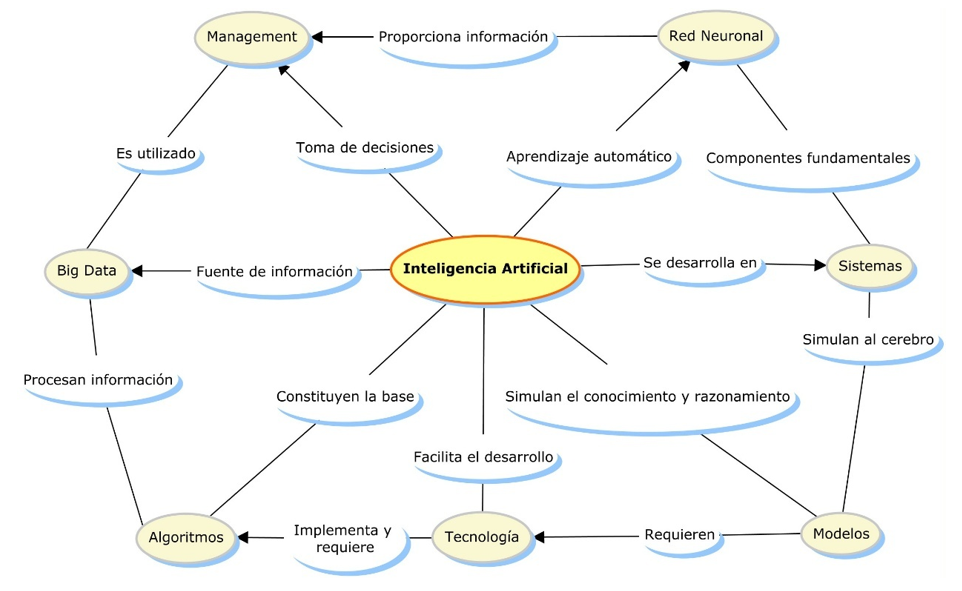
Therefore, according to Ruiz-Real et al. (2020), knowledge and disruptive technologies are elements that generate significant changes in production structures, society, and knowledge in general, rendering previous structures obsolete. In this sense, AI has gone, in the 20th century, from being a branch of knowledge in the field of computer science with applications limited by the hardware capabilities of the time, to becoming a vital element for the development of 21st-century industry and services (Ruiz-Real et al., 2020). Figure 1 systematizes these ideas along with the author’s assessments.
Figure 1.
Map of Artificial Intelligence
Source: own elaboration.
Note: the figure appears in its original language.
Banking services
According to the official information portal of the Community of Madrid, banking services are those that a bank or banking institution makes available to its potential clients. It also defines the range of banking products and services that can be contracted by a banking institution as extensive and deserving of in-depth study to understand the rights of clients of these services (Community of Madrid, 2024). In this regard, the Financial Market Commission defines banks as receiving and holding in custody the money that individuals and companies deposit, granting loans using these resources, and making investments, among other activities authorized by law (Financial Market Commission, 2025).
In other words, banking services require a regulatory legal framework, especially with the innovation and digital transformation of banks. Therefore, Lévy Mangin et al. (2020) state that, in a constantly changing sector like finance, banking services are offered throughout the network. Furthermore, it is relatively easy for a company to market its products or services online, and this is especially true for financial products and services (Lévy Mangin et al., 2020). In line with this, according to the World Bank, digital financial services are financial products and services, including payments, transfers, savings, credit, insurance, securities, financial planning, and account statements, delivered through digital/electronic technology, such as electronic money (initiated online or on a mobile phone), payment cards, and a regular bank account (World Bank, 2025).
Customer trust in new technologies
The theory of resistance to change appears more frequently when changes involve innovation accompanied by new technologies; this is why customer trust is a key variable in human interaction with disruptive technologies. According to Yuan et al. (2024), service-oriented organizations empower users to perform specific tasks through the implementation of cutting-edge technologies, resulting in cost savings and additional benefits. However, this ideal win-win scenario only materializes if users implement and utilize the technology effectively; therefore, they establish that the introduction of innovative technologies and products is a common method for implementing new habits in service delivery. They also suggest that the adoption of AI can generate both trust and resistance, depending on factors such as ease of use, perceived usefulness, and trust in the technology (Yuan et al., 2024).
From the above considerations, it follows that the same principles apply to the banking sector, where the implementation of new technologies such as AI systems can also elicit a mix of acceptance and resistance, influenced by customer perceptions of the technology’s transparency and security. The customer’s age also plays a role in these perceptions. According to Manser Payne et al. (2018), digital natives are typically early adopters of online and mobile applications; their findings show that respondents report a relatively high level of current and anticipated mobile banking usage. However, the comfort digital natives have shown with mobile technologies has not yet extended to AI banking services, which are still in their early stages. This is somewhat surprising, given that digital natives readily seek out and adopt such technologies (Hakimi et al., 2023; Manser Payne et al., 2018).
METHODOLOGY
This research is framed within the positivist paradigm, seeking objectivity and rigor in the analysis of trust in artificial intelligence (AI) applied to banking services. According to Briones (1996), in its most general sense, positivism stands as the philosophical current that demands all authentic knowledge be grounded in empirical experience. According to this approach, the progress of knowledge is limited to direct observation and experimentation. Consequently, it is imperative to adopt the methodology of the natural sciences for any research aspiring to genuine status (Briones, 1996).
This quantitative-descriptive research focuses on a systematic and bibliometric literature review, which aims to analyze existing publications related to the object of study: the applications of AI in banking services and customer trust. The materials used in this research consist primarily of high-impact databases, such as Web of Science and Scopus (Donthu et al., 2021; Mukherjee et al., 2022; Sánchez Castillo et al., 2024). Accordingly, the search equation was defined according to the study’s objective, focusing on artificial intelligence, and was configured as follows: TS =(artificial NEAR/0 intelligence), Refined By: Web of Science Index: Social Sciences Citation Index (SSCI) or Science Citation Index Expanded (SCI-EXPANDED). Research Areas: Business Economics.
This search equation was carefully designed to locate specific articles addressing artificial intelligence in the areas of Social Sciences and Business Economics. A database of 2,916 scientific articles was obtained, from which, through inclusion and exclusion criteria, 59 articles on AI and Banking were extracted. The VOSviewer software was used to visualize the networks of relationships between different bibliographic elements, specifically for citations between authors and the co-occurrence of keywords or terms associated with AI, banking services, and trust; in addition, for the selection of the articles, inclusion, exclusion, and quality criteria were followed (see Table 1).
|
Table 1. Article selection criteria |
|
|
Criteria |
Requirement |
|
Inclusion |
Web of Science database article |
|
Published in English |
|
|
Open deadline |
|
|
Scientific articles only |
|
|
Exclusion |
Articles that, while meeting the search terms, are not directly related to the topic or have minimal relation to it. |
|
Document Quality |
Articles must be related to the topic of AI, AI applications in services, and the banking sector. |
|
Articles that link customer trust with the use of artificial intelligence |
|
|
Articles must contribute to the theories in the theoretical framework. |
|
Source: own elaboration.
RESULTS
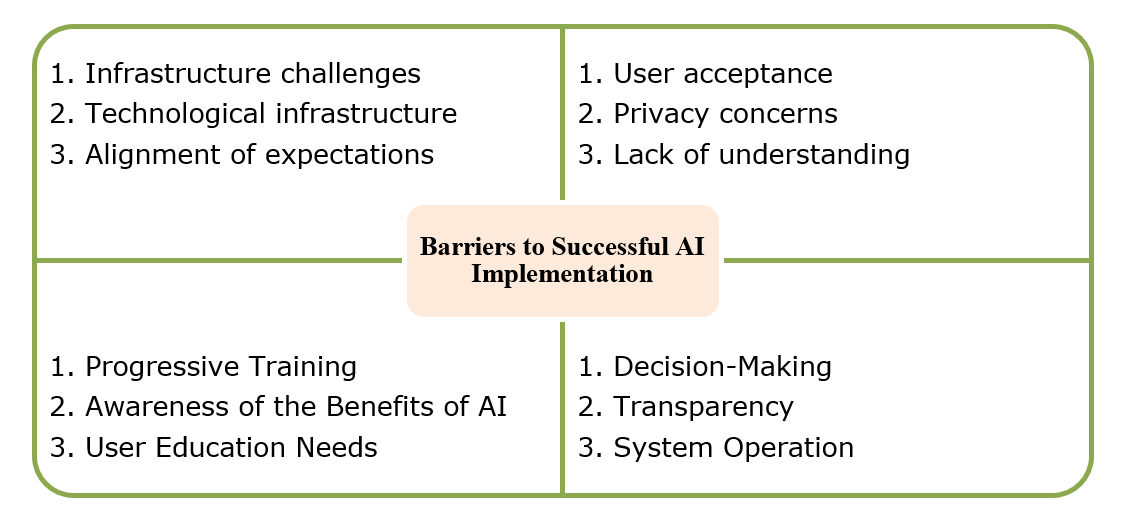
Several studies have examined the evolution of digital banking in emerging markets, as technology can enable banks and their customers to interact securely and remotely through existing local retail establishments (Mas & Siedek, 2008). Furthermore, Sheth et al. (2022) indicate that, despite the opportunities AI offers for personalizing banking services, institutions must consider the available technological infrastructure and customer expectations. Similarly, the transition to greater automation should be gradual and accompanied by efforts to educate users about AI’s capabilities and benefits to minimize potential fears and resistance (Sheth et al., 2022). In this context, it is useful to mention the barriers that arise when successfully implementing any disruptive technology, including artificial intelligence (Figure 2).
Figure 2.
Barriers to the successful implementation of Artificial Intelligence
Source: own elaboration.
The literature review process yielded a systematic and exhaustive analysis of articles indexed in the Web of Science and Scopus databases, focusing on the application of AI. Inclusion and exclusion criteria were established to select potential scientific articles; this identified the most relevant contributions to the object of study, allowing for the consolidation of a rigorous theoretical framework and establishing the basis for a critical analysis of the existing literature. Furthermore, a documentary analysis was conducted on the articles extracted from the WoS database, after applying inclusion and exclusion criteria. This analysis considered 59 articles from a database of 2,916, given that their key terms were related to artificial intelligence, banks, services, and banking services. The critical analysis was achieved by reviewing the methodology, findings, and conclusions of previous research.
It was determined that previous research on the object of study of AI and human interaction also focuses on the variable of customer trust, its determinants, and the factors that influence it. These include ethics, transparency, privacy, and security. Thus, several authors have developed a multidimensional approach that reveals how these variables interact and shape users’ perceptions in a technologically advanced financial environment (Alaamer & Prasanth, 2024; Cil & Yildiz, 2025). Consequently, the integration into the digital world and the introduction of innovative models (social networks, mobile technology, big data, cloud computing, the Internet of Things, artificial intelligence, financial technology, blockchain, virtual reality, and augmented reality) provide banks with significant opportunities to offer valuable new products and services, especially by combining their existing services with new digital capabilities (Naimi-Sadigh et al., 2022).
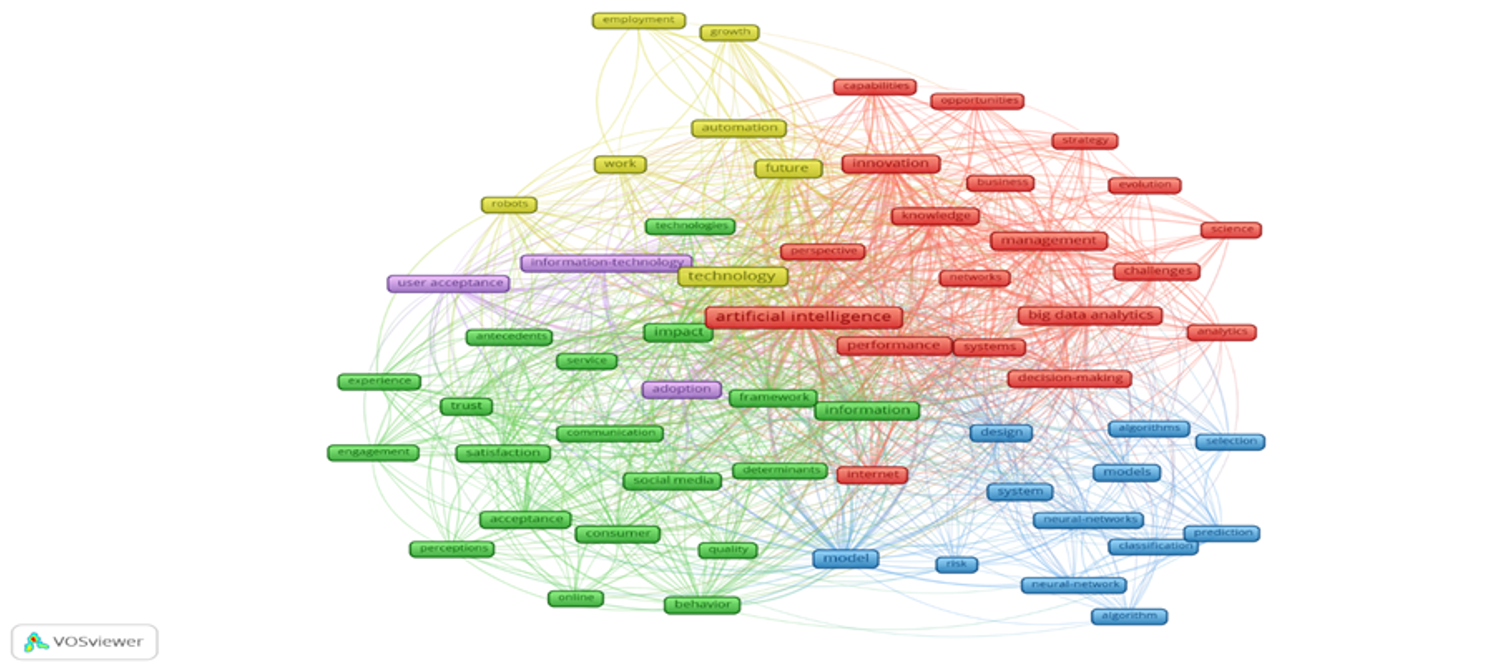
Figure 3.
Network of terms related to Artificial Intelligence.
Source: own elaboration.
Figure 3 represents the keyword network related to artificial intelligence; the most central terms in the network cluster around “artificial intelligence,” “performance,” and “data analysis.” It is evident that AI emerges as a key concept strongly connected to themes such as “management,” “opportunities,” “technologies,” “information,” and “performance.” These elements suggest, firstly, the relevant and imperative connection between these concepts or terms. Secondly, they indicate that AI is primarily being used to optimize performance, decision-making, and improve operational efficiency. As the literature points out, the integration of AI with big data analytics enhances service personalization, proactive risk management, and adaptation to global markets, redefining traditional operating paradigms (Alquqa, 2026; Mancuso et al., 2025).
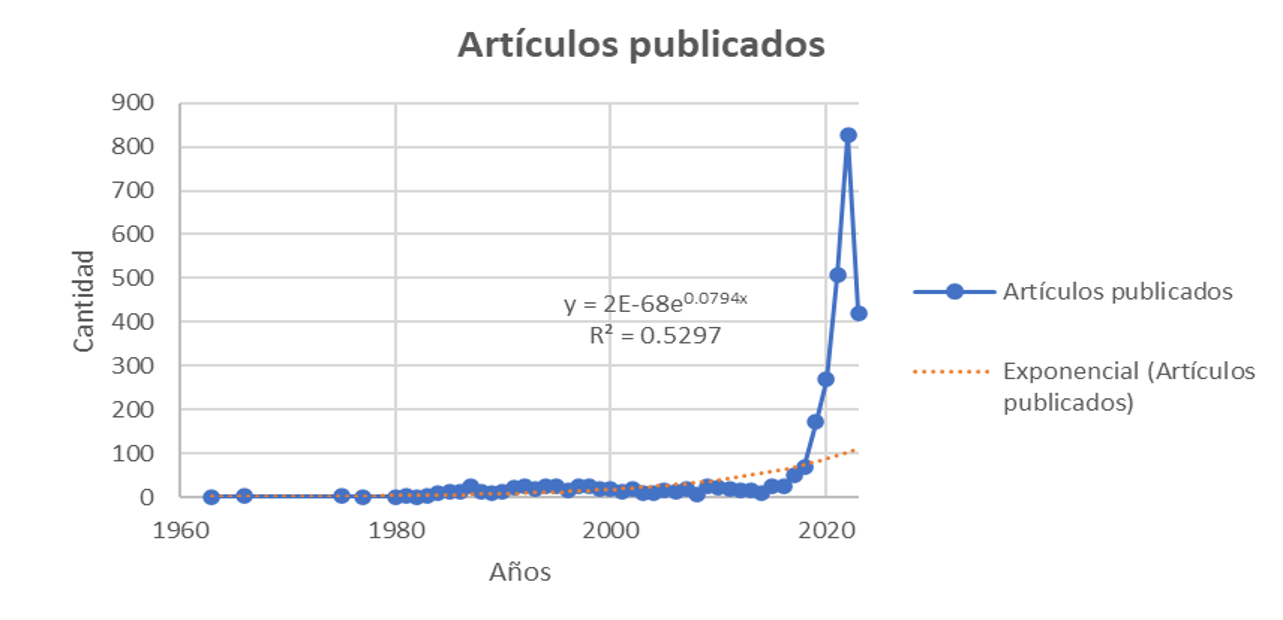
There are growing trends in the field of AI and, during the last few years, this has been reflected in the rise of AI research and application, which has been motivated by various phenomena, including advances in machine learning, natural language processing, processing large amounts of data in Big Data, and other related technologies (Figure 4).
Figure 4.
Trends in AI publications
Source: own elaboration.
Note: the figure appears in its original language.
The data identified a notable peak in 2020, due to several factors, including publication saturation, changes in research funding, and the emergence of new areas of interest within the field of AI. This exponential growth in publications demonstrates the rapid development and expansion of the AI field in recent years. This surge is attributable to the availability of vast amounts of data, increased computational processing power, and investment in research and development by companies and governments. Furthermore, the COVID-19 pandemic opened up new research and publication opportunities in 2020, as the scientific community faced one of its greatest challenges in addressing a global health crisis. This situation generated an unprecedented volume of publications (Torres-Salinas, 2020).
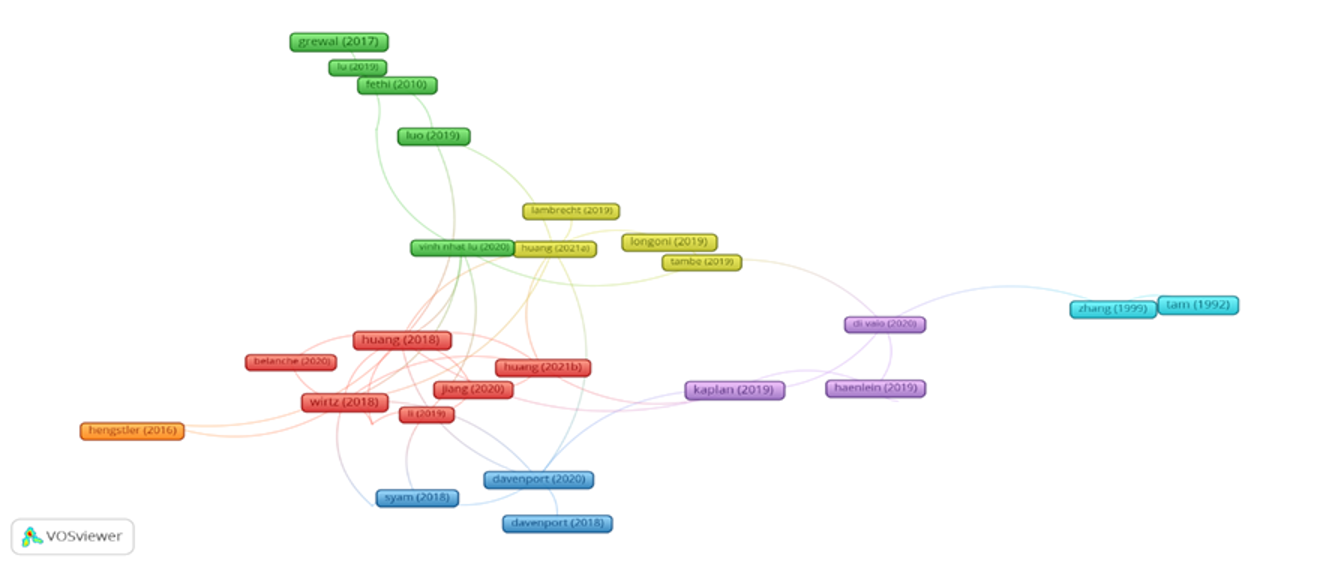
Furthermore, the analysis of prolific authors on the topic of artificial intelligence in the field of economics and business was obtained from VOSviewer (Figure 5). Among the high-impact references are Huang & Rust (2018), who developed a theory on job substitution in the service sector that can be facilitated by AI. These authors are highly cited because their theory identifies four types of intelligence, indicating that the ways in which AI learns and acts are necessary for service tasks. The core of this theory lies in the premise that AI first progresses in a predictable manner, with a high potential to replace more mechanical and analytical tasks before moving on to more complex tasks that require intuitive and empathetic actions—a substitution that poses significant risks to human labor.
Figure 5.
Most relevant authors in the field during the period studied
Source: own elaboration.
DISCUSSION
Innovation in the banking sector has become a differentiating characteristic that financial institutions have implemented to meet the needs of their markets. In this context, AI technology is no longer an option but a requirement for a sector as constantly innovating and changing as the financial sector.
However, precisely these constant changes do not contribute to increasing customer confidence in technology applications; therefore, the loss of trust and the perception of high risk hinder the use of digital and innovative banking services. In this sense, the trends identified in the comprehensive literature review on this innovative AI technology, specifically that related to or applied in the banking sector, conclude with evidence that AI applications improve the operational efficiency of institutions, positively enhance the customer experience and personalize customer services; furthermore, they have a more effective impact on risk management.
Specifically, the authors point out that AI can help banks automate tasks such as customer information gathering and document retrieval (Rabbani et al., 2023). Machine learning algorithms could reduce risk and facilitate financial forecasting and cross-selling (Bhattacharya & Sinha, 2022). The literature also identifies use cases of artificial intelligence in banking services, present in the back office, middle office, and front office—that is, throughout the entire value chain.
The back office refers to the bank’s internal operations, such as credit assessment, fraud detection, and risk monitoring. The middle office refers to intermediate operations such as document digitization, loan processing, and processes like Know Your Customer/Anti-Money Laundering (KYC/AML) and compliance workflows. Finally, the front office is the face-to-face interaction with the consumer; that is, customer service or support that includes elements such as chatbots, facial recognition, voice assistance, and biometrics (Bhattacharya & Sinha, 2022).
Given the aforementioned conditions, the evolution of AI positions it as the medium with the greatest potential to generate significant changes in the digital transformation of banks, as well as in how customers understand banking services and experience the handling of their requests and financial transactions. This transformation is primarily expected to occur through the automation of highly structured, precise, and complex processes such as fraud detection, the delivery of experiences tailored to individual customer needs through data analysis, and the use of predictive models for informed strategic decision-making.
This is a field where robots are easily expected to have a profound impact on the service sector; therefore, their emergence has sparked growing interest among both academics and business professionals (Lu et al., 2020). Furthermore, Northey et al. (2022) demonstrate in their study that consumers in high-involvement situations trust the financial advice of a robot advisor less than that of a human advisor. Moreover, this makes consumers feel that the company is less customer-centric, negatively impacting their investment decisions (Northey et al., 2022).
A review of various studies demonstrates that critical challenges remain, posing significant obstacles to the full and equitable adoption of AI, such as consumer trust, algorithmic biases, and the need for human interaction (Gursoy & Cai, 2025). According to these studies, many users still perceive automated systems as impersonal, while biases in algorithms can exacerbate inequalities if not properly addressed. Furthermore, human intervention remains crucial in interactions requiring empathy or complex solutions.
It is worth noting that this research contributed to establishing a robust framework for further investigation and reveals that addressing the challenges related to AI applications leads to a drive toward sustainable and equitable transformation in the banking sector. Therefore, throughout the arguments presented, it is understood that overcoming mistrust requires not only greater transparency in algorithms, but also designs that integrate elements of authenticity and empathy into automated interactions.
On the other hand, mitigating algorithmic bias demands robust ethical frameworks that guarantee fairness and representativeness, while balancing automation with human interaction will allow for a combination of efficiency and service quality. Banks that overcome these obstacles will not only maximize the benefits of AI, but will also ensure that its implementation is inclusive and fair, benefiting all stakeholders.
Looking ahead, banks need to focus on overcoming these challenges to adapt to current technological demands and prepare for emerging innovations. As already explained, this fosters a more resilient and customer-centric banking environment, with positive effects on customer trust, security, and transparency in data management.
Based on the above considerations, it is recommended that future research focus on developing explainable AI models, exploring ways to integrate human interaction into automated services, and establishing ethical and legal standards to guide responsible implementation. In this way, AI will not only redesign banking operations and services but also consolidate a more inclusive, accessible, reliable, and prepared financial system for the challenges of the near future.
CONCLUSIONS
This study has mapped the state of the art at the intersection of AI, banking services, and customer trust, offering a systematic view that goes beyond the mere accumulation of evidence. By employing a bibliometric and analytical approach to scientific output indexed in Web of Science and Scopus, the study has identified thematic areas and academic collaboration networks, as well as discerned the underlying tensions shaping the current debate. Essentially, the promise of efficiency and personalization versus ethical concerns, algorithmic opacity, and the persistent need for human warmth in financial interactions is the contradiction driving the field’s development.
This work provides, firstly, a map of AI applications across the entire banking value chain (back, middle, and front office), demonstrating that its penetration is already widespread, albeit uneven. Secondly, it reveals that customer trust is not a monolithic attribute, but a multidimensional construct modulated by technological factors (usability, transparency, explainability), contextual factors (type of service, level of involvement), and personal factors (age, digital familiarity, culture). This complexity requires banks to abandon technocentric approaches and adopt hybrid service designs, where automation and human oversight coexist in varying proportions depending on the nature of each task.
On a practical level, the results underscore that the implementation of AI in banking cannot be separated from a robust ethical framework that guarantees algorithmic fairness, privacy by design, and accountability for potential biases or errors. Trust, far from being an automatic byproduct of efficiency, is built through proactive policies of transparency, user education, and channels for human appeal when the customer requires them. Banks that embrace this challenge will not only improve their competitiveness but also contribute to a more resilient and socially legitimate financial ecosystem.
Finally, this study is not without limitations, as the restriction to two databases and to articles in English may have excluded relevant contributions published in other languages or in lower-impact journals, but with innovative approaches. Furthermore, the descriptive nature of the analysis prevents establishing causal relationships between the variables examined. Future research could complement this approach with mixed methodologies that incorporate case studies, in-depth interviews, or controlled experiments, in order to unravel the psychological and social mechanisms underlying the acceptance or rejection of banking AI. Ultimately, trust in AI is not a final goal, but a dynamic and negotiated process that demands critical vigilance and ongoing ethical commitment from all stakeholders.
REFERENCES
Abbas, J., Balsalobre-Lorente, D., Amjid, M. A., Al-Sulaiti, K., Al-Sulaiti, I., & Aldereai, O. (2024). Financial innovation and digitalization promote business growth: The interplay of green technology innovation, product market competition and firm performance. Innovation and Green Development, 3(1), 100111. https://doi.org/10.1016/j.igd.2023.100111
Abdeljawad, I., Alia, M. A., Kharoub, T., & Abulrub, S. (2025). The Impact of AI on Customer Service and Financial Decision-Making: The Perceptions of Bank Clients. En A. M. A. Musleh Al-Sartawi, A. I. Nour, & I. Abdeljawad (Eds.), Business Resilience and Business Innovation for Sustainability (Vol. 587, pp. 845–861). Springer Nature Switzerland. https://doi.org/10.1007/978-3-031-87584-7_60
Abueid, A. I., Mohammad, S. I., Mohammad, A. A. S., Vasudevan, A., Al Sarayreh, A., Alrfai, M. M., Aldaihani, F. M. F., Al-Momani, A. M., & Saraireh, S. (2025). Digital Finance and Fintech Innovations Towards Disrupting Finance Innovation. En A. Al-Sartawi & H. Ghura (Eds.), Artificial Intelligence, Sustainable Technologies, and Business Innovation: Opportunities and Challenges of Digital Transformation (Vol. 1171, pp. 17–31). Springer Nature Switzerland. https://doi.org/10.1007/978-3-031-77925-1_2
Adam, M., Wessel, M., & Benlian, A. (2021). AI-based chatbots in customer service and their effects on user compliance. Electronic Markets, 31(2), 427–445. https://doi.org/10.1007/s12525-020-00414-7
Alaamer, A., & Prasanth, A. (2024). Human-AI Interaction in FinTech: The Prospects and Risks of Using Chatbots as Conversational Agents in Financial Customer Service. En M. Al Mubarak & A. Hamdan (Eds.), Innovative and Intelligent Digital Technologies; Towards an Increased Efficiency (Vol. 569, pp. 489–502). Springer Nature Switzerland. https://doi.org/10.1007/978-3-031-71649-2_42
Alquqa, E. K. (2026). Revolutionising Business Intelligence in Banking: The Mediating Role of Fifth Industrial Revolution Technology in Artificial Intelligence Integration in the Commercial Sector. En H. M. Alzoubi & S. Joghee (Eds.), Integrating 4IR and 5IR Technologies for Digital Business Innovation (pp. 137–148). Emerald Publishing Limited. https://doi.org/10.1108/978-1-83608-578-220251011
Alshurideh, M. T., Ahmed, G., Shrouf, H., Shwedeh, F., & Alzoubi, H. M. (2026). Leveraging Artificial Intelligence and Data Analytics for Digital Innovation: Insights from Banking Sector. En H. M. Alzoubi & S. Joghee (Eds.), Integrating 4IR and 5IR Technologies for Digital Business Innovation (pp. 81–93). Emerald Publishing Limited. https://doi.org/10.1108/978-1-83608-578-220251007
Banco Mundial. (2025). Servicios financieros digitales inclusivos [Portal corporativo del Banco Mundial]. Servicios Financieros Digitales Inclusivos. https://www.worldbank.org/
Belanche, D., Casaló, L. V., Flavián, C., & Schepers, J. (2020). Service robot implementation: A theoretical framework and research agenda. The Service Industries Journal, 40(3–4), 203–225. https://doi.org/10.1080/02642069.2019.1672666
Bhattacharya, C., & Sinha, M. (2022). The Role of Artificial Intelligence in Banking for Leveraging Customer Experience. Australasian Business, Accounting and Finance Journal, 16(5), 89–105. https://doi.org/10.14453/aabfj.v16i5.07
Bilgihan, A., Ostinelli, M. (Max), Zhang, Y., & Lorenz, M. (2025). Artificial intelligence (AI) agents and the future of customer loyalty. International Journal of Contemporary Hospitality Management, 37(9), 3240–3262. https://doi.org/10.1108/IJCHM-03-2025-0373
Briones, G. (1996). Epistemología de las ciencias sociales. INSTITUTO COLOMBIANO PARA EL FOMENTO DE LA EDUCACIÓN SUPERIOR, ICFES.
Bussmann, N., Giudici, P., Marinelli, D., & Papenbrock, J. (2021). Explainable Machine Learning in Credit Risk Management. Computational Economics, 57(1), 203–216. https://doi.org/10.1007/s10614-020-10042-0
Cil, A. E., & Yildiz, K. (2025). A systematic literature review on applications of explainable artificial intelligence in the financial sector. Internet of Things, 33, 101696. https://doi.org/10.1016/j.iot.2025.101696
Comisión para el Mercado Financiero. (2025). EDUCA Portal de Educación Financiera [Portal de Educación Financiera]. EDUCA Portal de Educación Financiera. https://www.cmfchile.cl/educa/621/w3-channel.html
Comunidad de Madrid. (2024). Productos y servicios bancarios [Portal informativo de la Comunidad de Madrid]. Productos y servicios bancarios. https://www.comunidad.madrid/
Dixit, P., Kohli, R., Acevedo-Duque, A., Gonzalez-Diaz, R. R., & Jhaveri, R. H. (2021). Comparing and Analyzing Applications of Intelligent Techniques in Cyberattack Detection. Security and Communication Networks, 2021, 1–23. https://doi.org/10.1155/2021/5561816
Donthu, N., Kumar, S., Mukherjee, D., Pandey, N., & Lim, W. M. (2021). How to conduct a bibliometric analysis: An overview and guidelines. Journal of Business Research, 133, 285–296. https://doi.org/10.1016/j.jbusres.2021.04.070
Fernández, A. (2019). Inteligencia artificial en los servicios financieros.
Foroudi, P., Robson, M. J., Marvi, R., & Spyropoulou, S. (2026). Enhancing Customer Engagement Through Artificial Intelligence Authenticity. Journal of Product Innovation Management, 43(1), 76–98. https://doi.org/10.1111/jpim.70008
Ganesh, C. N., Rani, M. S., Pradeep, S., Dahiya, R., Gupta, A., & Veeraiah, V. (2025). Optimizing Customer Relationship Management (CRM) Systems Using Advanced Machine Learning Algorithms. 2025 Seventh International Conference on Computational Intelligence andCommunication Technologies (CCICT), 215–220. https://doi.org/10.1109/CCICT65753.2025.00042
Gursoy, D., & Cai, R. (2025). Artificial intelligence: An overview of research trends and future directions. International Journal of Contemporary Hospitality Management, 37(1), 1–17. https://doi.org/10.1108/IJCHM-03-2024-0322
Hakimi, T. I., Jaafar, J. A., & Aziz, N. A. A. (2023). What factors influence the usage of mobile banking among digital natives? Journal of Financial Services Marketing, 28(4), 763–778. https://doi.org/10.1057/s41264-023-00212-0
Han, N., Guo, H., Zhang, B., Huang, Z., Zhou, Y., Weidenkaff, A., & Chen, G. (2026). Artificial intelligence as a driver of sustainable materials and circularity. Nature Reviews Materials, 11(7), 510–512. https://doi.org/10.1038/s41578-026-00912-8
Huang, M.-H., & Rust, R. T. (2018). Artificial Intelligence in Service. Journal of Service Research, 21(2), 155–172. https://doi.org/10.1177/1094670517752459
Huang, M.-H., & Rust, R. T. (2021). Engaged to a Robot? The Role of AI in Service. Journal of Service Research, 24(1), 30–41. https://doi.org/10.1177/1094670520902266
Iqbal, M. N., & Jan, M. T. (2025). AI-Powered Business Strategies for Enhancing Consumer Behavior and Brand Loyalty in the Bancassurance Sector: En R. Sharma, T. Maqableh, F. Rabby, R. Sharma, & R. Bansal (Eds.), Advances in Marketing, Customer Relationship Management, and E-Services (pp. 101–132). IGI Global Scientific Publishing. https://doi.org/10.4018/979-8-3693-9954-5.ch006
Kumar, J., & Rani, V. (2025). Financial innovation and gender dynamics: A comparative study of male and female FinTech adoption in emerging economies. International Journal of Accounting & Information Management, 33(2), 334–353. https://doi.org/10.1108/IJAIM-03-2024-0098
Kumar, J., Rani, V., Rani, G., & Sandhu, K. (2025). What attracts me or prevents me from using AI-enabled neo-banking services? Unveiling the nexus between service quality and customer loyalty. International Journal of Quality & Reliability Management, 42(10), 2793–2814. https://doi.org/10.1108/IJQRM-11-2024-0421
Larrán Jorge, M., & Muriel de los Reyes, M. J. (2007). LA BANCA POR INTERNET COMO INNOVACIÓN TECNOLÓGICA EN EL SECTOR BANCARIO. 13.
Lévy Mangin, J.-P., Bourgault, N., Calvo Porral, C., & Trudel, M. (2020). La influencia de la confianza y satisfacción del cliente en la intención de uso de los servicios bancarios por internet: Un modelo estructural. CIENCIA ergo sum, 27(2), 1–23. https://doi.org/10.30878/ces.v27n2a3
Lissillour, R., & Sahut, J.-M. (2026). What future for AI chatbots in banking: From current challenges to mirages? Information Technology & People, 39(5), 2027–2062. https://doi.org/10.1108/ITP-01-2025-0008
Lu, V. N., Wirtz, J., Kunz, W. H., Paluch, S., Gruber, T., Martins, A., & Patterson, P. G. (2020). Service robots, customers and service employees: What can we learn from the academic literature and where are the gaps? Journal of Service Theory and Practice, 30(3), 361–391. https://doi.org/10.1108/JSTP-04-2019-0088
Mancuso, I., Petruzzelli, A. M., Panniello, U., & Vaia, G. (2025). Business model innovation in the banking sector: How digital technologies transform innovation drivers in value mechanisms innovations. Journal of Engineering and Technology Management, 75, 101858. https://doi.org/10.1016/j.jengtecman.2024.101858
Manser Payne, E., Peltier, J. W., & Barger, V. A. (2018). Mobile banking and AI-enabled mobile banking: The differential effects of technological and non-technological factors on digital natives’ perceptions and behavior. Journal of Research in Interactive Marketing, 12(3), 328–346. https://doi.org/10.1108/JRIM-07-2018-0087
Mas, I., & Siedek, H. (2008). Servicios bancarios a tráves de redes de establecimientos minoristas (No. 47). CGAP.
Mukherjee, D., Lim, W. M., Kumar, S., & Donthu, N. (2022). Guidelines for advancing theory and practice through bibliometric research. Journal of Business Research, 148, 101–115. https://doi.org/10.1016/j.jbusres.2022.04.042
Naimi-Sadigh, A., Asgari, T., & Rabiei, M. (2022). Digital Transformation in the Value Chain Disruption of Banking Services. Journal of the Knowledge Economy, 13(2), 1212–1242. https://doi.org/10.1007/s13132-021-00759-0
Narasapuram, N. K., Shah, S. A. A., Shiratuddin, M. F., & Sohel, F. (2026). Explainable artificial intelligence models for detecting suspicious bank transactions. International Journal of Machine Learning and Cybernetics, 17(3), 111. https://doi.org/10.1007/s13042-026-02994-w
Northey, G., Hunter, V., Mulcahy, R., Choong, K., & Mehmet, M. (2022). Man vs machine: How artificial intelligence in banking influences consumer belief in financial advice. International Journal of Bank Marketing, 40(6), 1182–1199. https://doi.org/10.1108/IJBM-09-2021-0439
Norzelan, N. A., Mohamed, I. S., & Mohamad, M. (2024). Technology acceptance of artificial intelligence (AI) among heads of finance and accounting units in the shared service industry. Technological Forecasting and Social Change, 198, 123022. https://doi.org/10.1016/j.techfore.2023.123022
Othayoth, P. K., & Khanna, S. (2025). Implementation of Artificial Intelligence and Chatbot for the Enhancement of New Age Banking Systems: A Systematic Review. En S. Dutta, Á. Rocha, A. K. Agarwal, R. G. Tiwari, & A. Bhattacharya (Eds.), Generative AI in FinTech: Revolutionizing Finance Through Intelligent Algorithms (Vol. 26, pp. 1–19). Springer Nature Switzerland. https://doi.org/10.1007/978-3-031-76957-3_1
Rabbani, M. R., Lutfi, A., Ashraf, M. A., Nawaz, N., & Ahmad Watto, W. (2023). Role of artificial intelligence in moderating the innovative financial process of the banking sector: A research based on structural equation modeling. Frontiers in Environmental Science, 10, 978691. https://doi.org/10.3389/fenvs.2022.978691
Rahman, M., Ming, T. H., Baigh, T. A., & Sarker, M. (2023). Adoption of artificial intelligence in banking services: An empirical analysis. International Journal of Emerging Markets, 18(10), 4270–4300. https://doi.org/10.1108/IJOEM-06-2020-0724
Reinartz, W. J. (2026). Customer Relationship Management: Past, Present, and Future. International Journal of Research in Marketing, 43(1), 8–27. https://doi.org/10.1016/j.ijresmar.2025.12.001
Roongruangsee, R., & Patterson, P. (2024). Engaging Robo-advisors in Financial Advisory Services: The Role of Psychological Comfort and Client Psychological Characteristics. Australasian Marketing Journal, 32(4), 339–354. https://doi.org/10.1177/14413582231195990
Ruiz-Real, J. L., Uribe-Toril, J., Torres, J. A., & De Pablo, J. (2020). ARTIFICIAL INTELLIGENCE IN BUSINESS AND ECONOMICS RESEARCH: TRENDS AND FUTURE. Journal of Business Economics and Management, 22(1), 98–117. https://doi.org/10.3846/jbem.2020.13641
Russell, S., & Norvig, P. (2004). INTELIGENCIA ARTIFICIAL. UN ENFOQUE MODERNO (Segunda edición). PEARSON EDUCACIÓN, S.A.
Sánchez Castillo, V., Pérez Gamboa, A. J., & Gómez Cano, C. A. (2024). Trends and evolution of Scientometric and Bibliometric research in the SCOPUS database. Bibliotecas. Anales de investigación, 20(1), 1. https://dialnet.unirioja.es/servlet/articulo?codigo=9740327
Torres-Salinas, D. (2020). Ritmo de crecimiento diario de la producción científica sobre Covid-19. Análisis en bases de datos y repositorios en acceso abierto. El Profesional de la Información, 29(2). https://doi.org/10.3145/epi.2020.mar.15
Tuge, N. B., & Msweli, N. T. (2026). Explainable Artificial Intelligence in the Banking Sector: A Systematic Literature Review. Applied Artificial Intelligence, 40(1), 2676353. https://doi.org/10.1080/08839514.2026.2676353
Yuan, J., Shah, S. K., Popp, J., & Acevedo-Duque, A. (2024). Understanding the Forced Adoption of an AI-Based Health Code System in China. Amfiteatru Economic, 26(66), 550. https://doi.org/10.24818/EA/2024/66/550
Yuniawan, A., Hersugondo, H., Mas’ud, F., Latan, H., & Renwick, D. W. S. (2025). Determinants of artificial intelligence adoption in the financial services industry: Understanding employees’ perspectives. International Journal of Information Management Data Insights, 5(2), 100371. https://doi.org/10.1016/j.jjimei.2025.100371
FINANCING
None.
CONFLICT OF INTEREST STATEMENT
None.
ACKNOWLEDGMENTS
To God, my family, and my professors in the Doctoral program.
STATEMENT ON THE USE OF ARTIFICIAL INTELLIGENCE
In the preparation of this manuscript, the author used ChatGPT (OpenAI) exclusively as a support tool for correcting formal aspects, seeking paraphrasing to clarify certain expressions, and reorganizing some paragraphs. Its intervention was limited to providing stylistic and writing suggestions. In contrast, the substantive academic content of the work was entirely conceived and developed by the author. All conceptual and methodological decisions stem exclusively from their own research process and personal reflection. Each section of the document underwent meticulous review, and all citations and references were directly verified against their primary sources. The author assumes full responsibility for the content presented and for the academic rigor that underpins this manuscript.
AUTHORSHIP CONTRIBUTION
Conceptualization: Sergio Gerardo Padilla Hernández.
Data curation: Sergio Gerardo Padilla Hernández.
Formal analysis: Sergio Gerardo Padilla Hernández.
Research: Sergio Gerardo Padilla Hernández.
Methodology: Sergio Gerardo Padilla Hernández.
Software: Sergio Gerardo Padilla Hernández.
Supervision: Sergio Gerardo Padilla Hernández.
Validation: Sergio Gerardo Padilla Hernández.
Visualization: Sergio Gerardo Padilla Hernández.
Writing – original draft: Sergio Gerardo Padilla Hernández.
Writing – proofreading and editing: Sergio Gerardo Padilla Hernández.